suhaibatul, Author at MIDA | Malaysian Investment Development Authority
English
contrastBtngrayscaleBtn oku-icon

|

plusBtn crossBtn minusBtn

|

This site
is mobile
responsive

sticky-logo

By

suhaibatul
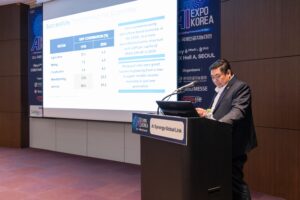
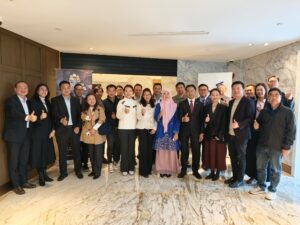
MIDA Seoul participated in the “AI Synergy Global Link” seminar, held as part of AI EXPO KOREA 2026—one of the country’s leading artificial intelligence exhibitions and industry platforms. The event was co-organised by the Korea Artificial Intelligence Association, Seoul MESSE Co., Ltd., and the Artificial Intelligence Times.
Read More
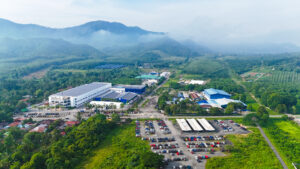
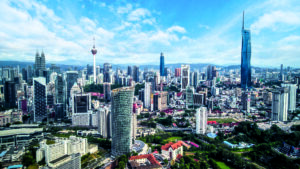
Global manufacturers no longer choose locations on cost or production capacity alone. As supply chains are reshaped by resilience, technological advancement and geopolitical shifts, investors are placing greater emphasis on the depth of an ecosystem—its supply chain capabilities, talent pipeline, innovation capacity and long-term growth potential. Malaysia's Central Region is responding by strengthening an integrated industrial ecosystem designed to support high-value manufacturing and long term investment growth.
Read More
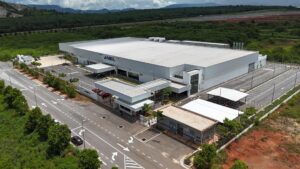
The global health and wellness industry is evolving rapidly as consumers seek scientifically validated, halal-certified products manufactured to the highest standards of quality and consistency. This growing demand presents significant opportunities for manufacturers capable of delivering innovative, high-quality functional food and beverage (F&B) solutions. EMZI Health Science Sdn. Bhd. is one such company.
Read More
Malaysia has become one of Southeast Asia's leading destinations for digital infrastructure investment, drawing hyperscalers, cloud service providers and colocation operators. Its strategic location, strong connectivity and pro-business investment ecosystem have made it a preferred hub for digital investment.
Read More
Aerospace investment decisions are rarely made on cost or location alone, investors need confidence that suppliers can meet exacting standards, talent can support increasingly sophisticated technologies, and the wider ecosystem can remain reliable as aircraft programmes expand. Against this backdrop, Malaysia’s proposition is clear: it is not simply an operating base, but a springboard for aerospace companies to build regional reach and participate more deeply in global value chains.
Read More
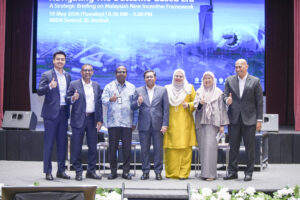
As Malaysia strengthens its position as a preferred investment destination, the New Incentive Framework (NIF) marks a significant shift towards attracting quality investments that generate long-term economic value, stronger industrial capabilities and better jobs.
Read More
As global industries accelerate their transition towards advanced manufacturing, digitalisation, and artificial intelligence (AI), access to skilled talent has become a key determinant of investment decisions. Beyond infrastructure and incentives, investors increasingly seek locations with sustainable pipeline of industry-ready talent capable of supporting technological transformation and long-term business growth.
Read More
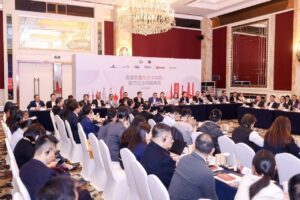
Global manufacturers are increasingly seeking resilient, well-connected locations that can support long-term growth in Southeast Asia. Building on the growing momentum of the Johor-Singapore Special Economic Zone (JS-SEZ), MIDA Shanghai and MIDA Johor joined the Johor State Government on a high-level investment mission to China to strengthen engagement with investors and promote Johor as a strategic gateway for regional expansion. The mission brought together investment promotion agencies, state stakeholders, and industry players in a coordinated effort to showcase investment opportunities within the JS-SEZ ecosystem.
Read More
As global industries accelerate supply chain diversification and the transition towards low-carbon and technology-driven operations, regions that can combine industrial depth, sustainability, and cross-border connectivity are increasingly becoming preferred investment destinations. The Johor-Singapore Special Economic Zone (JS-SEZ) represents one such example.
Read More
Through proactive facilitation by MIDA, innovation by local companies such as Solaroo, and technological advances from global partners such as Leoch Battery, Malaysia is strengthening the foundations needed to support sustainable digital growth. Rather than simply accommodating regional digital expansion, Malaysia is positioning itself as a regional leader in sustainable, resilient, and future-ready digital infrastructure.
Read More
The global medical device industry is undergoing a profound transformation. It is moving rapidly beyond standalone hardware into an era defined by Artificial Intelligence (AI), digital health, automation, and hyper-connected healthcare ecosystems.
Read More
As Malaysia strengthens its position as a preferred investment destination, the New Incentive Framework (NIF) marks a significant shift towards attracting quality investments that generate long-term economic value, stronger industrial capabilities and better jobs.
Read More
Malaysia started 2026 on a strong note, recording RM92.8 billion in approved investments across 1,249 projects during the first quarter, reflecting continued investor confidence in the country’s long-term growth prospects.
Read More
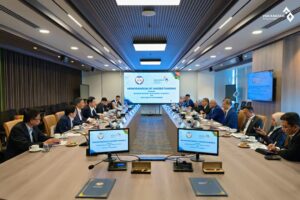
As global semiconductor supply chains continue to evolve, Malaysia is strengthening its position as a strategic hub for advanced manufacturing, semiconductor expansion, and high-value technology investments. Through continuous engagements with global industry players and participation in key international platforms, the country continues to attract quality investments, deepen technological collaboration, and reinforce its role within the regional semiconductor ecosystem.
Read More
The Northern Corridor Economic Region (NCER) is reshaping the Malaysia–Thailand border into a strategic gateway for advanced manufacturing, cross-border logistics and technology-driven industries. Anchored by the New Investment Framework (NIF), which prioritises high-value investments and high-quality employment, the region is accelerating advanced manufacturing growth and positioning Northern Region as a prime destination amid the global China +1 supply chain realignment.
Read More
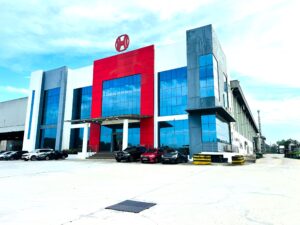
Heng Hiap Industries Sdn. Bhd. (HHI) is a Malaysian-grown success story in the global circular economy, demonstrating how innovation, sustainability, and strategic expansion can transform environmental challenges into economic opportunities. As a fully integrated plastic recycling and manufacturing company, HHI has built a robust end-to-end ecosystem that converts post-consumer plastic waste into high-quality recycled resins for international markets.
Read More
Discussions surrounding Malaysia’s rise as a global semiconductor powerhouse - which accounts for roughly 13% of global back-end chip testing and packaging, and over 7% of total global semiconductor trade - usually picture state-of-the-art factories, pristine cleanrooms, and the high-tech assembly lines of Penang, Kulim, or Johor. Yet behind every billion-ringgit semiconductor investment lies a foundational ecosystem that rarely makes the headlines.
Read More
Artificial intelligence (AI), advanced computing and next-generation mobility technologies are rapidly reshaping the global semiconductor industry. As technology becomes more complex, competitive advantage is increasingly determined not by individual companies, but by the strengths of entire ecosystems.
Read More
Boeing’s decision to position Malaysia as a key aerospace hub in Asia reflects a deliberate, long-term investment strategy shaped by supply chain efficiency, cost optimisation, and access to fast-growing regional markets. As Southeast Asia’s aviation sector continues to expand, Malaysia is emerging as a key hub within Boeing’s global operations network.
Read More
The Singapore Manufacturing Federation (SMF) Manufacturing Day Summit 2026, held on 30 January, brought together over 1,000 industry leaders, policymakers, and innovators, underscoring its importance as a regional platform for industrial collaboration.
Read More
Energy Storage Systems (ESS), particularly Battery Energy Storage Systems (BESS), are gaining traction in Malaysia as industries place greater emphasis on energy reliability and operational efficiency. Recent investment trends highlight the emergence of ESS as a growing segment within the country’s industrial ecosystem.
Read More
Malaysia is undertaking a significant transformation in its investment landscape through the Government’s introduction of the New Incentive Framework (NIF). This initiative marks a major policy reform shift, transitioning from a traditional product/activity-based tax incentives structure to a tiered and outcome-based incentive model that rewards investors based on measurable contributions to the nation’s economic and strategic objectives. Presently, Malaysia’s incentive framework is governed by two key legislations: the Promotion of Investments Act 1986 (PIA) and the Income Tax Act 1967 (ITA). Both primarily offer Pioneer Status (PS) or Income Tax Exemption (ITE) and Investment Tax Allowance (ITA) to projects within the listed promoted products or activities. Under this structure, incentives were largely granted based on sector-based qualification.
Read More
Healthcare is emerging as one of the fastest-growing segments of the global services economy with medical tourism becoming an increasingly important driver of cross-border healthcare demand. The global medical tourism market is projected to exceed USD107 billion by 2030, driven by rising healthcare costs in developed economies, ageing populations, and increasing demand for specialised treatments across borders. Malaysia is strategically positioned within this expanding landscape. With internationally accredited hospitals, a highly skilled medical workforce, competitive treatment costs, and strong regulatory governance, the country has further strengthened its standing as a preferred destination for quality healthcare services in the region.
Read More
Malaysia is the land of strategic geography and sustainable growth – of connectivity corridors and cross-border dynamism, of natural resilience and technological ambition. This emerging identity extends to its digital infrastructure. Where once the country was known for palm oil and semiconductors, it is becoming ASEAN's essential digital backbone not merely through scale, but through an intelligent blend of location, sustainability and purpose-built ecosystems that global technology players increasingly recognise and value.
Read More
For centuries, traditional and herbal medicine have supported human health across cultures and civilisations. Today, as the global healthcare landscape evolves, these age-old remedies are gaining renewed relevance — not as alternatives, but as valueble complements to modern medicine.
Read More
1 2
wpChatIcon