


|


|

This site
is mobile
responsive

When people speak of Malaysian companies that “earn globally”, the conversation often turns to electronics, palm oil, or oil and gas. DXN Holdings Bhd (Bursa: 5318) offers a different case study: a Kedah-headquartered wellness manufacturer that has spent three decades turning Malaysian biotech capability (Ganoderma cultivation, spirulina farming, functional food science) into a consumer platform spanning more than 180 countries and 22 million consumers.
DXN’s journey demonstrates how a homegrown company can expand both its production and market presence internationally, while retaining key research, formulation and quality-control functions in Malaysia.
DXN’s FY2026 revenue of roughly RM1.9–2.1 billion was overwhelmingly generated outside Malaysia. Latin America alone contributed 61.2% of group revenue, with Asia (excluding Malaysia) at 23.8%, the Middle East and North Africa at 8.7%, Europe at 5.0%, and North America and Oceania making up the remainder.
Latin America is its largest market, led by Peru, Bolivia and Mexico.
Newer markets such as Argentina and Brazil are also expanding, illustrating the importance of building a strong local customer base before committing to larger investments.
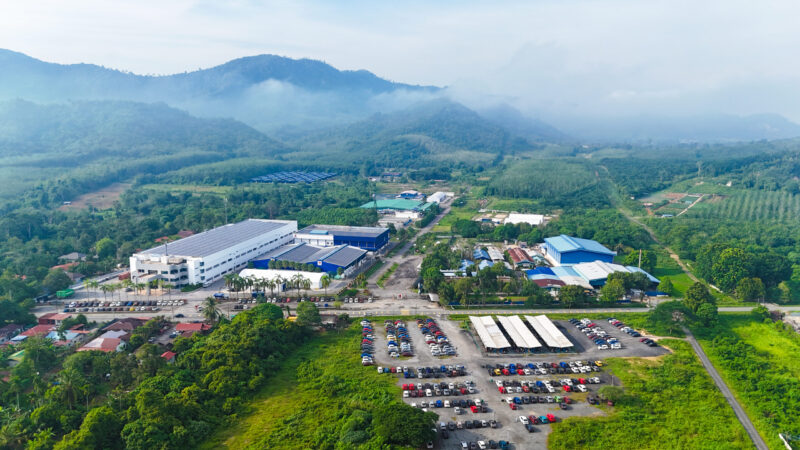
What distinguishes DXN’s overseas strategy from a purely distribution-led expansion is the scale of physical investment committed outside Malaysia. The group currently operates manufacturing facilities in Mexico, Peru, China, India, Indonesia, Bangladesh and Nepal, supported by cultivation and research operations in China and India, and plantations spanning China, Bolivia and Brazil.
A further RM500 million in capital is planned to expand manufacturing and plantation capacity across five countries key projects include:

Beyond established markets, DXN is expanding into five new countries: Brazil, the United Kingdom, Argentina, Egypt and Chile. It is also pursuing opportunities in several other markets across Europe, Latin America, Asia, the Middle East and Africa. The company continues to actively open new geographies even as it scales existing ones, reflecting a long-term commitment to international expansion.
Several elements of DXN’s overseas trajectory are worth highlighting for policy and promotion purposes:
This approach shows that companies do not always need to begin with a major overseas facility. They can enter a market through sales and distribution, build demand and local knowledge, and gradually establish a physical presence when the market is ready.
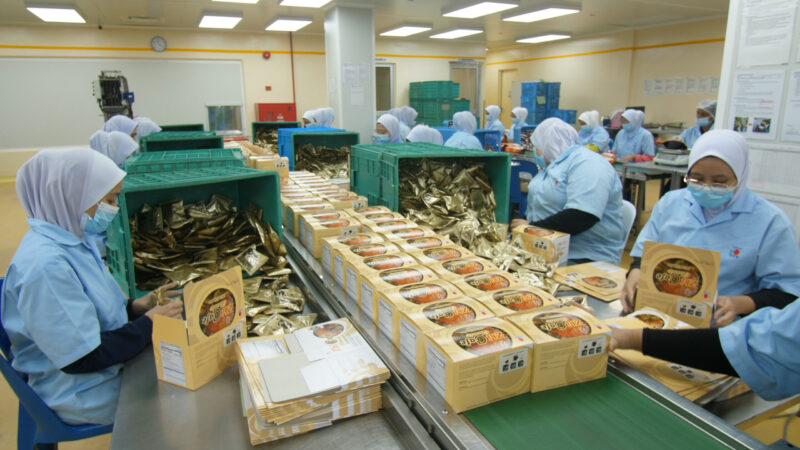
DXN’s own roadmap targets a “top-tier global wellness platform” by FY2030, underpinned by six additional manufacturing facilities and three new plantations currently in the pipeline. From a single facility in Kedah, DXN has grown into an international business with 14 factories, 10 plantations, and a presence in more than 180 countries. Its journey shows how Malaysian manufacturing and agri-biotech capabilities can be taken abroad, adapted to different markets internationally, while Malaysia remains at the heart of the business.

Explore other related content to further
explore MIDA’s insights.