JOERIZAL BIN PILIP, Author at MIDA | Malaysian Investment Development Authority - Page 4 of 5
EnglishB. MelayuDeutsch
contrastBtngrayscaleBtn oku-icon

|

plusBtn crossBtn minusBtn

|

This site
is mobile
responsive

sticky-logo

By

JOERIZAL BIN PILIP
Numerous industries are experiencing disruptions in business operations due to the outbreak of the COVID-19 pandemic. According to the United Nations, the pandemic has wiped US$50 billion off global exports in February 2020. The global industry now faces an increasingly unpredictable global economic landscape due to supply chain disruptions as countries heightened its health and safety measures by suspending in-country deliveries.
Read More
Malaysia's higher education system is undergoing a comprehensive transformation and has matured significantly. The curriculum and teaching methods are being revamped with new critical elements such as experiential learning, future-ready curriculum, and lifelong learning mind-set to develop future-ready graduates. Graduates’ skillsets are also further enriched to embrace opportunities within the gig economy.
Read More
The escalating growth of the human population and the rapid evolution of heavy industrial sectors are significant contributors to energy demands. To fulfil this ever-increasing demand, current and future energy systems need to be costeffective, practical, reliable and sustainable, with low impact on the environment. For these reasons, there is a growing interest in hydrogen-based fuel technologies in recent years.
Read More
With the rising trend of establishments of Centres of Excellence (COE) in Asia among multinational corporations (MNCs), Malaysia increasingly emerges as a popular choice of location for these operations. For many years, Malaysia has played an important role as a Regional Hub, offering strategic operations location within South East Asia, robust industrial ecosystem and a talented and multilingual workforce.
Read More
As more trade deals are shifting towards the ASEAN region, Malaysia is gearing up to be the go-to place for trade. Malaysia’s trade value is steadily increasing amidst economic challenges and on-going trade tensions globally. According to MATRADE, in 2019, Malaysia recorded its largest trade surplus since 2009 valued at RM137.39 billion, an increase of 11 per cent compared to the previous period. Malaysia aims to continue this favourable trend, making it a preferred destination for investors and businesses.
Read More
The two billion millennials, representing 25 per cent of the world’s population, are re-defining consumerisation. Based on a market research company, Growth from Knowledge (GfK) study found that 59 per cent of 20 to 29 years old and 57 per cent of 30 to 39 years olds agreed with the statement that “experiences are more important than possessions”. Millennials prefer to socialise in group engagement at a fraction of the cost instead of investing in personal highly expensive virtual reality applications such as Virtual Reality (VR) headsets and play stations. They are favourable to ‘immersion rooms’ that provide space and technology for a hyper-real, smooth journey into VR which cannot be achieved at home.
Read More
The trend of supply chain convergence has strengthened Malaysia’s role as a Global Hub. Many MNCs such as Volkswagen, Nestle, IDT and IKEA have leveraged on Malaysia’s strategic location and efficient trade infrastructure to serve their growing business in the Asian market.
Read More
Demographic shifts and urban lifestyle changes demand innovative responses for new directions in the delivery of healthcare from the Government and healthcare providers. In supporting the growth of healthcare services, MIDA continues to position Malaysia as the healthcare hub in the region. Thus far, MIDA has facilitated a total of 77 private healthcare facilities since 2012. This amounted to investments of more than RM10 billion and have created over 15,000 job opportunities in the healthcare industry.
Read More
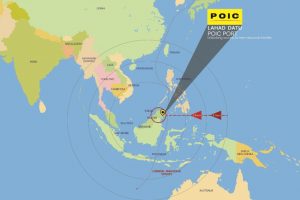
The Palm Oil Industrial Cluster (POIC) Lahad Datu was established by the Sabah State Government in 2005 to spearhead the development of palm oilbased downstream activities. Through the provision of adequate physical infrastructure and policies, POIC serves as a catalyst to accelerate the growth of the palm oil industry in the region. Presently, Sabah is the largest oil palm T producing state in Malaysia, tapping on 1.55 million hectares of its plantation to supply oil palm raw materials for valueadding manufacturing. Apart from palm oil, the Lahad Datu POIC comprises other industrial clusters such as port and logistics, oil and gas, biorefineries and small and medium enterprises. Strategically located along the Lombok-Makassar Straits, POIC is well known for its deep seaport with 20-meter depth.
Read More
The International Greentech and Eco Products Exhibition and Conference Malaysia (IGEM) 2019 marks its 10th anniversary as the largest trade event for green technologies and eco-solutions in South East Asia. IGEM is an excellent platform for solution providers and green energy businesses to tap into the fast-expanding ASEAN market by showcasing the latest innovations within the industry. Organised annually by the Ministry of Energy, Science, Technology, Environment and Climate Change (MESTECC) in collaboration with Malaysia Green Technology Corporation (MGTC), IGEM 2019 is scheduled to be held from 9 to 11 October 2019 at the Kuala Lumpur Convention Centre (KLCC). It is expected to generate RM2.8 billion in business leads.
Read More
Active use of technology to capture new frontiers and drive productivity is not new to the oil and gas industry. The upstream sub-sector for example, has been at the forefront of several significant technological advances in the past, from supercomputing techniques for reservoir modeling to seismic and 3D imaging for drilling and project developments; while refineries have been pursuing digitalisation for more than 30 years, with technologies like advanced process control (APC) being part of the operational mix of many operators.
Read More
With fast-growing cities and ballooning population, developing countries like Malaysia are facing numerous challenges in sustainably managing wastes. The waste generated in Malaysia in 2005 was 19,000 tons per day at a recycling rate of 5%. The quantity rose to 38,000 tons per day thirteen years later, in 2018, despite the increased recycling rate of 17.5%. This is alarming as the rate has exceeded the Japan International Cooperation Agency (JICA) study’s proposed rate of 30,000 tons per day in the year 2020. With limited space for landfills and rising costs of disposal, there is increased pressure and urgent need to tackle the waste management issue and reduce the impact on the environment and general well-being of the population.
Read More
he e-Commerce industry is growing exponentially within the Southeast Asia region particularly in Singapore, Malaysia, Indonesia, Thailand, Philippines and Vietnam. BMI Research in 2018 reported that these ASEAN countries are set to contribute an estimated of USD64.8 billion (RM257.9 billion) in 2021 from online shopping market activity, a giant leap from USD37.7 billion recorded in 2017. Malaysia's share of total online retail sales was at 2.7%, positioning Malaysia second in the region.
Read More
The Gaming Industry evolved from a group of young developers into a billion-dollar industry, and with the exponential growth of technology, the trend of playing games has grown from being played on PCs and mobiles, to consoles and virtual reality (VR). A global leader in eSports, games, and mobile intelligence, Newzoo is the leading market intelligence from the Netherlands since the year 2007. It has a partnership with giant tech companies such as Microsoft, Facebook, Warner Bros, Google, Razer and many others. Newzoo has also highlighted in its 2018 Global Games Market Report that the global games market is expected to grow from USD151.9 billion in 2019 to approximately USD180.1 billion in 2021.
Read More
Globally, sports tourism is recognised as one of the upcoming tourism markets with significant economic potentials. In Malaysia, it is an important income generator in the tourism industry, contributing approximately RM5 billion annually and is supported by a broad global audience as sporting events usually attract domestic and international participants. Revenue generated ranges from accommodations, food and beverages, ticket/gate sales, sponsorships, media rights to merchandising and garment production.
Read More
As part of the Malaysian Investment Development Authority’s (MIDA) investment promotion arm, the Domestic Investment and Supply Chain Division (DISC) aims to boost local industrial development. This is driven through continuous engagements with various local stakeholders through activities such as outreach programmes, roundtable meetings and dialogues to further understand companies’ role in the supply chain ecosystem and facilitate future strategic development plans to strengthen the nation’s economic growth.
Read More
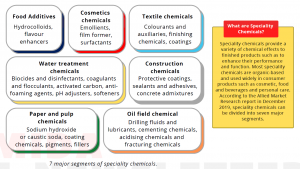
The market for speciality chemicals has emerged as among the top segments of the chemical industry globally. From 2019 to 2026, the global market of speciality chemicals is expected to grow at a compounded annual growth rate (CAGR) of 5.2%, reaching USD316.4 billion[1]. Asia Pacific is set to remain the largest market for speciality chemicals in terms of volume due to demands by established and rapidly industrialising nations like India, China, Japan, South Korea and Taiwan.
Read More
We are a global pharmaceutical company with 79 years of experience. We strive to improve lives through quality products with continuous innovation.
Read More
Our customers/end-users are national and international O&G companies including Petronas, Sapura, Shell, ExxonMobil, Chevron, ConocoPhilips, ADNOC Group, Qatar Petroleum, Kuwait Oil Company, Petroleum Development of Oman, Sonatrach, Sinopec, ENI, Samsung, Hyundai, Technip, Wood and many others.
Read More
The market for speciality chemicals has emerged as among the top segments of the chemical industry globally. From 2019 to 2026, the global market of speciality chemicals is expected to grow at a compounded annual growth rate (CAGR) of 5.2%, reaching USD316.4 billion[1]. Asia Pacific is set to remain the largest market for speciality chemicals in terms of volume due to demands by established and rapidly industrialising nations like India, China, Japan, South Korea and Taiwan.
Read More
Founded by Mr Steven Goh in 2002, DelstAsia Sdn. Bhd. (DelstAsia) began as a marketing company, acting as the sole-agent for Delst Inc, USA in distributing DMX-7, a food-grade grain and feed conditioner, for the Asian market. Being a new player then in the animal feed industry was a great challenge. DelstAsia had to compete against well-established international MNCs that had stronger brand names and more resources to hold firm to their market share. However, given the products’ outstanding field results and ability to solve industry-specific challenges of tropical climate grain storage and handling, it managed to sell itself.
Read More
Shifting customer demands, changing global landscape and continuous technology enhancement are crucial elements that shape the role, processes and capabilities of the electronic manufacturing services (EMS) industry. Printed circuit board (PCB) assembly is the primary manufacturing activity of EMS companies, and this segment is continuously evolving as components are being consistently minusculed with the introduction of more compact new devices. This, in turn, requires changes to be made to the process of mounting electrical components to the PCB such as the Surface Mount Technologies (SMT) to ensure the final assembled PCB is equipped to be used in complex and high technology products.
Read More
Aemulus Corporation started operation in 2004, focusing on the tester equipment market for the semiconductor industry. By 2015, Aemulus testers footprint can be found in most of the countries in Southeast Asia, and China, Taiwan, South Korea, Germany, as well as the States. Aemulus was listed in Bursa Malaysia as a public company in the same year. Then in 2017, Aemulus embarked on artificial intelligence platform software development.
Read More
The world has been astounded by the spread of the COVID-19 virus at the start of the year 2020. The Malaysian economy was also affected, notably smaller businesses and vulnerable groups such as lowerincome individuals, daily wage earners and workers. Proactively, Malaysia implemented the Movement Control Order (MCO) since 18 March 2020 to battle the pandemic. Selected economic sectors were, however allowed to operate subject to strict adherence to the standard operating procedures (SOPs) for the respective sector.
Read More
Qualities of innovative are essential for every country. This is important to maintain sustainability by making a continuous improvement that opens up to all kind of opportunitis for potential new market and product/activities. Based on the 2019 Global Innovation Index, released by The World Intellectual Proerty Organisation (WIPO), it is found that Asia's innovation index is increasing despite experiencing an economic slowdown.
Read More
1 2 3 4 5
wpChatIcon