

|


|

This site
is mobile
responsive

Malaysia has steadily emerged as one of the leading players in the global modest fashion industry, reflecting its unique blend of cultural diversity, craftsmanship, and innovative design. Driven by a significant Muslim population and a growing middle class seeking high-quality apparel, Malaysia has successfully nurtured a dynamic ecosystem of designers, manufacturers, and retailers who are redefining this market segment. The overall textile manufacturing sector demonstrates robust potential, with the total market projected to expand significantly to USD 4.47 billion (RM 21.05 billion) by 2030, fueled by strong domestic demand, increasing disposable income, and evolving consumer preferences.
Modest fashion, which encompasses both Islamic wear and universal modest trends, is rapidly gaining mainstream appeal globally. Muslim consumer spending on apparel and footwear is a powerful growth driver, projected to reach a substantial USD 428 billion (RM 2.02 trillion) by 2027. This segment, once a niche market, has evolved into a sophisticated, mainstream fashion line that appeals to both Muslim and non-Muslim consumers, presenting major export opportunities.
The Malaysian industrial ecosystem is highly supportive of this growth, with the Halal Industry Master Plan 2030 (HIMP) 2030 providing a strategic blueprint to position the nation as the global leader in the Halal economy, including emerging sectors like modest fashion. This involves strengthening the Halal assurance system, promoting ethical sourcing, and ensuring high hygiene standards across the entire supply chain, which is crucial for international credibility. Current market trends strongly emphasise digital transformation, with brands effectively leveraging e-commerce and social media to reach wider and more diverse market. Furthermore, there is a strong institutional and consumer push towards sustainability and ESG compliance, compelling brands to adopt eco-conscious materials and transparent ethical practices. Prominent local players like Naelofar, TudungPeople, and Poplook, alongside established manufacturers, collectively underscore Malaysia’s industry maturity and its strong potential for high-value export in this sector.
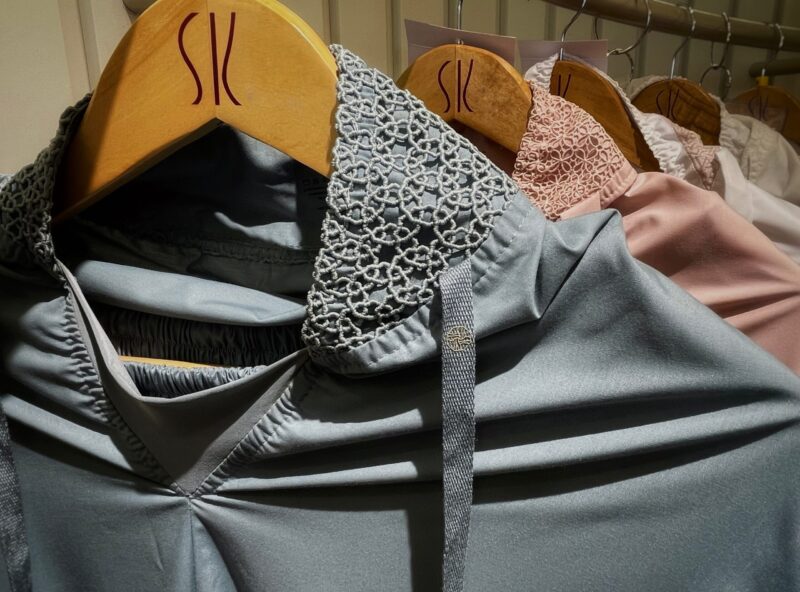
Within this thriving landscape, Siti Khadijah has profoundly distinguished itself as a pioneer, transforming the telekung (prayer attire) market from a niche product category into a symbol of quality and innovation. The story of Siti Khadijah is one of determination, faith, and vision. What began as a modest, home-based effort to create practical and comfortable telekung has blossomed into a pioneering modest apparel and lifestyle brand, a household name at the forefront of Malaysia’s textile industry. Born from the founder’s deep desire to meet the real needs of women, Siti Khadijah grew step by step, guided by innovation, perseverance, and a strong sense of purpose, until it became the trusted name it is today.
From its early days of crafting products by hand, Siti Khadijah has steadily expanded its reach. Today, it operates 61 boutiques nationwide, alongside international outlets in Indonesia and Singapore, strengthened by a thriving online presence and significant numbers of loyal customers. Along this journey, the brand has received numerous prestigious accolades, including the Putra Brand Awards 2024 (Silver in Apparel & Accessories), the Star Outstanding Business Awards (SOBA) with Meritorious Bronze for Best Brand and Best in Retail, as well as the Malaysia Franchise Awards 2024. These recognitions reflect not only its business achievements but also its role in uplifting communities and redefining modest fashion with elegance, functionality, and comfort.
Looking to the future, Siti Khadijah is committed to elevating Malaysian modest fashion and lifestyle products onto the global stage. The company is broadening its international footprint while ensuring that sustainability remains central to its journey. At Laman Khadijah, the brand’s cultural and experiential hub, solar panels have been installed to promote sustainability and strengthen support for ESG values. The adoption of eco-conscious fabrics such as bamboo and Tencel organic materials, together with the placement of recycling bins throughout the headquarters, further underscores the brand’s commitment to responsible and ethical practices.
Beyond sustainability, Siti Khadijah continues to prioritise investment in people, knowledge, and innovation. The company is committed to empowering underprivileged local talent through structured training and upskilling initiatives, while driving Research & Development (R&D) to address the evolving needs of its customers. Strategic collaborations with universities and research institutions further enhance its ability to integrate tradition with technology, laying a strong foundation for future lifestyle innovations.
The journey of Siti Khadijah proves that humble beginnings can give rise to extraordinary achievements. With passion, resilience, and a spirit of innovation, the brand has grown into Malaysia’s most trusted modest apparel and lifestyle brand. As it steps boldly into the future, Siti Khadijah remains steadfast in its mission: to inspire, to innovate, and to bring Malaysian modest fashion to the world.
As global demand for modest fashion continues to expand, Malaysia is well-positioned to become a hub for innovation, sustainability, and export excellence in this sector. Companies like Siti Khadijah exemplify how homegrown brands can compete internationally by prioritizing quality, operational efficiency, and customer-centric design. The inspiring journey of Siti Khadijah underscores the country’s potential to lead not only in modest fashion production but also in setting global standards for ethical, sustainable, and inclusive growth in the textile industry.
As the principal investment promotion agency, MIDA is instrumental in guiding both foreign and domestic investment into the high-value modest textile industry. MIDA’s support is structured to facilitate the industry’s shift towards high-growth and high-value areas, in line with the national aspiration to increase economic complexity and promote ESG considerations under New Industrial Master Plan (NIMP) 2030. To encourage this transformation, MIDA administers a range of competitive tax incentives for companies undertaking textile and textile products manufacturing activities.
Under the NIMP 2030, the Textile, Apparel, and Footwear subsector is one of the key areas targeted for industrial transformation in Malaysia. Effective first quarter of 2026, companies undertaking investment in this subsector will be subject to a New Investment Incentive Framework where tax incentives are tiered and based on an outcome-based approach. Achieving these incentives requires, among others, the adoption of Industrial Revolution 4.0 (IR4.0) technologies and R&D expenditures commitment.
MIDA also support R&D activities by offering Investment Tax Allowance for Contract R&D Companies and for in-house R&D, underscoring the government’s commitment to innovation and value chain transformation. MIDA also provides comprehensive support and guidance to investors, from the application process to operational expansion, ensuring Malaysia remains a premier destination for Modest Fashion industry investment.
To learn more about investment opportunities in the textiles and textile products industry, please contact the MIDA Building Technology and Lifestyle Division at https://www.mida.gov.my/staffdirectory/building-technology-lifestyle-division/.

Explore other related content to further
explore MIDA’s insights.