

|


|

This site
is mobile
responsive
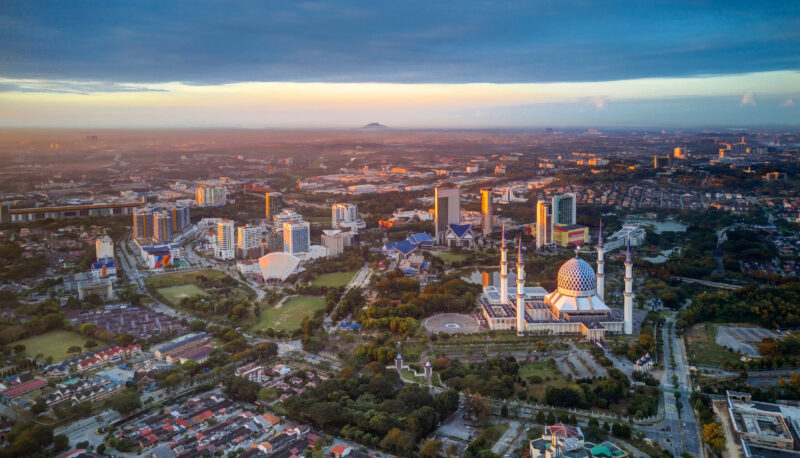
Global manufacturers no longer choose locations on cost or production capacity alone. As supply chains are reshaped by resilience, technological advancement and geopolitical shifts, investors are placing greater emphasis on the depth of an ecosystem—its supply chain capabilities, talent pipeline, innovation capacity and long-term growth potential. Malaysia’s Central Region is responding by strengthening an integrated industrial ecosystem designed to support high-value manufacturing and long term investment growth.
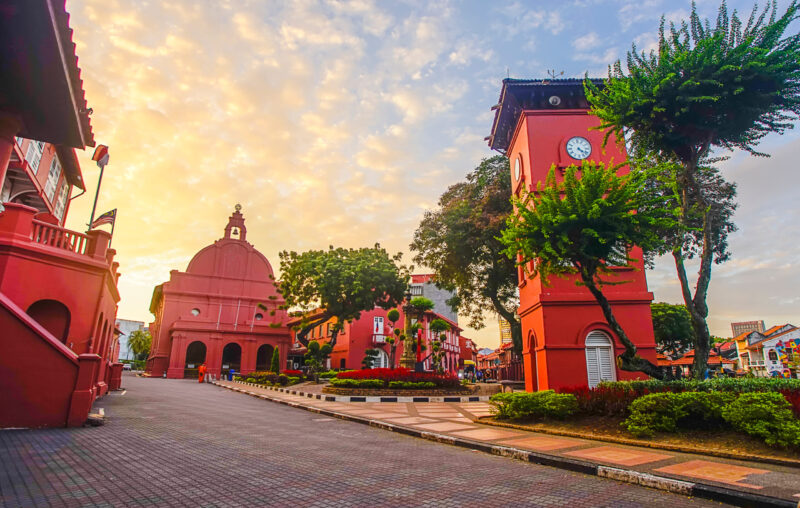
Spanning Selangor, Negeri Sembilan, Melaka and the Federal Territories, the region brings complementary industrial strengths across four priority sectors—Electrical and Electronics (E&E), aerospace, pharmaceuticals and food manufacturing—alongside the engineering support and ecosystem industries that underpin them. By bringing together the complementary strengths of each state, the initiative presents the region as a connected production base where companies can access integrated supply chains, specialised capabilities and coordinated investment facilitation.
The Industrial Cluster Development Initiative, introduced at MIDA’s Flagship Investment Seminar in November 2025, established a common platform for state governments, investment promotion agencies and industry stakeholders. It also marked the beginning of a longer-term effort to deepen industrial linkages and strengthen the region’s competitiveness beyond individual investment projects.
The region’s industrial strengths are already reflected in its strong investment performance. In 2025, it recorded RM22.03 billion in approved investments across the priority and ecosystem industries under MIDA’s purview, spanning 831 projects. Foreign investment accounted for RM14.77 billion, while domestic investment contributed RM7.25 billion. These projects are expected to generate 20,164 new employment opportunities, including 16,131 positions for Malaysians, with 8,065 are managerial, technical and supervisory roles.
While attracting investments remains important, the next phase focuses on strengthening the ecosystem that enables those investments to grow.
Major approvals in wafer fabrication, semiconductors, energy storage and aerospace maintenance serve as anchor investments around which broader industrial capabilities can be developed. Rather than representing the end of the investment journey, these projects provide opportunities to nurture local suppliers, strengthen industrial partnerships and integrate Malaysian companies more deeply into global value chains.
Efforts are underway to map capability gaps across supply chains, talent, infrastructure and innovation, drawing on established cluster models such as Brainport Industries Campus in the Netherlands. The aim is to achieve wider local participation in higher-value segments and reduce dependence on imported capabilities over time.
Malaysia’s strategic collaboration with Arm supports the development of a more complete semiconductor ecosystem, and the country’s transition towards higher-value activities. Under the national-level agreement signed with MIDA on 3 March 2025, the collaboration focuses on three areas: training 10,000 engineers, providing selected Malaysian companies with access to Arm’s compute platforms and intellectual property portfolio and developing semiconductor products designed in Malaysia. Thirty-two technology-access allocations have been made available nationally, comprising 25 ARM Flexible Access (AFA) licences and seven Compute Subsystem (CSS) allocations, with five approvals involving local companies reported as of May 2026. Beyond expanding access to technology, the collaboration has the potential to shorten product-development timelines, reduce research and development risks and help Malaysian companies move from design capability to successful tape-outs, commercial products, intellectual-property ownership and participation in regional and global markets.
For the Central Region, this collaboration complements the region’s established semiconductor capabilities. Negeri Sembilan hosts front-end wafer fabrication facilities, Melaka has developed strong semiconductor manufacturing capabilities, Selangor continues to strengthen industrial electronics and systems integration, while Kuala Lumpur is expanding its role in regional headquarters, research and development, and global business services.
Together, these capabilities create an integrated semiconductor value chain—from intellectual property and chip design through to advanced manufacturing and commercialisation across the Central Region.
The benefits extend well beyond semiconductor design itself. Growth in IC design stimulates demand across precision engineering, tooling, specialised materials, testing and measurement, electronics services and advanced manufacturing support, and creates new opportunities for local companies to move into higher-value segments of the global semiconductor supply chain.
Talent development is equally central to this transformation. With its concentration of universities, technical institutions and specialised training centres, the Central Region is well positioned to develop a highly skilled engineering workforce. Through collaboration between MIDA, industry partners and higher learning institutions, national talent development initiatives can strengthen regional capabilities and give investors confidence in the long-term availability of skilled professionals.

As the initiative progresses, greater emphasis is being placed on tangible outcomes that strengthen industrial competitiveness.
Planned programmes include supply chain development initiatives, structured business matching between multinational corporations and local companies, ecosystem-focused investment missions, participation in major industry platforms, alternative financing pathways for promising local enterprises, and the organisation of a Central Region Investment Summit to further promote collaboration across the industrial ecosystem.
These efforts are supported by a governance framework that brings together federal and state stakeholders through a Special Committee and dedicated working groups covering each priority industry and talent development. This collaborative model enables coordinated implementation while leveraging the respective strengths of participating states and agencies.
The Central Region’s competitive advantage extends beyond its strategic location or industrial scale. Its greatest strength lies in the depth of its ecosystem—bringing together manufacturing capabilities, supply chain integration, skilled talent, research capacity and coordinated facilitation across the region.
As industries continue to move towards greater technological sophistication and supply chain resilience, this integrated approach positions the Central Region to support increasingly complex, innovation-driven investments while creating greater opportunities for Malaysian companies to participate in higher-value global production networks.
Companies interested in exploring investment opportunities across Selangor, Negeri Sembilan, Melaka and the Federal Territories, or learning more about the Central Region Industrial Cluster Development Initiative, are encouraged to contact with MIDA’s Domestic Investment Division at https://www.mida.gov.my/staffdirectory/domestic-investment-division/ for further information.
Explore other related content to further
explore MIDA’s insights.