

|


|

This site
is mobile
responsive
Sabah is steadily strengthening its position as a strategic investment destination for agro-based industries in Malaysia and the wider ASEAN region.
With rich natural resources, fertile agricultural landscapes, marine biodiversity, and strong access to regional growth markets, the state offers a compelling ecosystem for investors seeking opportunities in sustainable agriculture, downstream processing, and innovation-driven food systems.
As global priorities increasingly shift towards food security, resilient supply chains, green production, and higher-value agro-industrial outputs, Sabah is well-positioned to capture emerging opportunities across the agricultural value chain. The state’s policy direction strongly supports the transformation of agriculture from traditional commodity production towards a more modern, technology-enabled, and value-added agro-industrial model.
Agriculture remains a cornerstone of Sabah’s economy, and continues to play an important role in the state’s socio-economic development. The agro-based sector serves as a core economic anchor and a high-volume “platform asset” for Malaysia, supported by abundant arable land, biodiversity-rich ecosystems, and a strong commodity heritage led by palm oil and rubber. This foundation is further strengthened by diversified outputs across fisheries, seaweed, tropical fruits, and high-value horticultural crops, positioning Sabah as a resilient and scalable agri-economy with significant downstream investment potential for both domestic and foreign investment.
On the trade front, Malaysia’s agricultural exports rose significantly to RM179.2 billion. Palm oil and related products continued to anchor export performance, with exports of palm oil, palm kernel oil, and palm-based oleochemicals reaching RM103 billion between January and November 20251. This compares with total agricultural imports valued at RM93.8 billion in 2024.
Sabah’s agro-based industry is entering a more strategic phase of development. Long recognised for its strengths in primary commodities such as palm oil, cocoa and marine products, the state is now gaining momentum in downstream processing, value-added manufacturing, and integrated agro-industrial development.
This shift marks an important turning point for Sabah’s agro-industrial sector. With an established feedstock base already in place, Sabah’s next phase of growth lies in processing, branding, innovation, and export-oriented production. Rather than competing solely on raw output, the state is increasingly aligned with an industrial model that supports agro-processing facilities, R&D-linked product development and stronger supply-chain integration.
Sabah’s agro-based industry is supported by strong structural advantages, including land availability, year-round cultivation potential, diverse agro-climatic zones, and rich marine resources. These strengths create a solid foundation for investments across food processing, contract farming, aquaculture, biomass utilisation, livestock integration, and industrial crop development.
Crucially, Sabah’s industrial park ecosystem offers sector-specific locations that are highly suited for agro-based manufacturing and downstream expansion namely:
Beyond land-based agriculture, Sabah’s fisheries and aquaculture sectors present strong opportunities in seaweed farming, hatcheries, feed production, seafood processing, and marine nutraceuticals. The proposed Blue Economy Industrial Park in Kudat is expected to further strengthen Sabah’s capabilities in marine-based manufacturing, biotechnology, cold chain logistics, and export-ready blue economy industries.
As Sabah advances its agro-industrial ambitions, the next wave of growth will be driven not just by capacity, but by capability. Investors that integrate technology, sustainability and efficiency will be best positioned to capture emerging opportunities.
This includes areas such as precision agriculture, digital traceability, automation in food processing, waste-to-value systems, biomass applications, cold-chain optimisation and resource-efficient manufacturing. Sabah is actively seeking to attract smart, value-adding capital—investment that goes beyond passive deployment to drive productivity, innovation, and market differentiation. The state’s future growth model is no longer anchored solely on “grow and ship,” but increasingly reflects a broader shift towards an integrated approach of “process, certify, package, and scale.”
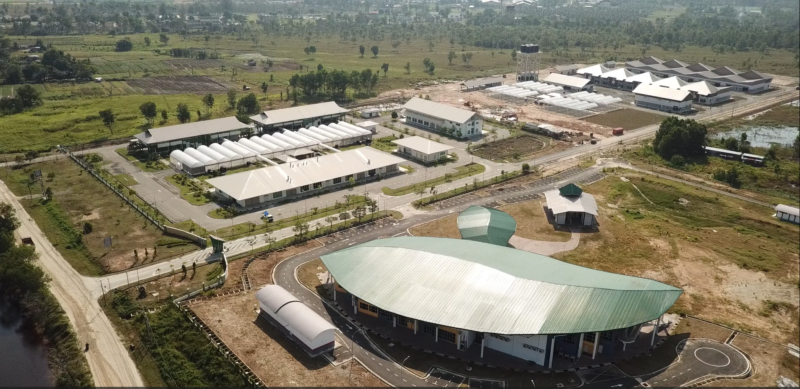
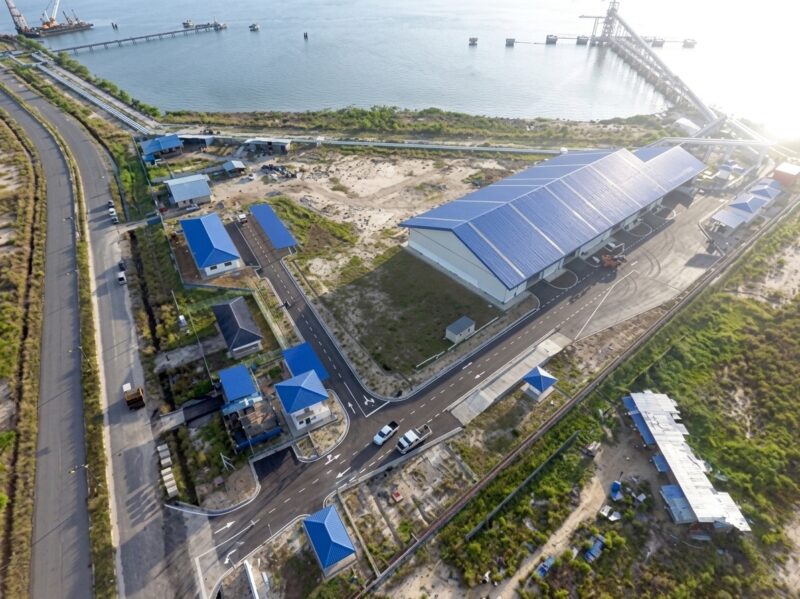
With established hubs such as SKSIP, POIC Lahad Datu, and SAIP in Kimanis, alongside future-ready developments including KKIP 2.0 in Kota Belud and the proposed Blue Economy Industrial Park in Kudat, Sabah offers investors a fully integrated ecosystem to scale innovative, sustainable, and export-oriented agro-industrial ventures.
Discover investment opportunities in Sabah, visit: investmentpromotion.sedia.com.my. For further information, contact the Investment Promotion Unit at [email protected] or +6088 418 917. SEDIA also supports further corridor alignment, stakeholders engagement with state government agencies and investment facilitation services.
1 https://www.mpoc.org.my/palm-oil-remains-top-contributor-as-malaysias-agriculture-sector-expands-3-1pc-in-2024/
Disclaimer: All figures in this article are under the purview of SEDIA and are for informational purposes only. For specific details regarding investments and initiatives, please refer to official SEDIA communications.
Explore other related content to further
explore MIDA’s insights.