


2024 Archives - Page 59 of 77 - MIDA | Malaysian Investment Development Authority
English
contrastBtngrayscaleBtn oku-icon

|

plusBtn crossBtn minusBtn

|

This site
is mobile
responsive

sticky-logo

G Capital partners with Hong Kong’s CCIAM Logistic to raise RM325 mil for hydropower projects

Renewable energy solution provider G Capital Bhd has partnered with Hong Kong-based CCIAM Logistic Company Limited to raise RM325 million for its small hydropower projects in Pahang.

In a bourse filing on Monday, the group announced that its wholly-owned subsidiary Northern Star Hydropower Sdn Bhd has entered into a Memorandum of Understanding (MOU) with CCIAM Logistic to set forth mutual intentions for the project.

It said a full-term agreement is expected within 60 days from the effective date of the MOU, which will include the roles of the parties in the project and a success fee payable to CCIAM Logistic as capital-raising lead arranger.

CCIAM Logistic is fully owned by CCIAM Future Energy Limited, a public-listed company on the Hong Kong Stock Exchange primarily involved in the provision of energy-saving solutions and loan financing business.

In a statement, G Capital’s executive chairman Tan Sri Affendi Buang said the partnership would serve as a gateway for global green capital to invest in the company’s small hydropower portfolio.

“CCIAM Future Energy’s expertise and presence at HKEX bridge the gap between China and international markets. This strategic partnership is poised to accelerate Malaysia’s transition to clean energy by attracting foreign direct investment, fueling economic growth, and propelling the nation towards carbon neutrality,” he said in a statement.

G Capital has been in the red for the past two financial years ended on Dec 31. For FY2023, the company reported a net loss of RM9.76 million compared with a net loss of RM18.68 million in FY2022. Its revenue was down 2.3% to RM26.26 million from RM26.88 million.

According to its bourse filing, the loss was mainly attributable to provisions for foreseeable losses in its transportation and investment holding divisions. Its hydropower division, on the other hand, has yet to generate any revenue.

As at Dec 31, 2023, the group reported total cash and cash equivalents of RM2.23 million.

Shares of G Capital rose by half a sen or 1.35% to 37.5 sen at Monday’s close, valuing the group at RM121.96 million.

Source: The Edge Malaysia

G Capital partners with Hong Kong’s CCIAM Logistic to raise RM325 mil for hydropower projects


Content Type:

Duration:
The Johor government approved RM113.7 billion in investments in the last two years, which is almost 20 per cent of the country’s total approved investments in the same period.

Johor Menteri Besar Datuk Onn Hafiz Ghazi attributed the state’s strategic and robust location as the main factor in achieving the investments.

Between 2022 and 2023, Malaysia’s overall approved investment was RM597.2 billion.

“In a post-Aidilfitri discussion today, the main focus was on the Johor-Singapore Special Economic Zone (JS-SEZ) implementation efforts,” read a post on Onn Hafiz’s Facebook.

A dialogue session with state-based industry players discussed several efforts, including incentives, potential sectors and areas that could be offered the opportunity to conduct their business and operations in the JS-SEZ.

The menteri besar is committed to replicating the Shenzhen-Hong Kong SEZ achievements in the state.

“To achieve Shenzhen’s success in becoming a thriving SEZ, all industry players must share the same agenda within a broader framework.

“We must ensure it is beneficial to the people, too, enjoys economic growth, while creating job opportunities,” he added.

The discussion was attended by state executive council members, Iskandar Regional Development Authority and Malaysian Investment Development Authority representatives, among others.

Source: NST

Johor govt approved RM113.7 billion in investments in last two years, says MB


Content Type:

Duration:

The positive outlook and overweight ratings in the construction sector following the rollout of infrastructure projects nationwide continued to lift market sentiment.

As we enter the second quarter of 2024 (2Q2024), Budget 2024’s RM90 billion development expenditure allocation to fund projects should drive contract flows this year.

The projects include the Penang LRT, Pan Borneo Sabah Phase 1, MRT3, large-scale flood mitigation projects, Sabah-Sarawak Link Road, Kuching Urban Transportation System-Green Line, and water-related projects. Contract awards are expected to be forthcoming in the first half of this year.

Research houses RHB Investment Bank Bhd, Kenanga Research, Hong Leong Investment Bank (HLIB), and Rakuten Trade Sdn Bhd are broadly optimistic about the industry.

There are also plans to reinstate five more LRT3 stations in the Klang Valley. As for MRT3, the government is acquiring land with notifications of the identified land expected to kick in 2Q2024, finalised in the third quarter, and awards handed out starting 4Q2024.

Still along the public transportation vein, the Johor government will submit its proposal in late November 2024 to the Federal Government for Johor Bahru LRT to have three lines.

While there is much focus on the rail lines, some contractors are also hoping to strike gold in renewable energy-related initiatives such as the Corporate Green Power Programme.

Johor is also being touted as the fastest-growing data centre market in Southeast Asia. With all these goodies coming out, HLIB said they should drive contract flows this year.

RM70 billion budget allocation

Meanwhile, Master Builders Association Malaysia (MBAM) president Oliver HC Wee told Bernama that the budget allocation for the construction industry in 2024 is over RM70 billion.

Based on trends from previous years, MBAM expects this to add up to about RM100 billion, inclusive of the private sector, with private contracts comprising mainly warehouses, data centres and factories manufacturing semi-conductors.

“On the outlook, we have to remain neutral. Costs are rising, and there are many uncertainties even as the government improves policies at the macro level to bring down costs.

“At the same time, it is important to leverage innovations and technologies with industry stakeholders willing to move together towards digitalisation,” he added.

Although the industry is heading in the right direction, companies need to undertake changes, Wee said.

“Fairer forms of contracts should be in place as we seek better ways to conduct business.

“We believe a variation of price (escalation) provisions in a contract will allow for fairer risk and rewards between contracting parties against a fluctuating building material price backdrop. This will subsequently reduce the number of projects being abandoned,” he noted.

Industry players overview

Industry players are bullish. Kerjaya Prospek Group Bhd is optimistic about the construction industry’s growth post-COVID-19 despite various challenges, including rising raw material prices. Its FY2023 core profit leapt 20 per cent on higher construction and property billings.

Chairman Datuk Tee Eng Ho said projects could progress faster as the situation improves, with labour shortages no longer a concern.

Tee also announced the company’s plans to pursue new opportunities with Samsung C&T Corporation via a consortium, Samsung-KP JV, focusing on factory construction in Malaysia and opportunities in Penang’s Andaman Island project, estimated to be worth about RM2 billion. 

As for Varia Bhd, formerly Stella Holdings Bhd, its managing director, Datuk Benson Lau, is optimistic about sectoral growth.

The biggest winners are the Klang Valley LRT’s five new stations worth RM4.7 billion, the RM11.8 billion nationwide flood mitigation programme, and Penang’s RM10 billion LRT initiative, he told Bernama.

“The demand for commercial and residential buildings is rising as infrastructure projects and private investment increase. This positive momentum aligns with Varia’s growth prospects, positioning the company favourably for upcoming opportunities,” Lau said.

Varia, which previously signed a memorandum of understanding with Sungai Klang Link Sdn Bhd to embark on the Sg Klang Link elevated highway project, said it is currently in the early stages of planning and development.

“We are open to exploring opportunities to contribute to our growth trajectory. Our tender book currently stands at RM1.5 billion,” Lau added.

Varia also received a contract from Kator Construction Sdn Bhd to undertake the Klang River flood mitigation project in Seksyen 25, Shah Alam, which kicked off on Feb 1, 2024 with a timeline extended to Jan 31, 2029.

1Q2024 performance

The first three months saw solid performance, with the construction index on Bursa Malaysia at 193.83 on Jan 2, 2024. It expanded above the 200 level between January and March and stood at 223.17 on March 29, 2024.

Malaysia aims to transform its economic landscape via infrastructure projects and digitalisation, which have lifted infrastructure-related counters on Bursa Malaysia Bhd since the second half of 2023. 

Rakuten Trade Sdn Bhd equity research vice-president Thong Pak Leng told Bernama that construction stocks saw a 13.5 per cent year-to-date gain.

“In the past 12 months, the construction index surged 37 per cent. We expect the sector to be one of the best performers in 2024,” he said.

New contracts win to improve companies’ earnings

Kenanga Research said companies’ earnings should improve as work progress gathers momentum amid higher contract wins.

There should be a significant improvement in the sector’s earnings delivery versus 4Q2023 expectations, it said.

Here are some numbers to chew on. Gamuda Bhd’s 1Q FY2024 core profit jumped 35 per cent on higher construction billings from Sydney Metro West and maiden earnings from DT Infrastructure Pty Ltd. As for new job wins, Gamuda is leading with RM25 billion in 24 months. 

As for new job wins, Gamuda is leading with RM25 billion over 24 months, and IJM Corp’s RM3.62 billion year-to-date FY2024 has already exceeded its RM3 billion projection.

Sunway Construction raised its guidance on new job wins in FY2024 to RM3 billion, the same level as WCT Holdings Bhd.

Kerjaya Prospek Group Bhd has secured RM377.9 million in year-to-date job wins, and Kimlun Corp Bhd has bagged year-to-date RM133.6 million.

Source: Bernama

Strong spillover from mega infrastructure projects in Q2


Content Type:

Duration:

The East Coast Rail Link-Economic Accelerator Projects (ECRL-EAPs) is set to boost socio-economic activities within various sectors such as construction, tourism, trade and industrial development, said the Malaysian Investment Development Authority (Mida).

The ECRL-EAP is an infrastructure project which started in April 2019 in collaboration with Mida and China Communications Construction Company (CCCC).

Mida emphasised that the ECRL is replete with opportunities for local companies and it would be a huge loss if these were to go untapped. Given that the project is the largest ever to be undertaken along the East Coast alignment, it would be ideal for all companies to seize opportunities that arise.

“Areas that could be further explored — being EAP enablers — are construction (products and services); renewable energy; sustainability products and services; education and training centres; shared utility service like waste management, research and development.

“This will create more economic opportunities and new jobs at each of the EAPs,” the agency told Bernama.

Mida also said that the successful implementation of the ECRL requires cooperation and collaboration among all stakeholders, including local governments, key transportation players, government-linked investment companies (GLICs), financial institutions and local communities.

“Mida is eager to support businesses eyeing ECRL-EAP investments. This will enhance the project’s allure for investors. This effort is crucial in maintaining an edge over competing initiatives, like the proposed Thailand’s Kra Land Bridge.

“We are calling on more companies to join forces with the government via Mida, amplifying this groundbreaking initiative,” it said.

Mida will also promote programmes in Kelantan, Terengganu, Pahang and Selangor related to the ECRL-EAPs. It has also initiated engagements with key stakeholders including local governments, industry associations, park managers and developers, GLICs and real-estate investment trusts to raise awareness of the EAPs and to reach a wider audience among potential investors.

“Participation from all stakeholders is highly important. Issues like environmental challenges, such as floods, infrastructure, utility readiness, zoning restrictions, and land categorisations, have been identified.

“To address these concerns, Mida is currently working closely with key stakeholders such as utility providers, state governments, associations and developers, and other key stakeholders to make sure that the issues are addressed and an enabling environment is provided for development and investment along the route,” it said.

Mida, through the domestic investment coordination platform (DICP), which is under the domestic investment division, plays a role in connecting investors with financiers.

According to the agency, the DICP facilitates direct engagement between investors and financiers, allowing them to discuss funding options, negotiate terms, and explore alternative financing arrangements.

The ECRL is a Malaysian project costing RM50.27 billion. It is currently under construction and aims to connect the east coast city of Kota Bharu in Kelantan to Port Klang, Selangor on the the west coast.

The electrified train will run on a standard gauge double-track railway connecting the East Coast Economic Region states of Pahang, Terengganu, and Kelantan to the central region. It is expected to spur economic growth in areas along its route.

Spanning 665 kilometres, the ECRL is poised to be a game changer for Malaysia, linking the country closely to the Pan-Asia railway network and enhancing connectivity with Asean and Eurasia regions.

It is targeted to be completed in December 2026 and operational in January 2027. The ECRL is expected to raise Malaysia’s gross domestic product (GDP) by 3.8 per cent in 2047 by enhancing trade, boosting tourism, and stimulating regional development.

The ECRL-EAPs are anticipated to generate RM1.4 trillion for the Malaysian economy by 2047 with a focus on industrial parks, logistic hubs, and transit-oriented developments (TODs).

“This strategic initiative aims to improve connectivity and economic activities along the ECRL route and to ensure inclusive growth across all participating states. The EAPs seek to tackle income and wealth disparities by fostering a shared prosperity agenda,” said Mida.

As of February 2024, the project is 62.4 per cent complete, with each state’s alignment progressing steadily.

Source: Bernama

ECRL-related projects to boost socio-economic activities in various sectors — MIDA


Content Type:

Duration:

The government is reaching out to the Malaysia Semiconductor Industry Association (MSIA) to improve the investment climate and ease of doing business to attract global semiconductor companies to relocate to Malaysia.

MSIA president Datuk Seri Wong Siew Hai said there should be regulatory changes to improve the investment climate accompanied by operational efficiency.

He also said that equally important is reducing bureaucracy, having the right infrastructure in place, the necessary utilities, as well as an industrial ecosystem which should include industrial clusters to support the relocating companies.

“This will position Malaysia as a preferred investment destination for renowned companies wanting to expand abroad and grow their business due to geopolitical tensions brought on by the US-China chip war,” Wong, who is a veteran with 27 years of working experience in the semiconductor industry, told Bernama in an interview today.

He noted that of utmost importance is Malaysia not to lose sight of the fact that the semiconductor industry is the “golden goose” of the nation.

“We need to nurture it carefully, grow and make the industry to be globally significant,” Wong said, adding that agencies involved in attracting and approving investments including state governments need to reduce bureaucracy and achieve greater ease of doing business.

Malaysia needs to prepare for foreign investments by building the necessary infrastructure and not rest on its laurels amid regional competition, he said.

These include power, water, airports, as well as facilitating shipments which would lead to increased exports for the company and the country.

Wong explained that it is important to develop an industrial ecosystem, including clusters, wafer fabrication (fab) plants and assembly test facilities, to build these fabs to increase chip manufacturing capacities so that multinationals find relocating to Malaysia more attractive.

Competition is stiff as these companies are being pursued by countries like Vietnam, Thailand, the Philippines and India, all of which are “trying to also chip in and play the game”.

These measures to improve the investment climate are pertinent, more so since the Madani government is aiming for Malaysia to be ranked 12th in global competitiveness within a decade from its 27th position currently.

To facilitate the necessary improvements to investment, Wong, who has had a long stint with Intel Penang, said MSIA has gathered feedback from the electrical & electronics (E&E) industry and passed it on to the government.

“The good news is that the government is engaging with MSIA,” he said, adding that MSIA’s feedback has led to online applications for work permits for expatriates in the industry being shortened to just 10 days now from 6-12 months in 2022-2023, and a mere five days for those in the green lane or fast-track basis.

“There are other areas which may be more difficult to resolve, but at least with the political will and the willingness to work together, we can continue to make progress.

“If our rate of improvement is faster than them (other countries), then we will be a favoured country for investment,” Wong said.

One of the major factors that led foreign semiconductor companies to relocate to other destinations besides their home base was business grinding to a halt during Covid-19.

Recalling the pandemic, he said many could not ship their products such as Taiwan, the United States and Germany, among others, and not just Malaysia.

“But Malaysia was highlighted as a country that stopped all the production of cars worldwide. This was because we have a few semiconductor companies which produced automotive chips or integrated circuits for cars.

“To mitigate such risks, a lot of companies – especially American and Chinese companies – felt they could not be in just one country but decided to relocate to other destinations and avoid US tariffs as well.

“That was how all this (scramble to look for other investment destinations) started and Malaysia turned out to be the perfect destination and beneficiary,” said Wong.

Source: Bernama

Govt engaging with MSIA to improve investment climate for semiconductor industry


Content Type:

Duration:

Malaysia witnessed a 326 per cent year-on-year (YoY) surge in green investments to US$1.03 billion last year, due to an increase in large-scale deals seen specifically under the building sector.

This accounted for 16 per cent of the total green investments in Southeast Asia, according to a report jointly published by Bain & Company, GenZero, Standard Chartered and Temasek.

The report highlighted that although power, especially renewables, continued to be the leading green investment focus in 2023, there was a notable rise in investments in green data centres, primarily driven by energy efficiency regulations implemented in Malaysia and Singapore.

Significant investments of US$280 million by GDS Holdings Bhd and US$250 million by YTL Power International Bhd were made in data centres in Nusajaya Tech Park and Kulai, both in Johor.

For Malaysia to accelerate the development of its green economy, the report recommended driving the deployment of blended finance, further developments in renewables regulations, and continuing the momentum within industrial parks.

It suggested that Malaysia enhance renewable targets beyond the existing 40 per cent to accelerate the scale of the energy transition, as well as facilitate the first successful cross-border renewable energy sale to demonstrate its feasibility.

Malaysia plans to invest roughly US$1.47 billion into increasing energy efficiency in government buildings, according to the National Energy Transition Roadmap (NETR) phase two.

In August 2023, the government announced an allocation of US$430 million in a catalytic fund for blended finance, with an emphasis on the growth of industrial clusters in the districts of Sarawak and Johor.

Malaysia also lifted bans on renewable energy exports in 2023.

The report suggested that the state governments of Sarawak and Johor should continue enabling policies to attract private investors.

“(They should) catalyse more eco-industrial park formation by identifying partners with a keen interest in decarbonising,” it added.

Meanwhile, the report, which covers 10 markets – Malaysia, Brunei, Cambodia, Indonesia, Laos, Myanmar, the Philippines, Singapore, Thailand, and Vietnam – stated that Southeast Asia requires US$1.5 trillion in cumulative investment in the energy and nature sectors to reach nationally determined contribution targets by 2030. 

However, only 1.5 per cent has been invested to date.

Last year saw a notable 21 per cent YoY uptick in green investments in the region to US$6.3 billion, reversing the downward trend in previous years. 

“As a growing economy, Southeast Asia needs to balance economic growth and the costs of the energy transition, as the region has legacy dependencies on fossil fuels for power generation.

“There is a reality gap between what many believe is happening and true progress on the ground. Despite Southeast Asia’s structural challenges, immense potential exists to accelerate the energy transition and build the green economy,” it said.

Source: NST

Malaysia’s “green” investments surge more than three-fold to over US$1bil: Survey


Content Type:

Duration:

Finance Minister II Datuk Seri Amir Hamzah Azizan is leading Malaysia’s delegation to an investor meeting in New York, United States to strengthen the country’s finances and facilitate investment.

The Finance Ministry (MoF) in a statement said the meeting is held in conjunction with Amir Hamzah’s attendance at the Spring Meetings of the International Monetary Fund and World Bank Group 2024 in Washington DC.

“Investors have shown a high interest in understanding the fundamentals and economic potential of Malaysia as well as the progress in implementing the Madani Economic Renewal agenda.

“Investor confidence is stronger due to the fiscal reforms implemented by the government, including deficit reduction, the Public Finance Act, Fiscal Responsibility, and targeted subsidies for electricity and water,” he said.

The meetings and dialogue sessions with financial investors and capital market players are held to provide insights into the current economic status and government planning to strengthen the country’s finances and facilitate investment.

Meetings with international investors such as fund managers and investment banks will also clarify the direction of Madani Economic Framework implementation.

Amir Hamzah also held engagement sessions with investors, and is also expected to meet with around 50 global investors from various industries and businesses in the US.

These engagement sessions are crucial to providing explanations regarding the progress of key government policies, including fiscal reforms to ensure fiscal sustainability and national debt.

Source: NST

Investor confidence high in Malaysia’s economic potential, says Finance Ministry


Content Type:

Duration:

Investments from Japan to Malaysia are expected to expand further into new areas of retail, green and sustainable energy, digital industry as well as increase in capacity in traditional areas in the manufacturing sector.

Japanese Ambassador to Malaysia Katsuhiko Takahashi said Japanese companies view Malaysia as an attractive investment hub and are eager to do business in Malaysia.

While Takahashi may not be able to divulge the number of Japanese investments coming into Malaysia this year, he said based on recent trends, there will be a growth from an investment inflow of RM5.272 billion last year.

“Japanese companies are attracted to invest in Malaysia based on its cultural diversity, religious tolerance, good command of the English language and no major earthquake, tsunami or other disasters.

“As a result of the Look East Policy, there are many

Malaysians that can speak Japanese,” he told Bernama in an interview.

According to Takahashi, there are now 1,600 Japanese companies operating in Malaysia.

“We are the fourth largest investor in Malaysia after Singapore, Hong Kong and the US,” he noted.

He emphasised that Japanese companies are interested in expanding into the green energy sector, particularly in addressing climate change, in line with Malaysia’s aspirations to be carbon neutral by 2050.

Japanese companies Sumitomo Corp and Eneos inked a tripartite agreement with SEDC Energy, a subsidiary of Sarawak Economic Development Corp (SEDC), last year to establish clean hydrogen supply chain for local consumption and export to Japan.

He said carbon capture, utilisation and storage in clean energy is another potential area that Japan and Malaysia can collaborate.

The retail sector, according to Takahashi, has also attracted Japanese investors with the expansion of retail names such as Jonetz by Don Don Donki concept stores and Tsutaya bookstore.

“Another area is in the digital industry and the data centre for example with the setting up of Intelligent Centre Operations in Johor this year by NEC Corporation of Malaysia Sdn Bhd, a subsidiary of NEC Corporation, a Japanese information technology and electronics corporation,” he said.

In healthcare, he said Japanese companies such as Japanese conglomerate Mitsui & Co Ltd has invested in IHH Healthcare Bhd and Sumitomo Corporation in managed care services in guidance of medical costs.

In the Islamic finance and halal industries, he said, Japanese investors viewed Malaysia as a favourable hub.

Takahashi said Japanese companies are also expanding into traditional areas of investment in the manufacturing sector in Malaysia such as the extension of production facilities by two Japanese companies based in Malaysia last year, namely ROHM-Wako Electronics (Malaysia) Sdn Bhd and Taiyo Yuden (Sarawak) Co Ltd.

According to Takahashi, Malaysian companies are also investing in Japan as the Land of the Rising Sun is an attractive investment destination as a big market, good human resources and as one of the highest ranked research and development facilities in the world.

Malaysian companies that have successfully expanded their horizon to Japan are Aerodyne Group, a leading drone service provider and Pentamaster Corporation Bhd, an automation technology solutions and services provider as well as Berjaya Land Bhd in the tourism industry, Takahashi said.

He pointed out that Japanese economy is in a transitional period after a relatively quiet period for more than 25 years, with the government’s efforts to stimulate the economy in order to come out from a period of economic stagnation.

“We are starting to see a new economic situation, with the recent hike in salaries this year, which were the highest in 33 years, that motivated the end of negative interest rate regime since 2007 on March 18,” Takahashi noted.

Source: The Borneo Post

‘Investments from Japan will expand further’


Content Type:

Duration:

GLOBETRONICS Technology Bhd, an established outsourced semiconductor assembly and test (OSAT) player, is planning to move up the value chain by diversifying into advanced packaging to ride the wave of rising demand for such services.

It also expects advanced packaging to be its future revenue growth driver and aims to attain leadership within the segment in this region over the next five years.

CEO Heng Charng Yee says the new business segment will enable Globetronics to package semiconductor chips supportive of artificial intelligence (AI) technology.

“The critical part of advanced packaging is the ability to co-develop with customers starting from package design and simulation. That will be the group’s strength,” she adds.

The group’s strategy is to rope in a partner from Taiwan to shorten the learning curve for Globetronics and build up confidence among potential customers that are interested in the service.

The company is in talks with a leading Taiwanese OSAT player established in advanced packaging to bring its technological know-how to Malaysia.

“We are in discussions now about the investment plan. The timeline to set up the facility can be as short as nine months to up to two years [after the deal concludes],” Heng tells The Edge during a media plant visit in Penang.

Globetronics says it will fund the advanced packaging facility via internal funds and bank borrowings, but final details about the investment will be announced later. Its cash and bank balances stood at RM210.11 million as at end-December 2023, with no borrowings.

Advanced packaging is a subset of traditional packaging that boosts computational capabilities while lowering power consumption and costs. It also offers higher profit margins than traditional packaging. Demand for AI, 5G technology and the Internet of Things (IoT) drives growth for advanced packaging, prompting more companies to invest in such technology.

The global advanced packaging market was worth US$29.2 billion in 2022 and is expected to reach US$66.9 billion by 2032, growing at a compound annual growth rate (CAGR) of 8.7% during the forecast period, according to DataHorizzon Research, a market research and consulting firm.

In Taiwan, OSAT vendors Advanced Semiconductor Engineering Inc (also known as ASE Group), Powertech Technology Inc and the world’s largest contract chip manufacturer Taiwan Semiconductor Manufacturing Co Ltd (TSMC) are key players in the advanced packaging market.

Globally, OSAT players such as US-based Amkor Technology Inc and China-based JCET Group Co Ltd, chipmaker Intel Corp and consumer electronics giant Samsung Electronics Co Ltd are in the advanced packaging business.

Note that Inari Amertron Bhd and UWC Bhd are among local listed players that have ventured into advanced packaging testing. 

US-China tensions open door for Globetronics’ advanced packaging venture

Heng says Globetronics benefits from US-China geopolitical tensions, which have put Malaysia in a sweet spot with businesses seeking to build resilience in global supply chains, Heng says.

“This geopolitical situation is a good thing for Malaysia … Another advantage for us is a strong push from customers that don’t want China’s participation, [because] people would ask whether we are a Malaysian company and they like a neutral position. So, that is our advantage,” she explains.

“This is the segment to grow, but it isn’t easy, as [advanced packaging] is dominated by [established] industry players. With the advanced packaging mostly from Taiwan and some from China, this region has a very good opportunity. So, we want to position and enter this market quickly to become a market leader.”

Heng points out that there are numerous requests, including from international bodies such as the Semiconductor Industry Association, for Malaysian companies to invest in the advanced packaging segment.

Apart from competition from overseas players, high investment costs are a major concern for Malaysian companies when investing in the advanced packaging segment.

“There is a lot of reluctance … because of the substantial investment, and the know-how also is challenging. But if you look at it, this [advanced packaging] is highly dominated by Taiwanese players. The fear of doing this is real,” Heng says, adding that Taiwan dominates in advanced packaging with more than 50% market share.

“But, if we do not do this in Malaysia, we could lose out on this segment eventually. If you look at the smartphone, almost every component is very advanced. Then, if you look at future automotive, they will also move into this segment as well. In fact, our sensor business is also looking at the new generation requirement already. So, we see this happening and if we don’t take this step, we will be left behind.”

Heng has been with the group since 2013, starting out as a quality and strategic business manager at subsidiary Globetronics Manufacturing Sdn Bhd. She was appointed CEO in July 2022, succeeding her father Datuk Heng Huck Lee, who retired after serving as CEO since January 2008.

She is also the group’s non-independent executive director. Prior to her appointment as group CEO, she served as the group’s chief operating officer since January 2021.

Early this year, Heng exercised her employee stock options and acquired 829,700 shares before selling one million shares in Globetronics on Feb 7, leaving her with just 32 shares in the company.

According to Globetronics’ 2022 annual report, she had 170,332 shares or direct interest of 0.03% in the company as at March 24, 2023.

Near-term outlook seen as challenging for Globetronics

UOB KayHian Research says the game changer for Globetronics could come from any new business collaboration or advanced packaging manufacturing solution.

“Globetronics is rationalising its low-margin business and pursuing new programmes with its existing and new customers. While the company is not fully out of the woods yet, the game changer could be the fruition of its active engagement with potential Chinese and Taiwanese customers,” the research house wrote in a Feb 21 report.

UOB KayHian, which has a “hold” call on Globetronics with a target price of RM1.49, also noted that the company benefits from 5G and IoT, with its growing relevance in high-end smartphones. In the long term, it remains hopeful of the group’s ability to improve its relevance in high-tech sensor products for various applications, which would continue to spearhead earnings growth.

According to Bloomberg data, there are five “hold” calls and four “sell” recommendations on Globetronics.

The counter closed at RM1.40 last Tuesday (April 9), exceeding analysts’ 12-month median target price of RM1.24.

Maybank Investment Bank Bhd, which rated Globetronics a “sell” with a target price of RM1.05, believes its shares are overvalued and its outlook remains challenging in the near term, owing to margin pressures from a high fixed-cost base.

The fewer working days because of festivities in the first quarter this year are expected to pose a continuous drag on its financial performance, Maybank IB adds.

Given the inflation pressures and stiff competition in the premium segment of the wearables markets that would weigh on demand for the company’s products, Maybank IB has cut its earnings forecast for Globetronics by 7% for the financial year ending Dec 31, 2024 (FY2024), and 12% for FY2025. It now sees Globetronics delivering an annual net profit of RM34 million in FY2024 and RM41 million in FY2025.

Globetronics’ revenue and earnings have been volatile, and on a declining trend since FY2018.

For FY2023, Globetronics generated a revenue of RM131.82 million with a net profit of RM26.42 million.

Its earnings have dwindled from RM70.12 million in FY2018 to RM45.46 million in FY2022 while revenue dropped from RM327.96 million to RM180.05 million during the same period.

Boardroom reshuffle amid APB Resources stake acquisition

Penang-based Globetronics was co-founded by former executive chairman Michael Ng Kweng Chong and C K Tan in 1991, providing integrated circuit (IC) burn-in services. It was listed on the local bourse in 1997.

Lately, the company has seen changes in its board and major shareholders, following the Ng family’s exit and emergence of APB Resources Bhd as Globetronics’ second-largest shareholder, with a 10.41% stake.

The Employees Provident Fund is the largest shareholder in Globetronics, with a 13.06% stake; Lembaga Tabung Haji has 5.36% in the company.

APB Resources is involved in the fabrication of specialised design process equipment for the petrochemical, oleochemical, oil and gas, power as well as food and beverage industries.

In a filing last December, it was disclosed that APB Resources acquired a 10.41% stake in Globetronics for RM140 million, or RM2 per share, from General Produce Agency Sdn Bhd (6.89%, or 46.31 million shares) and Ng Kweng Chong Holdings Sdn Bhd (3.52%, or 23.69 million shares), vehicles of the Ng family, who co-founded Globetronics.

Following the completion of the deal in February, Globetronics named three new members to its board — Liaw Way Gian, Kang Wei Luen and Ku Chong Hong. Liaw was made group executive chairman, while Kang and Ku were appointed executive directors.

All three appointees also hold directorships in APB Resources, Artroniq Bhd and Sarawak Consolidated Industries Bhd. The counters of these companies faced heavy selling pressure in January this year.

Subsequently, the Globetronics board saw the departure of executive chairman Ng Kok Yu, non-independent and non-executive director Ng Kok Khuan, and independent and non-executive directors Datin Suryani Ahmad Sarji, Khoo Kay Leong, Ong Huey Min and Mohammad Hazani Hassan, effective Feb 21.

Kok Yu and Kok Khuan are Michael’s son and nephew respectively.

As to the boardroom changes in Globetronics, RHB Research Investment Bank Bhd stated in a Feb 22 report that the onboarding of a new major shareholder might spell a more growth-focused phase ahead, although the overall business direction remains unchanged in the near term. Still, the research house noted that the potential risk of changes in the management team and strategies, with the onboarding of new major shareholders, could bring about a “structural change” to the counter.

RHB Research has kept its “neutral” call for Globetronics and maintained its target price of RM1.45.

At last Tuesday’s close of RM1.40, Globetronics’ share price has declined 12.5% year to date, valuing the group at RM945.06 million. 

Source: The Edge Malaysia

Globetronics to venture into advanced packaging on back of rising demand


Content Type:

Duration:

Malaysia can propel its economic engine and become a leading innovation hub in the region by embracing AI and addressing existing challenges.

Through fostering collaboration between public and private sectors, investing in talent development and prioritising AI implementation, Malaysia can unlock the true potential of this transformative technology and become more competitive.

Malaysia is at the forefront of AI with its policies and various initiatives. Its digital economy is on course to hit its goal of contributing more than 25.5% of the nation’s gross domestic product (GDP) by 2025.

Unlike in the past, these initiatives will synch with the implementation from its government-linked companies and timely actions from the private sector.

The benefits of AI to industries in Malaysia:

Innovation acceleration: AI can analyse vast amounts of data to identify patterns and trends humans may miss. This fuels innovation by helping companies develop new products, services and business models. Companies that do not leverage AI for innovation risk falling behind in the race to develop the next big thing.

Efficiency edge: AI automates repetitive tasks, analyses data faster and optimises processes. Companies that integrate AI can significantly increase productivity and reduce costs, thereby raising profits. Imagine a manufacturing plant using AI to optimise its processes and then using an e-commerce platform using AI to streamline order fulfilment. Those who lag will struggle to compete with the efficiency gains of AI-powered businesses.

Customer experience revolution: AI personalises customer experiences by understanding their needs and preferences. This translates to targeted marketing, custom recommendations and improved customer service. Imagine a travel agency using AI to curate personalised vacation packages or a retailer using AI to recommend products based on a customer’s past purchases. Companies that do not leverage AI risk losing ground to competitors who cater to individual customer needs.

Disruption from AI-first companies: Entirely new businesses built around AI can emerge, disrupting traditional industries. Think of companies like Grab that revolutionised transportation, food delivery and parcel courier services. Industries that do not adapt to the changing landscape with AI can be blindsided by entirely new competitors.

Grants

Below are some of the grants available for AI implementation and other industry innovations:

Science, Technology and Innovation Ministry (Mosti):

Mosti plays a central role in promoting AI development in Malaysia. They oversee the National AI Strategy, which includes initiatives that may provide indirect support for AI implementation. Keep an eye on Mosti’s website (https://www.mosti.gov.my/en/) for updates on funding programmes related to AI.

Malaysian Digital Economy Corporation (Mdec):

Mdec actively supports digital transformation across various industries. While they may not have specific grants solely for AI implementation, they offer programmes that can be relevant depending on your project’s focus. Explore Mdec’s website (https://mdec.my/) for funding opportunities under initiatives such as the Digital Transformation Grant or the Global Innovation and Tech Alliance.

Other research granting bodies:

Explore grant opportunities offered by other public research bodies such as:

Fundamental research grant scheme: Administered by the Higher Education Ministry (https://www.mohe.gov.my/en), this scheme supports fundamental research across various disciplines, potentially including AI-related projects within universities.

Science Fund: Managed by Mosti, the fund provides grants for research projects in various scientific fields, potentially aligning with some AI initiatives.

MyDigital Corporation

MyDigital Corporation was incorporated in September 2021 as a strategic change management office to drive the execution of initiatives under the Malaysian Digital Economic Blueprint and the National IR4.0 policy.

The Fourth Industrial Revolution (IR4.0)

Malaysia established Asean’s first centre for IR4.0, known as the Malaysian Centre 4IR. The role of this centre is to create a foundation to harness IR4.0 and:

Connect Malaysia to leading global 4IR practices to accelerate the adoption of emerging technologies.

Serve as the IR4.0 International Cooperation and Partnership Development.

Position Malaysia as an IR4.0 innovation hub.

Enable access to top experts, innovators and policy leaders.

Expose companies to cutting-edge technology governance and adoption

Act as a global platform that drives a multi-stakeholder ecosystem to facilitate the development of policy frameworks across centres around the world.

Act as a focal point between government agencies and the private sector to problem-solve issues.

Provide support for pilot projects, knowledge transfer and talent development.

MyAira

The Malaysian Autonomous Intelligence and Robotics Association (MyAira) is a non-profit association founded in 2021. Its main objectives are to accelerate innovation in the AI and Robotics sector, connect entrepreneurs and start-ups in their initial steps and be a catalyst toward better national policies, legislation and regulations in AI and robotics.

MyAira is an international collaboration platform based in Malaysia, nurturing related ecosystems by:

Providing a collective platform for expressing common industry concerns in promoting robotics, digital workforce, unmanned vehicles and artificial and autonomous intelligence.

Promoting research and development in autonomous intelligence, robotics, digital human workforce augmentation, unmanned vehicles and cybersecurity while giving a consultative voice in technical solutions and services.

Promoting and organising trade missions, events, exhibitions, conferences, virtual events and webinars to accelerate global trade and collaboration with industry associations globally.

Promoting awareness and education of AI in educational institutions and to the public at large.

Providing a collective voice of the related industries to contribute to governments on regulatory issues.

AI is not just a trend, it is a transformative force. While implementing AI comes with challenges, the benefits are undeniable.

Companies that embrace AI early stand to gain a competitive advantage. The longer an industry waits, the higher the risk of falling behind and becoming obsolete. The urgency for industries to adopt AI stems from the immense potential it offers to revolutionise efficiency, innovation and customer experience.

The writer is the Chief Mind Unzipper and founder of Mindbloom Consulting.

Source: The Sun

Embracing AI and IR4.0


Content Type:

Duration:

KUKA’s robots to support high productivity and quality manufacturing

The fascination with robots is evolving. One of the largest worldwide suppliers of intelligent automation solutions is German robot maker KUKA, whose robotics technology is now supporting a diverse range of industries in the Malaysian automation market.

KUKA’s capabilities and cutting-edge technologies are known for various applications such as palletising, welding, machine tending, simple assembly, pick and place, as well as training cells.

Priding itself on having all the right robots in its portfolio, KUKA’s machines have allowed it to provide customers with robots for a range of applications, from small assemblies in the furniture industry to side panels for freight cars.

Its welding robots, for instance, are for customers in the central manufacturing sectors of the automotive and metalworking industries. Unlike a human workforce, the robots are automated to complete complex welding tasks efficiently and furthermore, to implement them to perfection down to the tiniest weld seam with high system stability.

These robots visibly stand out for their significantly increased productivity due to integrated process steps, reduced cycle times and long maintenance intervals.

KUKA Asia-Pacific excluding China (APeC) regional CEO and KUKA Malaysia CEO Alan Fam said with KUKA’s intelligent automation products, productivity has been proven to rise, which in turn will affect profitability in the entire value chain.

The smart integration of its products into the digital and connected world of production does not stop at just the company’s welding robots, with KUKA having other robust and flexible robots suitable for a wide range of tasks.

Diverse portfolio

As much as the robots look like they are involved in heavy labour like welding and palletising, KUKA has robots that are capable of handling tasks in the food and medical field.

Robots such as the KR Cybertech HO and KR Iontec HO have food compatible H1 lubricants in all axes, which allow the products to meet the high, stringent requirements of the food industry for hygienic handling.

Other robots, like the LBR Med, are capable of executing diagnostics and surgical interventions on patients. KUKA even has a range of robots developed for a variety of cleanroom applications.

Designed for environments that need the highest levels of cleanliness and the lowest levels of particle emission without sacrificing speed or performance, KUKA’s robots are reliable and fast enough to achieve high productivity and quality manufacturing for industries such as life sciences, healthcare, medical devices, biotechnology and pharmaceuticals.

These robots can be used even in confined workspaces, as they can be mounted on the floor, ceiling, wall and at an angle.

Industrial Internet of Things

With Industry 4.0 in full swing, established structures are on the way out, with cyber-physical production coming in at full force. Via its Malaysian business entity KUKA Robot Automation, the group seems well-prepared for the change, with intelligent machines equipped with sensitivity and enhanced intelligence designed to work side by side with humans, while still operating more independently than before.

The fleet of products by KUKA are mobile, highly flexible and versatile for changing industries that are incorporating digital networking and autonomous adjustment to rapidly changing production requirements.

“It is easier to teach a cobot programming as compared to an industrial robot. It is also easier to integrate a cobot to any of the external devices. Because of these benefits, cobots are very popular and are used in many industries, such as automotive, manufacturing, electronics, warehousing and logistics,” said KUKA Robotics (APeC) senior business development manager Deric Chin at the launch of KUKA Malaysia office in Puchong last week.

A portmanteau of “collaborative robots”, cobots are another arm of KUKA’s products that are designed to work with humans in a shared space. Among many others, this splicing of value in both humans and robots is something KUKA sees that will drive growing productivity.

Both the robots and cobots by KUKA have made an indelible mark on companies that are using the products in Malaysia. A steel wire and wire mesh manufacturing company in Perak that uses KUKA’s products, Wei Dat Steel Wire, has witnessed the uptick in production firsthand.

“We are amazed by the performance of KUKA’s KR Quantec-2 robotic arm. With this automation in place, the entire steel wire bending process is faster and efficient. Previously, (we could) see 500 steel wire mesh bent in one day. It has now increased to 1,500 per day,” said an employee from Wei Dat.

KUKA is ready to support more Malaysian businesses to raise efficiency and automate operations as the country’s smart technology continues to grow.

Source: The Sun

Built for Industry 4.0


Content Type:

Duration:

Investment, Trade and Industry Minister Tengku Datuk Seri Zafrul Abdul Aziz said the recent report by the Asean+3 Macroeconomic Research Office (Amro) on Malaysia’s growth underscores its potential to become a high-income nation by 2030, driven by significant foreign direct investment (FDI) inflows.

He said plans are in place to enhance the country’s electrical and electronics (E&E) ecosystem, improve business conditions, and prepare for global minimum tax implementation in 2025.

He said Malaysia is dedicated to attracting high-technology companies and encouraging value chain advancement within existing industries.

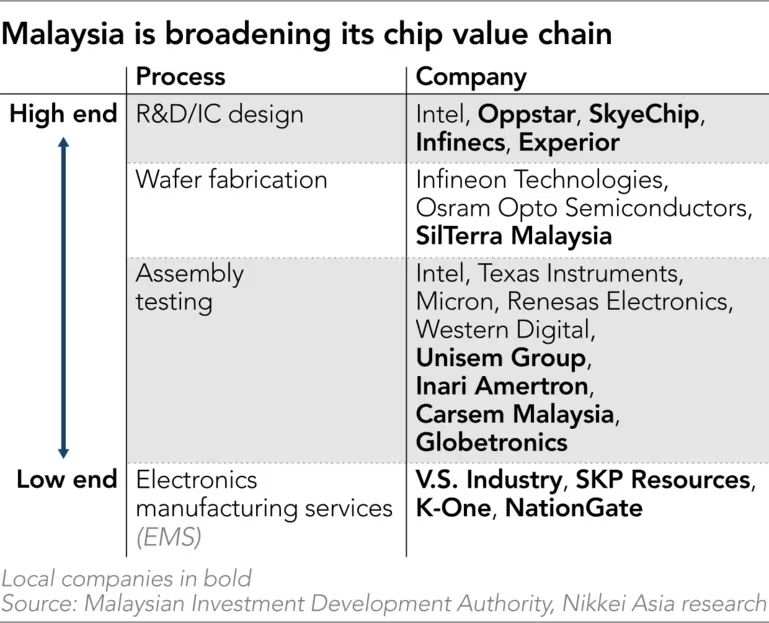
“Efforts are also ongoing to boost the semiconductor ecosystem through the New Industrial Master Plan (NIMP) 2030, which includes attracting wafer fabs and advancing packaging, assembly, and testing capacities to reinforce Malaysia’s global industry position,” he said in a reply to a post on X here on Sunday.

Tengku Zafrul was replying to a post by a local financial media quoting Amro on the Malaysian economy and the year-end peak of the semiconductor upcycle.

According to Amro, Malaysia’s gross domestic product is expected to grow by 5% this year  2024, outpacing Asean’s average of 4.8%.

Amro also said that economic growth in the regional bloc is expected to improve, premised on higher exports, on the back of the semiconductor upcycle, continued strength in the US goods consumption, and robust demand for travel and services.  

Apart from that, Tengku Zafrul said that Semiconductor Equipment and Materials International (Semi) has reported a global semiconductor manufacturing industry recovery, with increasing electronics and integrated circuits sales. 

He said that Malaysia’s semiconductor sector  is also poised for significant growth in the latter half of 2024, bolstered by a World Semiconductor Trade Statistics prediction of a 13.1% market rebound.

“Malaysia achieved a historic high in approved investments of RM329.5 billion in 2023, a 23% increase from the previous year, with foreign investments constituting 57.2% of the total (approved investments),” said Tengku Zafrul.

Source: Bernama

Zafrul: Plans in place to enhance Malaysia’s E&E ecosystem, prepare for global minimum tax implementation


Content Type:

Duration:

The Automotive High Tech Valley (AHTV), a mega project in Tanjong Malim, Perak involving an investment of RM32 billion, will give a positive impact in terms of price and development of property, not only in Batang Padang but Bidor as well.

Perak Menteri Besar Datuk Seri Saarani Mohamad said the project will transform Tanjung Malim into a global automotive hub for new energy vehicles (NEV) while expanding to include talent development, research and development, urbanisation as well as offer job opportunities to 370,000 throughout the construction and 160,000 once completed.

He said the state government through the Lembaga Perumahan Hartanah Perak (LPHP) will take the initiative to prepare new housing projects to cater for the high demand in the district.

Saarani said the AHTV mega project would certainly demand the availability of housing units to meet the demand for accommodation in the long run.

“A part of the important aspect will be that it would influence the development of social community in the surrounding areas through various projects being carried out in the Bidor area,” he told reporters after opening a housing project and Hari Raya Aidilfitri open house, here today.

Also present were State Housing and Local Government Committee chairman Sandrea Ng Shy Ching; Perak Human Resources, Health, Indian Community Affairs and National Integration Committee chairman A. Sivanesan and Demi Hartajaya Sdn Bhd managing director Vincenns Lim.

Source: Bernama

Automotive High Tech Valley project can give positive economic impact to Bidor, says Perak MB


Content Type:

Duration:

With some Japanese multinational corporations (MNCs) looking beyond Singapore to base their regional headquarters due to the rising cost there, Malaysia has what it takes to position itself as a viable destination, say economists.

Sunway University economics professor Dr Yeah Kim Leng said Malaysia’s investment promotion efforts and its rising competitiveness in attracting multinationals to relocate from Singapore and elsewhere are gradually bearing fruit.

“Its well-developed physical, financial and logistics infrastructure, harmonious industrial relations, multilingual workforce and embedded global value chains are gaining increasing attention among foreign investors looking at opportunities in the dynamic Asean and Asian region as a whole,” he said.

By further enhancing government administrative efficiency and coordination effectiveness, as well as sharper policies focusing on facilitating trade and investment, Malaysia would become even more attractive as the next best alternative to Singapore, which is facing rising costs and growth constraints, he added.

“In addition to presenting opportunities for firms here to plug into the global value chains created by MNCs, domestic suppliers and service providers will need to up their game in terms of product and service quality, reliability and cost-efficiency.

“The efficiency of local supply chains will have a ‘crowding in’ effect that would further boost Malaysia’s appeal as a global service and manufacturing hub,” Prof Yeah added.

Economist Geoffrey Williams said despite sharing similar advantages with Singapore, such as the use of English language, high-quality workers and regional access, Malaysia has the edge over the city-state in terms of being cost-effective.

“There are also some good companies in key sectors such as technology and finance to work with in Malaysia.

“Against Indonesia and Vietnam, these advantages are also helping, but the Malaysian market is small. Vietnam is three times bigger and Indonesia is nine times larger.

“They are also opening up directly to MNCs,” he said.

Although the recent surge in applications and approvals for investments is positive, it must be converted into actual investments, Williams said.

“Historically, only 26% of foreign direct investment (FDI) approvals result in actual investment.

“So, the process must be streamlined with less red tape, quicker approvals of working permits, easier access to financial help and even to open bank accounts, and in general, a more welcoming low-tax, low-regulation, agile and competitive ecosystem is needed,” he added.

Malaysian Institute of Economic Research (MIER) head of research and senior research fellow Dr Shankaran Nambiar said by and large, Malaysia has “excellent infrastructure” although it will have to be constantly upgraded.

“All we need to do is to fine-tune some of our existing assets and put in place some structural changes. More could be done to reduce bureaucratic processes.

“Similarly, the offerings and roles of the central and state agencies can be brought into closer alignment,” he said.

More challenging would be to develop talent consistent with emerging technologies and to bring research and development (R&D) up to mark, he said.

“If we could attract FDI with our R&D capacity, that would be a real investment-puller,” Shankaran added.

Nikkei Asia recently reported that although Singapore is unlikely to be dethroned as the leading hub for Japanese companies, Malaysia and Thailand are potential alternatives.

The report also noted that printing ink maker Sakata Inx did not choose Singapore as its regional head office base, despite already having a presence in the region, but instead established it in Malaysia due to tax incentives.

According to the findings of a poll by the Japan External Trade Organisation released in March, among Japanese companies which had their regional headquarters in Singapore, 31% had partly relocated their functions to another country or were considering doing so.

In the 2019 edition of the survey, only 7.4% companies had indicated the same.

In a 2023 survey by the European Chamber of Commerce in Singapore, 69% of respondents indicated that they were willing to move some personnel out due to the rising cost of operations in the city-state.

Meanwhile, the Malaysian Investment Development Authority (Mida) reported a historic investment performance in 2023, with approved investments valued at RM329.5bil across various economic sectors.

InvestKL attracted a record-breaking RM8.7bil in FDI in 2023, a 300% jump from the RM2.79bil in 2022.

About 66% of these investments, valued at RM19.74bil, have already materialised. This translates into the creation of 27,000 executive jobs, of which 74% has been filled, said InvestKL.

It added that 12 leading global corporations from the Americas, Europe and Asia regions drove the FDI.

InvestKL chief executive officer Datuk Muhammad Azmi Zulkifli said in March that the unprecedented FDI into Greater KL showcases the city’s attractiveness across diverse sectors such as technology, healthcare, finance and engineering, signifying a major achievement in efforts to attract high-value activities.

Source: The Star

Malaysia is next best bet – Country can position itself as viable alternative to Singapore


Content Type:

Duration:

THE electric vehicle (EV) industry has a lot of ground momentum driving its growth and adoption globally, but there are still key chokepoints that could impede any widespread adoption locally – at least for the moment.

No doubt, the EV sector is still touted as the biggest shift in the automotive industry that is still in progress since the development of the petrol internal combustion engine (ICE) which took off in the 20th Century.

Apart from the promise of vehicles powered by clean energy, EVs are by and large still bought by the top-20 income group in the country due to affordability issues, arising from the current taxation structure and limitations put in place to protect the local automotive supply chain.

It will likely continue to be this way at least until Proton Holdings Bhd and Perusahaan Otomobil Kedua Sdn Bhd or Perodua launch their own EVs and the government eventually opens this space up to more competition, which may then drive further growth in EV sales.

This may provide a hint of what may be to come for the EV industry locally and how this might challenge and eventually alter the outlook for ICE vehicles and its supply chain ecosystem in Malaysia.

At present, China is seen as the prime country mover of the global EV industry on its ability to change and challenge the industry’s status quo.

According to the International Energy Agency or IEA in its Global EV Outlook 2023, China dominates global sales of EVs and accounted for around 60% of global electric car sales last year.

More than half of the electric cars on roads worldwide are now in China, while Europe and the United States come in at second and third.

Of late, the industry in China has seen fierce price wars, with recent EV cars being priced from as low as US$9,700 for the new BYD Seagull.

It is likely that prices of such cars would continue to drop even further, especially if EV batteries become more efficient and cheaper in the future. Batteries presently make up about half of the selling price of an EV.

The recent decision by US-smartphone maker Apple Inc to abandon its plan to build EVs only highlights the risks it is avoiding to compete in a space which is seeing a strong price war globally.

China-based smartphone and appliance maker Xiaomi’s founder and chairman Lei Jun reportedly expressed he was “very shocked” at Apple’s decision, stressing Xiaomi remained firmly committed to building EV cars. He Xiaopeng, chairman of Guangdong-based carmaker Xpeng, expressed similar sentiment about Apple’s decision to abandon its car plans.

Xiaomi recently launched a sport utility vehicle (SUV) in China, code-named SU7, at a starting price of RM141,525. The SU7, reportedly looks and feels similar to a luxury SUV but at half the price, with EV technology and smart features installed; and it has already attracted a long waiting line of buyers in China, demonstrating how competitive this space will potentially get, moving forward

Industry analysts surveyed agree that the main driving factor for the global push towards EVs is the presumed threat of climate change and the ambition of achieving broader environmental, social and governance (ESG) goals of any particular country.

They also note the barriers to entry of the EV space have been lowered in recent years, especially for an existing smartphone maker, as battery EV cars (BEVs) are often likened to a smartphone on wheels.

Sales acceleration

China is a net oil importer faced with a longstanding issue of air pollution. This is likely a push factor for it to further grow its EV sector but it is notable that Norway, which is a net oil and gas exporter, stands out as an exception to the rule.

Due largely to a change in taxation regimes for ICE vehicles in Norway, the EV industry has grown strongly there in the last couple of years and EVs constituted 93.9% of the country’s passenger auto registrations in January 2024 with BEVs at 92.1% of the month’s sales figures.

Norway is the country with the highest share of EV sales in the world now, closely followed by other European countries such as Iceland at 50% in 2023 and Sweden at 51.8% in February 2024.

The World Resources Institute notes that a common pattern is seen in EV sales where in every country, once EV sales reached 1%, they accelerated.

“This acceleration happened faster in some places than others, but all are following an S-curve pattern,” it points out.

But a conducive tax or duty structure in place to encourage EVs also plays a determining role whether any take off or growth in EVs would eventually happen.

Case in point is the United Kingdom where demand for ICE vehicles has risen and EV demand has fallen after incentives for drivers buying new EVs were scrapped in 2022.

Data coming out from Europe, the frontier region for ESG-friendly policies, meanwhile, saw EV sales falling as well earlier this year as governments there stop subsidies for EV purchases and reconsider their ambitious plans to transition from ICE to EVs.

The market share for EVs in the European Union has reportedly shrunk from 14.16% last year to some 12% at the start of 2024.

Local scene

Back home, expectations are high that cheaper EVs would soon dominate the landscape and sales of the auto industry, especially once Proton and Perodua get into the EV-making business.

Proton New Technology Sdn Bhd (Pro-Net), which is a unit of Proton that’s selling the smart #1 EV, says it is actively working to make BEVs more accessible through initiatives such as affordability programmes and expanding charging networks.

“Malaysians can look forward to a future with more affordable BEVs, reflecting evolving market dynamics. Current pricing strategies by industry players strike a balance between affordability and essential factors such as acceptable range and car specifications, performance and ecosystem support,” Pro-Net’s chief executive officer Zhang Qiang tells StarBizWeek.

“It is foreseeable that EVs will become prevalent in Malaysia, much like in countries such as China, but this transition will take time. Several factors need to align for widespread adoption to occur,” he notes.

Zhang says Proton remains committed to its vision of launching its own BEV sooner than 2027.

It believes the fast growth in the EV industry will continue this year even as it is still growing from a small base.

“The market share for BEVs has seen significant increase. The EV sales volume has increased from 3,079 units in 2022 to 11,624 units in 2023, and the market share has increased to 1.45% from 0.43%.

“Many new products like the smart #1 and Tesla Model 3 have been launched, reinforcing our belief in the market’s potential for fast growth in the coming years,” Zhang says.

But he also notes that the success of Malaysia’s BEV ambitions hinges on factors like affordability, range and charging availability.

“While Malaysia is progressing in the BEV sector, continued investment in research and development, innovation in battery technology, and policy support for BEV adoption are needed for the country to establish itself as a regional BEV powerhouse,” he adds.

He expects further deployment and development of charging infrastructure locally, thus alleviating range concerns and bolstering consumer confidence in EVs as sales of such vehicles rise.

“Collaborative efforts between government bodies and private companies ensure continuous improvement in charging networks, further incentivising BEV adoption,” he adds.

Leading the change

Meanwhile, mass production of Perodua’s EV is expected to start at end-2025, according to the Minister of Investment, Trade and Industry Tengku Datuk Seri Zafrul Abdul Aziz.

This is in line with Perodua’s appointment as the lead in production of affordable EVs under the New Industrial Master Plan 2030.

In the completely knocked down (CKD) space for EVs, apart from Proton and Perodua, several companies have so far come public with their plans to venture here.

BYD is another major player in the EV space in the country which distributes its vehicles locally via a distribution agreement with Sime Darby Motors.

Another company, Chery Auto Malaysia will reportedly start local CKD assembly for the Chery Omoda E5 EV crossover in the second quarter at Sime Darby’s Inokom plant in Kulim, Kedah.

While NexV Manufacturing Sdn Bhd, which is a joint venture (JV) between Malaysia-based glove maker Careplus Group Bhd and EV company GoAuto Group Sdn Bhd, will build a new energy vehicle (NEV) manufacturing and assembly plant in Rembau, Negri Sembilan.

The plant has a planned capacity of 30,000 vehicles per year wherein a-third will comprise the assembly of Neta models through the JV partnership.

The JV-co said it is also open to working with other NEV brands that want to assemble CKD passenger and commercial EVs or electric motorcycles in this plant.

Another company which is venturing into this CKD EV space is Bursa Malaysia-listed EP Manufacturing Bhd which has broken ground on a RM100mil semi-knocked-down facility in Melaka to scale up manufacturing operations dedicated to energy-efficient vehicles (EEVs) and EVs.

The company aims to start phase one of production in the third quarter of this year and plans to hit a production milestone of 6,000 units by the end of 2024.

“By 2026, we project to ramp up production to 30,000 units annually,” its group CEO Ahmad Razlan Mohamed says.

EP Manufacturing has entered into a collaboration agreement with China’s Great Wall Motor for local assembly and manufacturing of prominent GWM models such as SUVs, pick-up trucks and EVs.

It has also signed a memorandum of understanding with Beijing-based BAIC International Development Co Ltd to produce selected models of their SUVs, ICE vehicles and EVs for Malaysia and other South-East Asian markets.

With its substantial investments here in this space, Ahmad Razlan also expects BEV to be the future of cars in Malaysia and expects sales of EVs to be on a significant growth trajectory in the near future.

“The significant growth anticipated is despite the current price advantage of ICE vehicles. The global shift towards sustainable transportation solutions, coupled with increasing awareness of environmental concerns and government initiatives to promote clean energy adoption will continue to drive the demand for BEVs,” he says.He points out that a total of 10,159 passenger and commercial EVs were sold in Malaysia last year, from 2,631 units sold in 2022.

“The number of hybrid vehicles sold in 2023 was 28,055 units (up from 2022’s 19,988 units). Both fully electric and hybrid cars combine to give a total number of 38,055 electrified vehicles sold in Malaysia in 2023. We can see the rising demand,” Ahmad Razlan says.

“There are long-term benefits of BEVs beyond just the initial purchase price because BEVs offer lower operational costs, reduced maintenance requirements and contribute to a cleaner environment,” he adds.

He also envisages a time when EVs would become more affordable eventually in the sub-RM100,000 range, especially when battery technology advances and economies of scale drives down production costs.

“We understand the importance of affordability in driving widespread adoption of EVs. While it’s difficult to predict exact timelines, I firmly believe that the foreseeable future holds promise for making EVs more accessible and competitive in the market, particularly in the CKD segment,” he says.

EP Manufacturing notes it is also seeing a positive uptake of its BEV two-wheelers called Blueshark with local sales rising, especially in the logistics and food delivery industries.

“However, it’s crucial to acknowledge that the full realisation of the potential of electric two-wheelers hinges also on the development of supporting infrastructure, particularly charging and swapping stations. Blueshark currently has 15 battery swapping stations across the Klang Valley and targets to expand this to 50 by the end of 2024,” Ahmad Razlan says.

Thus, it is becoming apparent that the widespread availability of charging stations, quicker charging times and improvement in battery technology will be the main factors that hold the key to advancements in the local EV sector.

Pro-Net’s Zhang notes: “As BEV sales rise, so does the deployment of charging infrastructure, alleviating range concerns and bolstering consumer confidence in electric vehicles.”

A wide charging network plays a key enabling role to encourage EV adoption among the masses.

On this front, Petroliam Nasional Bhd’s unit, Gentari, is the largest fast-charging network provider in Malaysia as certified by the Energy Commission.

But providing charging services is not as easy as thought as most EV charging service providers globally are still operating at a loss.

Overcoming this hurdle would be key to increasing charging networks in any country – and a good charging network is key, especially to deal with range anxiety among EV owners.

BloombergNEF noted earlier this month that charging operators, who make money from electricity sales, are not profitable, but some companies here have begun to generate positive earnings before interest, depreciation and amortisation.

In Malaysia, Tengku Zafrul acknowledged in January this year that the number of EV charging stations in the country at 1,500 is still far from the initial target outlined under the Low Carbon Mobility Development Plan 2021-2030.

Tengku Zafrul reportedly said the target of 10,000 EV charging stations operating in the country by 2025 will also be reviewed.

He noted that setting up such charging stations involves many processes and agencies, including the Energy Commission, local authorities and other parties.

The minister said there are plans to make the approval process more seamless and quicken the approval period, following feedback that setting up a charging station is taking too long a time.

Based on these, it is likely that when a more widespread charging network is present in the country with improved charging wait times, that EV sales will pop even further as range anxiety dissipates.

Source: The Star

Will EVs take off in Malaysia?


Content Type:

Duration:

His Majesty Sultan Ibrahim King of Malaysia expressed his hope for increased investment from Chinese companies within Malaysia as this will lead to the creation of more job opportunities for the people in this country.

His Majesty expressed this sentiment when receiving the Ambassador of China to Malaysia, Ouyang Yujing, who was accompanied by FAW Hongqi Global president Wang Lingyu, as well as renowned businessmen Tan Sri Lim Kok Thay and Datuk Lim Chee Wah today.

The audience with Sultan Ibrahim was to discuss bilateral relations between Malaysia and China as well as current issues related to both countries.

“In the meeting, His Majesty shared his thoughts on the direction of diplomatic relations between the two countries and emphasised the importance of identifying broader cooperation opportunities,” according to a post on Sultan Ibrahim Sultan Iskandar Facebook page today.

In his post, Sultan Ibrahim highlighted China’s status as one of the world’s major economic powers and emphasised its significant role as a key trading partner for Malaysia.

As such,  the King hopes that Malaysia will capitalise on its unique capabilities to maximize and enhance trade volume, foster technology exchanges and further expand its exports to China.

During the same meeting, His Majesty was presented with the Hongqi L5, a car manufactured in China, making him its inaugural owner worldwide.

This retro-styled vehicle, crafted by the FAW Group, is utilised by China’s top leaders during state and diplomatic events.

Source: Bernama

King expresses hope for increased investment from Chinese companies in Malaysia


Content Type:

Duration:

Malaysia’s vibrant semiconductor industry has been the talk of the town of late as the country emerges as a new semiconductor powerhouse with the global spotlight on Penang.

The World Economic Forum (WEF) stated on its LinkedIn page that Penang has major industry players from Europe and the United States setting up units or expanding existing operations as they seek to build new global supply chains for these vital components.

“Semiconductors are also known as microchips or integrated circuits, they are the fundamental building blocks of today’s digital world,” it said in a video post today.

It noted that there are more than 100 billion semiconductors in daily use around the world, but the supply chain is increasingly vulnerable because semiconductor manufacturing is highly concentrated.

According to the WEF, Malaysia has become a destination for those seeking new options.

“In 2023, Penang attracted US$12.8 billion in foreign direct investment. More than in the previous seven years combined, Intel, for example, has invested US$7 billion (US$1 = RM4.76) in a new plant in Penang,” it noted.

Prime Minister Datuk Seri Anwar Ibrahim posted the WEF video on semiconductor on his own Facebook account and said that under the MADANI Government, Malaysia is committed to building a new, high-tech, innovation-driven future for the country. “With high value investments from global firms, resulting in high-paying jobs for more Malaysians, I have absolute confidence in the potential of every Malaysian, in the bright prospects for our economy, and our shared future as a nation,” he said.

Similarly, Minister of Investment, Trade and Industry Tengku Datuk Seri Zafrul Abdul Aziz posted the same WEF video on his ‘X’ platform with the caption ‘Malaysia – the new semiconductor powerhouse’.

Besides the WEF, major media also reported that Penang has in recent years won new chip sector investments from multinationals, including Lam Research, Infineon Technologies, Texas Instruments, Micron Technology, Bosch, Advanced Semiconductor Engineering (ASE) and Intel.

According to the international media, the investments have reinforced Malaysia’s entrenched position in the late stages of the semiconductor supply chain, particularly chip assembly, testing and packaging, areas in which it holds a 13 per cent share of the global market.

“Chip design could be a more promising area for Malaysia than fabrication. A few local companies, such as Oppstar Technology, can already provide design services for advanced chips.

“Malaysia must quickly seize opportunities in chip design to move up the semiconductor value chain as competition intensifies,” one report said.

The international media also noted that when Oppstar listed on the Malaysian stock exchange last year, investors flocked to the initial public offering despite a globally weak public listing activity and that it was oversubscribed by 77 times, pushing the stock price up 286 per cent on the first trading day.

Founded in 2014, Oppstar designs transistor models used for chips from the 20-nanometer level and below, all the way to the most advanced three-nanometer chips.

Source: Bernama

Global spotlight on Malaysia as it emerges as semiconductor powerhouse


Content Type:

Duration:

Electrical vehicle (EV) adoption in Asean will continue to increase due to favourable regulations, launch of new models at lower prices by Chinese EV makers as well as large automotive production base and significant demand in the region, according to analysts.

Maybank Investment Bank Bhd (Maybank IB) said six markets reported a four-fold jump in fully electric (FE) car sales to 141,095, of which Thailand and Vietnam were the top two countries, forming 77 per cent of the sales in 2023.

“Indonesia had FE car sales of 17,062, (+65 per cent) year-on-year (yoy) and Malaysia saw 10,159 sold (+286 per cent) yoy.”

“Overall, FE share of car sales was 6.2 per cent for ASEAN-6 markets in 2023 versus 1.6 per cent in 2022.”

“As more low-priced EV models are launched in 2024 and 2025, we expect Asean’s EV adoption rate to increase further. Another driver would be direct subsidies to buyers and the addition of charging points,” the bank said in a research note today.

Maybank IB said regulatory push and cheaper EVs are the key to EV adoption, which is clearly visible in the EV adoption in Thailand.

“Thailand is offering cash subsidy to EV buyers as well as lower excise and import duty for original equipment manufacturers (OEMs) and the Thai government is also incentivising local manufacturing.

“Indonesia is offering duty cuts and pushing domestic manufacturing. The other way to push EV sales would be to increase the prices of petrol by reducing subsidies, which can be adopted by Malaysia. Finally, cheaper EVs, a game mastered by Chinese OEMs, will make it difficult for Japanese/Korean OEMs to compete in Asean markets,” it added.

Globally, the sales of electric car sales reached 14 million in 2023, (+34 per cent) yoy, making up 19 per cent of total car sales.

“A forecast expects EV car sales growth to slow in 2024 to 22 per cent yoy due to saturation in China and Europe, and uncertainty in the US ahead of the November presidential election and policy continuity. Weak sales by the leading EV companies in the first quarter this year confirms this concern,“ it said.

Source: Bernama

Asean to sustain EV growth on low base while world market slows


Content Type:

Duration:

Penang is set to become a catalyst for Malaysia to move up the chip value chain and solidify its position as the preferred investment destination for electrical and electronics and semiconductor production in the region, said Chief Minister Chow Kon Yeow.

He said with over 50 years of industrial excellence and leadership, Penang can contribute to Malaysia’s goals as envisioned in the New Industrial Master Plan 2030 (NIMP 2030).

Chow noted that Penang, dubbed the “Silicon Valley of the East”, has always championed back-end chipmaking processes within the country and the region while the state has consistently played a pivotal role in contributing to Malaysia’s annual gross domestic product (GDP) growth.

“However, for Penang to contribute further to Malaysia’s attainment of a high-income nation, bold and innovative ideas are required not just from foreign firms but from the grassroots.

“Therefore, local tech startups that hone skills in integrated circuit design and research and development are capable of pushing Malaysia further up the value chain,” the chief minister said in a Facebook post today.

Earlier, Nikkei Asia published an article, titled “Malaysian ‘Silicon Valley’ seeds homegrown chip startups”, highlighting that the time is ripe for Malaysia to move upstream into chip designing.

Chow, who is also the state Finance, Economic Development, Land and Communications Committee chairman, pointed out that Penang’s growth trajectory looks promising with Penang International Airport expansion and Silicon Island in the pipeline.

Touching on the Penang Light Rail Transit (LRT) Mutiara Line project, he said that from boosting the property market to potentially attracting foreign direct investments, the long-awaited LRT project signifies a significant step towards more equitable development across all states.

“The LRT project is not only a relief for those who battle traffic congestion during festive seasons but also holds promising economic benefits, as highlighted by analysts,” he noted.

The federal government officially took over the LRT project from the state government following the Cabinet’s decision to approve the suggested development of the project on March 22, 2024.

Source: Bernama

Penang on track to become catalyst for Malaysia to move up chip value chain: Chief Minister


Content Type:

Duration:

Prime Minister Datuk Seri Anwar Ibrahim said he is confident in Malaysians’ ability to realise the country’s potential in economic development, especially in high-value investments. 

Sharing a video report from the World Economic Forum Facebook page on Malaysia’s growing potential in the semiconductor industry today, Anwar said the Madani government is committed to building a new, high-tech and innovation-driven future for the country. 

“With high-value investments from global firms, resulting in high-paying jobs for more Malaysians. 

“I have absolute confidence in the potential of every Malaysian, in the bright prospects for our economy, and our shared future as a nation,” Anwar posted on his Facebook account.

The World Economic Forum video report highlighted that Malaysia, especially Penang, is emerging as a new semiconductor powerhouse after the state secured US$12.8 billion (US$1 = RM4.76) in foreign direct investment in 2023.

Source: Bernama

PM Anwar: Malaysians well-equipped to unleash economic potential


Content Type:

Duration:

The unity government is committed to stimulating the country’s economic growth through building new, high technology and innovation-driven future for the nation, Prime Minister Datuk Seri Anwar Ibrahim said.

Anwar, who is also the Finance Minister, said high value investment from global firms will result in the creation of high-paying employment opportunities that will benefit the people in the country.

“I have absolute confidence in the potential of every Malaysian, in the bright prospects for our economy and our shared future as a nation,” said Anwar in a posting on his Facebook account today.

The social media posting was accompanied with a Facebook post by the World Economic Forum, which highlighted Malaysia as the new semiconductor powerhouse.

“Malaysia’s semiconductor industry is booming. It is centered in Penang. Major players from Europe and the United States are setting up shop or expanding their existing operations (here in Malaysia).”

The World Economic Forum, in the same social media posting, noted that Malaysia has become a destination for firms seeking new options to set-up and expand their operations.

“In 2022, Penang attracted US$12.8 billion in foreign direct investment which is more than in the previous seven years combined.

“Intel, for example, has invested US$7 billion in a new plant in Penang.”

Source: NST

PM vows to propel country’s economic growth through innovation


Content Type:

Duration:

Former Intel engineers attempt to push Penang to higher end of value chain

When chip design company Oppstar listed on the Malaysian stock exchange last year, it was a watershed moment for the Southeast Asian country and its ambitions to revitalize its semiconductor industry.

Amid globally weak public listing activity, investors flocked to the initial public offering, the first by a chip design house on the local bourse. It was oversubscribed by 77 times, pushing its stock price up 286% on its first trading day.

“Being the first one is always tough,” founder and co-CEO Ng Meng Thai told Nikkei Asia. “When we started the IPO process, we feared that many local investors might not know our industry well. So it took us an effort to go and explain.”

Since then, executives from leading American, Japanese and European chip firms have been regular visitors to the company’s office in Malaysia’s northern state of Penang, where its staff of 280 design chips to clients’ specifications.

“It’s been quite a change from the early days, when we were knocking door to door,” said Ng, a 59-year-old former Intel designer. “We were the very few that went against all odds.”

But the fact that Oppstar is the only chip design company listed on the Kuala Lumpur stock exchange is also a sign of how far the country — once known as the ‘Silicon Valley of the East’ — still has to go if it is to return to its former tech glory.

“We would need more Malaysian front-end companies to excel and have an increased significant presence on the international stage in order to lift the country’s profile within the front-end markets,” said Steven Chan, senior equity analyst at Malaysia’s Affin Hwang Investment Bank.

The state of Penang has been known for decades as a cluster for back-end chipmaking processes, including packaging, assembly and testing, which are less advanced than wafer fabrication and other so-called front-end processes.

Startups like Oppstar are looking to change that by breaking out of the back-end and into areas like chip design.

Malaysian Trade Minister Zafrul Aziz says the government seeks to foster such activities. “Nurturing a vibrant startup culture is crucial,” he told Nikkei Asia.

Founded in 2014, Oppstar designs transistor models used for chips from the 20-nanometer level and below, all the way to the most advanced 3-nanometer chips.

“We can work with almost anyone from different industries,” said co-CEO Cheah Hun Wah, who was Ng’s former colleague at Intel.

Unlike the global chip giants Intel and Nvidia, which mainly design and sell their own branded chips, Oppstar is a contract designer, developing bespoke chips for clients. These designs are then manufactured by dedicated makers known as chip foundries.

Oppstar says its experience with various foundries, which all have their own complex set of rules, has allowed it to secure projects from global clients as supply chains shift in response to geopolitical tensions.

Malaysia has emerged, or rather re-emerged, as a major destination for chip investment as companies like Intel and Infineon Technologies seek to diversify their production footprints. Since Intel opened its first overseas assembly plant in Penang in 1972, the country has played an important role in the global chip industry. Today it is the world’s sixth-largest semiconductor exporter, and the largest contributor to U.S. semiconductor imports, at over 20% by value annually, more than Taiwan, South Korea and Japan.

But despite its long history in the industry, Malaysia was eclipsed by South Korea and Taiwan in the more technologically advanced areas of chip manufacturing — it has not produced its own version of Samsung Electronics or Taiwan Semiconductor Manufacturing Co. — while the U.S. is the dominant player in chip design.

Failing to get into the front-end is a missed opportunity for Malaysia. Almost 90% of the world’s total semiconductor equipment spending is for wafer fabrication processes, according to industry association SEMI.

“Tapping into that [front-end] market would be crucial in fueling the next stage of [Malaysia’s] semiconductor growth,” said Chan of Affin Hwang Investment Bank.

But fabrication plants are massively expensive — a cutting-edge chip plant built by TSMC or Samsung can cost billions of dollars.

With this level of spending beyond most local companies, Wong Siew Hai, president of Malaysia Semiconductor Industry Association, sees the more asset-light chip design business as a “key area” for newer entrants. “There are now many [venture capital] funds focusing on Malaysia,” Wong said, “and we encourage such talents to seek them for support.”

Fong Swee Kiang, another Intel veteran, shares Wong’s view.

Fong founded semiconductor design house SkyeChip in 2019, shortly after leaving chip developer Broadcom. In charge of global operations at the American company, he was on the frontline as the U.S.-China chip war broke out in 2018.

“There were restrictions on selling to certain customers. We started to feel the force of deglobalization,” Fong recalled of the U.S. export controls first imposed under the Trump administration. But this had a silver lining, he said, as it created more markets and lowered the entry barrier for smaller chip designers. “In the old days, there was one single market [the U.S.] with a lot of giant players.”

As the first local Intel engineer sent to the U.S. for training, Fong was responsible for setting up the company’s design center in Penang, which eventually grew to 1,500 people.

Today, SkyeChip designs AI chips for data centers, automotive and connected devices and boasts a dozen or so of its own patents on next-generation chips and other technologies, according to Fong.

In Asia, the contract chip design sector is crowded with companies like Taiwan’s Faraday Technology, Global Unichip, Alchip Technologies and Japan’s Socionext. While the global on-shoring of semiconductor production, as Fong pointed out, opens up more opportunities for challengers like SkyeChip and Oppstar, industry players say the trend is also exacerbating the long-standing problem of a shortage of qualified chip engineers.

Attracting engineers is a particular problem for Malaysia because of the strong presence of large multinationals offering higher salaries than local companies. Many locals also choose to work in neighboring Singapore, another semiconductor cluster.

“One of the key areas we need to look into is how to grow talent within [Malaysia] and to attract talents from abroad,” said Kalai Selvan Subramaniam, a former Intel designer and CEO of Malaysian chip design firm Infinecs Systems.

Attracting and retaining talent is not the only challenge to growing Malaysia’s chip industry. Investment is booming in Penang, but the cluster still relies heavily on foreign multinationals. The state attracted 60.1 billion ringgit ($12.65 billion) in foreign direct investment in 2023, according to government data, while domestic investment has hovered at around 3 billion ringgit over the years, significantly smaller than the FDI levels.

“FDI is a good thing, but it also has some downsides,” said Experior CEO Eugene Khoo, another former Intel colleague of Oppstar and SkyeChip founders. “It kind of pigeonholed us in the luxury boxes.” Experior tests and verifies new designs before they are put into mass production to ensure the manufacturing process goes smoothly. The company also provides training for universities and companies to help expand the local talent pool.

Developing a more advanced chip industry with a more skilled workforce is critical for Malaysia as other Asian countries with cheaper labor, like Vietnam, Thailand and India are also competing to build up semiconductor sectors. To that end, local officials and industry players say relying on FDI will not be enough.

Loo Lee Lian, CEO of InvestPenang, the non-profit arm of the state government, stressed that FDI is “only one of our areas of focus,” and that the state pushes foreign firms to localize their supply chain, or set up joint ventures as part of the criteria for approving projects.

“To fulfill our aspiration to move out from the middle income trap … we have to move up the value chain,” Loo said. “We cannot be competitive for commoditized products, or products that are too cheap.”

Source: Nikkei Asia

Malaysian ‘Silicon Valley’ seeds homegrown chip startups


Content Type:

Duration:

More Japanese multinational corporations (MNCs) are choosing Malaysia and Thailand over Singapore as the place for their regional hub to reduce costs and take advantage of new perks, according to Nikkei Asia.

One of these is printing ink manufacturer Sakata Inx, which set up a regional office in Malaysia in February ahead of operations starting either at the end of 2024 or early 2025.

Speaking to Nikkei, a Sakata spokesperson cited “tax advantages” as the reason for Malaysia’s selection for the regional head office.

This takes advantage of a Budget 2024 global service hub tax incentive, in which companies that set up regional headquarters here will receive preferential income tax rates of 5% to 10% for up to a decade among other perks.

Nikkei then said that Thailand is another choice for regional headquarters for companies seeking to also enlarge sales and production, adding that Nissin Foods Holdings moved its Southeast Asian headquarters from Singapore to Thailand in 2020.

It added that out of Singapore’s neighbours, Thailand is the most popular as a poll in March by the Japan External Trade Organisation (Jetro) found that 19 respondents who were planning or considering a move were considering heading there, while five chose Malaysia.

Quoting Jetro Singapore office deputy managing director Keisuke Asakura, Nikkei said that this is because Thailand has a concentration of production sites, and there is activity to relocate sales functions away from Singapore and its small market.

According to the Jetro poll’s results, out of the Japanese companies with regional headquarters in Singapore, 31% had partly relocated their functions to another country or were considering doing so.

“The share was up significantly from 7.4% in the fiscal 2019 survey,” said Nikkei.

It also added that many Japanese companies have moved specific functions such as sales or corporate planning out of Singapore instead of uprooting completely for its Southeast Asia neighbours.

On this, Asakura said that “partial relocations to Thailand are expected to accelerate for the purpose of reallocating functions, rather than full transfers” and cited rising office rents and other costs in Singapore.

Nikkei then added that Japanese companies are not alone in expressing concerns about Singapore’s rising costs, citing a 2023 survey by the European Chamber of Commerce in Singapore.

It said that while Singapore still has the advantage in location, language proficiency and financial services, 69% of respondents said they would be willing to move some personnel out, given the rising cost of operations.

This is not the first exodus from one Asian country to another, as companies moved from Hong Kong to Singapore following the 2019 protests.

However, when it comes to Singapore, the exodus will likely be limited to sales and similar functions for the time being.

Source: The Star

Malaysia’s tax incentives attracting Japanese corporations to set up regional hubs, says report


Content Type:

Duration:

Malaysian businesses can benefit from the immense potential of artificial intelligence (AI) by establishing comprehensive upskilling programmes and adopting advanced generative AI solutions, said Google’s global head of government affairs and public policy Karan Bhatia.

By doing so, they can position themselves as leaders in technology and drive economic growth, he said, adding that what makes generative AI different from other forms of AI that were introduced previously is user-friendliness, in terms of helping to solve everyday problems in people’s personal or professional lives.

People can use everyday language to interact with a generative AI chatbot or virtual agent as well as get it to answer questions, create content, produce images, and summarise documents, including conversations, stories, videos, and music.

“Even better, a single generative AI platform can deliver solutions for multiple use cases, creating a network effect.

“As the number of users and applications increases, the model is exposed to more data and becomes increasingly accurate and useful which in turn, encourages more users and, in a way, AI has the full potential to boost productivity and innovation in both the public and private sectors,” he told Bernama.

Karan said as a technology giant, Google is actively working with the leading businesses in Malaysia to adopt the latest technology in AI from Google Cloud.

For example, he said Maxis Bhd is leveraging Google Cloud’s enterprise-grade generative AI capabilities to unlock its data’s full potential, while Gamuda Bhd is embracing digitalisation and generative AI to drive innovation across its operations.

Bank Muamalat Malaysia Bhd, on the other hand, is tapping into Google Cloud’s capabilities in modern infrastructure, security, data analytics, and generative AI to enhance its operational efficiencies and customer experience.

Google contributes to building a safe and inclusive digital society

Recently, Google announced an initiative to equip Malaysian youth with future-ready skills focused on AI and enhance public service delivery with the help of cloud-native, AI-driven productivity tools, a move aligned with Malaysia’s MADANI Economy framework.

The initiative involves collaboration with the Ministry of Higher Education (MOHE) to upskill local youth from diverse backgrounds by providing 161 public universities, polytechnics, and community colleges in Malaysia with up to 500 Google Career Certificate scholarships each until the end of 2024.

This strategic initiative with MOHE marks a significant expansion of “Gemilang”, the digital training programme launched by Google in 2022 to help more Malaysians acquire digital skills – at no cost – for jobs in high-demand technology fields.

Karan said upskilling programmes like “Gemilang” and those offered by Google lead to benefits beyond just income level and higher revenues.

As AI technologies expand capabilities, new AI-related jobs such as prompt engineer and AI research scientist, among others, are emerging.

“We see AI as an opportunity to create new occupations, improve job quality, and generate significant benefits. In addition, the training programmes will enable organisations to get up-to-speed with the latest skills to help supercharge their productivity,” he said.

Karan elaborated that those organisations that use generative AI to speed up, automate, scale, and improve business processes stand to reap big benefits.

“Additionally, as the talent pool of highly skilled workers increases, homegrown companies are better positioned to innovate, develop cutting-edge products and services, and expand their reach. This contributes to the overall growth of employees and companies,” he said.

Since its launch, “Gemilang” has already provided 31,000 Google Career Certificate scholarships to benefit individuals in Malaysia, with 80 per cent of certificate graduates reporting a positive career outcome, such as a new job, promotion, or salary raise within six months of completion.

Importance of training programmes to bridge the digital talent gap

Karan noted that Malaysia has a fast-growing digital economy that is set to account for over 25 per cent of the country’s total economic output by 2025, with a potential to reach up to US$70 billion (US$1=RM4.738) in gross merchandise value by 2030.

“Training programmes that target the digital talent gap are critical to reaching this potential, ensuring businesses of all sizes are well equipped and prepared to fully capture growth opportunities,” he said.

In 2022, businesses and households in Malaysia unlocked RM51.5 billion in economic benefits from their use of Google’s AI-powered products and services.

Karan noted that Google is aware that more people want to learn new digital skills and get jobs in high-demand fields.

“That is why our ‘Gemilang’ programme aims to create opportunities for all Malaysians to do so at no cost,” he said, adding that Google is committed to supporting Malaysia’s digital growth ambitions.

AI is a once-in-a-generation opportunity to address some of the world’s most pressing challenges, like helping to reach climate goals, building sustainable growth, maintaining global competitiveness, and much more.

He explained that running generative AI at scale will require massive data storage and computing power, which requires investments in technical infrastructure like data centres.

“With the support of the Malaysian government, Google is now exploring the potential establishment of an in-country Google data centre to address not only growing demand for AI services but all the digital services that Google offers in Malaysia,” Karan added.

Source: Bernama

Google urges Malaysian businesses to embrace AI upskilling programmes


Content Type:

Duration:

Malaysia and Pakistan have agreed to explore opportunities to strengthen ties between the two countries, especially in trade and investment, said Prime Minister Datuk Seri Anwar Ibrahim.

Anwar said Pakistan’s Prime Minister Shehbaz Sharif conveyed the matter during a phone call he received from his Pakistani counterpart last night.

“During the phone conversation, we both wanted to explore opportunities to strengthen Malaysia-Pakistan ties, especially in the field of trade and investment.

“Praying that relations between Malaysia and Pakistan will continue to grow for mutual benefit, Insya-Allah,” he said in his Facebook post today.

He said that he also welcomed Shehbaz’s proposal to export halal meat from Pakistan to Malaysia.

Also discussed were various regional and international issues, including the situation in Gaza and Afghanistan.

“PM (Prime Minister) Shehbaz also praised Malaysia’s stance on the Palestinian issue,” he said.

Anwar said the two leaders also expressed hope that the ties between Malaysia and Pakistan would continue to be strengthened and Shehbaz also reiterated his invitation to Anwar to undertake an official visit to Pakistan as soon as possible.

The two leaders also exchanged Aidilfitri greetings.

Source: Bernama

Malaysia, Pakistan agree to strengthen ties in trade, investment – PM


Content Type:

Duration:

wpChatIcon