

2024 Archives - Page 52 of 77 - MIDA | Malaysian Investment Development Authority
English
contrastBtngrayscaleBtn oku-icon

|

plusBtn crossBtn minusBtn

|

This site
is mobile
responsive

sticky-logo

Tax incentive plan to attract investors to Forest City SFZ ready by month-end

A tax incentive proposal for Forest City Special Financial Zone (SFZ) to attract global investors will be finalised by the end of the month.

Menteri Besar Datuk Onn Hafiz Ghazi said the Ministry of Finance said this during a Special Meeting on Johor Development, chaired by Prime Minister Datuk Seri Anwar Ibrahim, on April 18.

“When examining several other leading financial special zones worldwide, various incentives are provided to attract the interest of global investors.

“The fiscal incentives discussed for SFZ Forest City include corporate tax exemptions and special income tax rates for skilled workers, as well as exemptions and special rates for stamp duty on property, and share transfer-related instruments.”

The tax incentive package to attract global investors to invest in SFZ Forest City, meanwhile, will be announced in a few months, he added.

He said this when answering oral questions at the Fifteenth State Legislative Assembly of Johor, in the Sultan Ismail Building, here, today.

Earlier, Chen Kah Eng (DAP-Stulang) wanted to know the status of the development of SFZ Forest City.

Meanwhile, Onn Hafiz, who is also Machap assemblyman, said the state government would conduct benchmark studies on several other leading international financial special zones to attract investments in SFZ Forest City.

He said SFZ was established to put Johor and Malaysia on the international finance and banking map.

“SFZ Forest City is not aimed at competing with any other financial special zone in the world, but rather, to act as a catalyst for increasing government revenue, besides providing thousands of job opportunities for the people of this state.

“The benefits SFZ Forest City will bring to the people are not only through the creation of thousands of new jobs, but also by enhancing economic growth and stimulating the state and national business sectors, as well as through the improvement of infrastructure, including roads and public transportation, which will bring about many advantages to the people,” he said.

Source: NST

Tax incentive plan to attract investors to Forest City SFZ ready by month-end


Content Type:

Duration:
Malaysia and Qatar have agreed to enhance investment cooperation between the two countries in the coming years, said Prime Minister Datuk Seri Anwar Ibrahim.

He said the understanding was reached when he met the Emir of Qatar Sheikh Tamim bin Hamad Al Thani, and was later mentioned in depth during a meeting with his counterpart, Sheikh Mohammed bin Abdulrahman Al Thani.

Also discussed was bilateral cooperation and facilitating investment and higher education which was then further discussed in a meeting with Sheikh Mohammed, who is also Qatar’s Foreign Minister, said Anwar.

“We both agree that investment cooperation between the two countries needs to be further enhanced in the coming years,” he said in a message on X today.

Anwar, who is also the Finance Minister, added that his official visit, which was at the invitation of Sheikh Tamim, was also aimed at continuing efforts and strengthening diplomatic ties and links that have already reached 50 years.

“The Malaysian delegation was then treated to a national banquet hosted by Sheikh Mohammed.

“Hopefully the bond of friendship between Malaysia and Qatar will continue to grow for mutual benefit,“ he said.

Earlier, Anwar was felicitated in an official reception and lunch at the Amiri Diwan, which is Qatar’s government hall, in conjunction with his maiden visit to the country.

The Prime Minister spent about 30 minutes with Sheikh Tamim, which was followed by a meeting with Sheikh Mohammed.

Last year, total bilateral trade between Malaysia and Qatar reached RM4.2 billion.

Source: Bernama

Malaysia, Qatar to enhance investment cooperation in the coming years – PM Anwar


Content Type:

Duration:

Estithmar Holding and Baladna are among Qatar’s largest companies by market capitalisation that attended a roundtable meeting hosted by Malaysia’s Ministry of Investment, Trade and Industry (MITI).

Established in 2014, Baladna, which is a public shareholding company, is Qatar’s largest dairy and beverage producer, supplying over 95 per cent of the country’s fresh milk.

Meanwhile, Estithmar Holding is a Qatari public listed company with a diverse portfolio of 51 companies operating in four strategic sectors namely healthcare, services, contracting and industries, as well as ventures.

The roundtable meeting with these captains of industry is part of Malaysia’s aggressive efforts to attract more high quality investments into the country.

More than 30 top executives and business leaders took the opportunity to meet with Prime Minister Datuk Seri Anwar Ibrahim, as he briefed them on the latest investment climate in Malaysia, while convincing them that the country could be their preferred investment destination and competitive trade partner.

Anwar, who is also the Finance Minister, is currently on a three-day official visit to the capital as part of his mission to increase Malaysia’s visibility as a potential investment destination to the Qataris.

The companies that attended the roundtable are mostly from the services, manufacturing as well as investment sectors.

Other companies that attended include Taleb Group, Morex Group, Tamam Capital and Al Mana Group.

Anwar spent about one hour in an interactive session to engage and update Qatari businessmen on the Malaysian economy, business ecosystem as well as the New Industrial Master Plan 2030.

The session was moderated by MITI Minister Tengku Datuk Seri Zafrul Abdul Aziz.

Apart from attracting potential investments through this meeting, Malaysia is also keen to woo more interest and increase awareness from the Qatari business community to source more products as well as services from Malaysia.

This is seen as vital as the two countries embark on a new phase of cooperation as they celebrate the 50th anniversary of bilateral trade this year.

Last year, Malaysia’s total bilateral trade with Qatar amounted to RM4.2 billion, as the Gulf state became Malaysia’s fifth-largest trading partner, sixth-largest export destination and sixth-largest import source from the West Asia region.

From January to March 2024, Malaysia’s total trade with Qatar increased by 178.4 per cent to US$303.9 million (RM1.43 billion) compared with US$116.7 million (RM514.9 million) for the corresponding period in 2023.

According to the International Monetary Fund, Qatar is among the richest countries in the world, with a per capita income of nearly US$96,610 in 2020.

It was reported that petroleum and natural gas are the cornerstones of its economy, with Qatar home to one of the largest reserves of natural gas in the world.

Source: Bernama

Qatar ‘big guns’ of industries attend roundtable meeting with PM Anwar


Content Type:

Duration:

THE Ministry of Investment, Trade, and Industry (MITI) has announced that an additional 268 electric vehicle (EV) charging stations have commenced operations until March 2024. This development brings the total number of Electric Vehicle Charging Points (EVCB) to 2,288 units.

As reported by Bernama, MITI Minister Tengku Datuk Seri Zafrul Abdul Aziz highlighted that the ministry remains committed to its goal of adding 10,000 new charging stations. Additionally, the target for Direct Current Fast Charging (DC) stations has been increased to 1,500 from the previous 1,000.

Furthermore, Tengku Datuk Seri Zafrul mentioned the rapid growth of the EV market in Malaysia, with nearly 11,000 battery electric vehicles (BEV) and hybrids sold until March 2024.

During the National Electric Vehicle Steering Committee (NEVSC) meeting chaired by Datuk Seri Fadillah Yusof, discussions were held regarding the concept of an EV Battery Passport. Tengku Datuk Seri Zafrul emphasised the importance of equipping all EV batteries with an identification system to ensure the detection and recycling of end-of-life batteries in alignment with the circular economy concept.

He underscored the necessity of integrating EVs into the circular economy and called for more initiatives to enhance the EV ecosystem in Malaysia.

Source: The Sun

Malaysia Accelerates EV Adoption with 268 New Charging Points


Content Type:

Duration:

A series of investments in Malaysia that focused on the semiconductor industry signals the country’s shift to attracting investors in high-end manufacturing. 

Malaysian Investment Development Authority chairman Tan Sri Sulaiman Mahbob told the NSTP group that Malaysia had shifted from a nation that does assembly to one that manufactures high-end products which require more high-skilled workers.

“If you view it from a structural perspective, we have elevated to a more high-end industry. This can be seen in the technology industry, among which includes the semiconductor sector which has seen an increase in demand for high-skilled workers. 

“We are not merely in the assembly line anymore. All the investments that were announced showed that we have shifted to producing high-end products,” he said. 

Commenting on the need for talent in these uplifted industries, Sulaiman said Malaysia’s existing talent pool was able to adapt to the shift and already acquired basic skills. 

“We need to train and upskill these talents by providing courses that are needed by the industries. Our talents are able to adapt to these changes and they already have the basic skills. 

“With these skills, the companies that invest here will take these talents to the respective countries or the headquarters here for training,” he said.

Among notable semiconductor investments that Malaysia has secured are from German-based global semiconductor company, Infineon Technologies AG, which will invest up to 5.0 billion euros over the next five years to build the world’s largest 200mm silicon carbide (SiC) power fabrication (power fab) plant in Malaysia.

The company said the investment on its Kulim facility in Kedah will lead to an annual SiC revenue potential of about 7.0 billion euros by the end of the decade.

Meanwhile, Sulaiman said Malaysia still has its competitive edge to attract investors as reflected in the amount of approved investments recorded as of last year. 

“The amount of approved investments from 2021 until 2023 was high with a fast implementation of projects which was up to 70 per cent. This shows that the country is still competitive and can attract investments,” he added. 

Previously, MIDA stated that Malaysia achieved a historic investment performance in 2023, with RM329.5 billion of approved investments across various economic sectors.

Within the manufacturing sector alone, which accounted for RM152 billion of the total approved investments, 62.9 per cent or RM95.5 billion originated from existing businesses expanding and diversifying their operations.

Sulaiman, who is also the Malaysian Institute of Economic Research board of trustees chairman, said Malaysia is poised to achieve the estimated growth of between 4.0-5.0 per cent for this year. 

“It is still early (to tell) but I am confident that we can hit the 4.0-5.0 per cent target for gross domestic product. Between 4.2 and 4.3 per cent is definitely achievable,” he said. 

On the ringgit, Sulaiman added that the government needs to take measures that support local-made brands to offset the declining value of the local currency against the US dollar. 

Among key steps that the government can consider is sending scholars to local universities instead of abroad to avoid currency exchange. 

He said specific courses that do not have the expertise in Malaysia or post-graduate studies can be done abroad but undergraduate students can benefit more by studying locally. 

“Some of the courses we have here apply syllabus from international universities so the students can reap the benefit by studying locally as well,” he added.

Source: NST

Spate of investments in semiconductor signals Malaysia’s shift to high-end manufacturing: Sulaiman Mahbob


Content Type:

Duration:

The Johor-Singapore Special Economic Zone (SEZ) could be a formidable competitive advantage in attracting fresh foreign direct investment (FDI) from multinational companies (MNCs).

This can be achieved by integrating Singapore’s global financial, logistics and advanced manufacturing capabilities with Johor’s access to competitive labour, abundant land and cheaper energy resources.

Maybank Investment Bank (Maybank IB) said Singapore enjoys wide and deep connectivity to global capital sources, while also serving as a gateway to the Asian markets, given unrivalled transport and trade links.

“MNCs are currently diversifying their supply chains away from China, and looking for alternative production bases as global competition for investments has intensified with rising impetus for countries to re-shore and friend-shore production.

“Against this backdrop, governments are looking to strengthen their competitive strengths to capitalise on this shift in supply chains and attract more foreign investments,” it said in a note today.

Maybank IB opined that there is scope for Singapore’s South-east Asia Manufacturing Alliance (SMA) to be expanded to other industrial parks within the SEZ.

“Incentive schemes covering other sectors could also be considered. This will provide additional impetus for complementary investments in Singapore and Johor, building on incentives offered by Malaysian authorities,” it said.

According to Maybank IB, rising business costs in Singapore have increased the need for a hinterland, which Johor is well positioned to provide.

It said Johor is cost-competitive and is a major consideration for Singapore-based small and medium enterprises.

Salary levels in Johor are more than 80 per cent lower for manufacturing; and 40 per cent lower for hospitality, while businesses hiring Malaysian workers are not subject to the foreign worker levies and quotas that they would face in Singapore.

Average electricity tariffs in Johor are around 60 per cent lower for businesses than Singapore, and 80 per cent lower for households.

“Business costs in the island state have climbed markedly in the post-pandemic period, driven by rising global inflation, a tight labour market, rents and tax adjustments, and administrative wage policies.

“Rents in Iskandar (Johor) are 75 per cent lower than Singapore for offices, 65 per cent lower for factories and 85 per cent lower for housing. Office rents are roughly RM9 per sq ft in Iskandar, compared to S$11-S$12 (RM38-RM42) in Singapore,” it said.

On the other hand, it said residential rents in Johor are around a seventh of Singapore’s public housing (HDB apartment) rents, while ready-built factory rents in Johor are roughly a third of Singapore.

“To minimise red tape and provide more clarity on investment policies, Malaysian authorities are working on the Invest Malaysia Johor Facilitation Centre (IMFC-J), which is to be located in Forest City, and scheduled to be operational in the third quarter of 2024.

“The JB-Singapore Rapid Transit System Link is about 70 per cent completed and on track to meet the operational start date at end-2026. Travel time between Singapore and Johor Bahru will take just six minutes,” it said.

Source: Bernama

Maybank IB: Johor-Singapore SEZ has competitive advantage in attracting fresh FDI


Content Type:

Duration:

The State Government will empower the Manufacturing Investment Task Force this year to ensure that all approved investment proposals can be realized and their implementation accelerated.

Chief Minister Datuk Seri Panglima Hajiji Noor said the industrial and investment sector continues to drive the state’s economy and has contributed to the overall favorable investment amount.

According to Hajiji, in 2023, Sabah recorded investments amounting to RM11.346 billion, ranking the state seventh in Malaysia in terms of receiving the highest investments.

“The State Government has successfully stimulated the industrial sector and further encouraged growing investments in the economic chain,” he said at the opening and launching of the Bursa Marketplace Fair Sabah 2024 here today.

Industrial Development and Entrepreneurship minister Datuk Phoong Jin Zhe delivered Hajiji’s speech.
Hajiji said that investors with impacts such as SK Nexilis Malaysia Sdn Bhd have expanded its investments in Sabah through its subsidiary, Curix Sdn Bhd, in the construction of a copper granulation plant in the Kota Kinabalu Industrial Park (KKIP) with an investment value of RM300 million.

He added that the oil and gas industry in Sabah is also developing in both upstream and downstream activities, adding that all these investments have met the high demand of the current global market and have focused on driving widespread growth and job opportunities for the people of Sabah.

Hajiji pointed out the importance of exposing the people of this state to education and financial literacy and having the mindset of an investor to make life better, contribute to community development, and help others achieve the same goals.

He added that based on research papers on the Malaysian Retail Investor Landscape recently published by Bursa Malaysia, respondents from Sabah and Sarawak generally have a relatively low level of understanding of stock investments.

“This underscores the importance of financial education in efforts to increase an individual’s proficiency in the stock market,” he said and reiterated that the State Government is fully committed to youth development as they represent the state’s largest investment that must be educated to become responsible investors in the coming decades.

According to the Department of Statistics Malaysia (DOSM), more than half or 52.5 per cent of Malaysia’s population consists of Millennials, Gen Z, or younger generations, and data from the Malaysian Youth Development Research Institute states that Sabah has the second-highest number of youths in Malaysia.

“Therefore, now is the best time to help advance the status of our youth’s lives. I believe the Bursa Marketplace Fair can educate and help raise awareness of wise investing, especially among our youth,” he stressed.

Hajiji said as investors, it is important to learn how to acquire and protect capital, as well as to be vigilant against the increasing number of financial fraud schemes occurring every day.

“It mostly start with ourselves. This is where the role of Bursa Malaysia is crucial as they provide a lot of guidance and various investment opportunities that our youth should take advantage of,” he emphasized.

He also praised Bursa Malaysia for taking the initiative to cultivate financial literacy in young people through their gamification tool, Burmon Trader.

Hajiji hoped that the Bursa Marketplace Fair program will expose visitors to various digital tools that help educate and develop investors, such as MyBursa and the Bursa Anywhere app.

He also welcomed the recent launch of the Bursa Malaysia API gateway, given the low Central Depository System (CDS) account ownership rate in Sabah.

Source: Borneo Post

Govt will empower Manufacturing Investment Task Force


Content Type:

Duration:

A total of 268 electric car (EV) charging stations have been operational, bringing the total number of EV charging bays (EVCB) to 2,288 units as of March 2024, according to the Ministry of Investment, Trade, and Industry (MITI).

MITI Minister Tengku Datuk Seri Zafrul Abdul Aziz said that while the goal of 10,000 new charging stations remains unchanged, the target for direct current (DC) fast chargers has been increased from 1,000 to 1,500 stations.

“In the first quarter of this year, the country’s EV market has continued its rapid development, with nearly 11,000 units of battery electric vehicles (BEVs) and hybrids sold until March 2024,“ he said on social media platform X on Saturday.

Tengku Zafrul said that during the National EV Steering Committee (NEVSC) meeting, chaired by Datuk Seri Fadillah Yusof, there was also a discussion revolved around the EV Battery Passport concept.

He said the NEVSC meeting concluded that all EV batteries must be equipped with identification to facilitate tracing and recycling at the end of their lifecycle, aligning with the principles of the circular economy.

“EV vehicles are integral to the circular economy. There are numerous initiatives that can be implemented to enhance the current EV ecosystem.”

“In shaa Allah, we will collectively propel the development of the country’s EV industry and ecosystem in a progressive manner,“ he added.

Source: Bernama

MITI : 2,288 EV charging stations installed as of March 2024


Content Type:

Duration:

Prime Minister Datuk Seri Anwar Ibrahim’s official visit to the Qatari capital, commencing tomorrow, is expected to deepen bilateral relations between Malaysia and Qatar, as the two nations commemorate their 50th anniversary, while also exploring new investment opportunities.

The visit fulfills an invitation from the Emir of Qatar, Sheikh Tamim Hamad Al Thani, and encompasses participation in the Qatar Economic Forum 2024.

Malaysian Ambassador to Qatar, Zamshari Shaharan, hailed the Prime Minister’s inaugural visit as a promising start, aimed at strengthening relations forged over five decades and fostering new cooperation for the next 50 years.

“Qatar regards Malaysia highly as one of the progressive and modern Islamic countries that has achieved remarkable economic success over the years,“ he told reporters during a press conference at the Malaysian Embassy here on Saturday, coinciding with the Prime Minister’s official visit.

Shaharan noted that Anwar’s presence at the economic forum carries significance, especially as Malaysia is featured in a 30-minute ‘In Conversation with Prime Minister Anwar Ibrahim’ session, providing an opportunity for interaction with forum participants, including Qatari industry representatives and government delegations.

Furthermore, Anwar’s participation in a roundtable meeting with 30 representatives of Qatari companies will afford him the opportunity to elucidate Malaysia’s economic landscape and the incentives available for potential investors.

“Qatar is keen on attracting investments, including through joint ventures with Malaysian companies and establishing a presence in Qatar, aligning with the vision of the Qatari government,“ he said.

Renewable energy emerges as a potential sector in Qatar, added Shaharan.

Last year, bilateral trade between Malaysia and Qatar amounted to RM4.3 billion, a figure expected to rise further following this visit.

Malaysia’s major exports to Qatar last year comprised iron and steel products (37.2 per cent), machinery, equipment, and parts (16.5 per cent), and palm oil and palm oil-based agriculture (8.5 per ent), alongside processed foods, electrical and electronic products.

Conversely, imports from Qatar included petroleum products (47.4 per cent), crude petroleum (31.5 per cent), chemicals and chemical products (10.5 percent), manufactures of metal (9.3 per cent), and palm oil-based manufactured products (0.3 per cent).

Source: Bernama

Anwar’s visit strengthens Malaysia-Qatar ties, explores new investment horizons


Content Type:

Duration:

Penang aims to attract 150,000 talents in the next five years, with a focus on the semiconductor and medical technology industries, which are crucial for the state’s economic growth.

Deputy Chief Minister, Jagdeep Singh Deo said Penang is commited to foster a conducive environment for technological innovation, partly undertaken through the development of tech talents.

“Penang’s strategic initiatives, such as collaborations between industry and academia, investments in education programmes and attracting foreign direct investment, aim to position the state as a global hub for technological advancement and to maintain its competitive edge in the global supply chain,“ he said in his opening speech at the Malaysia Board of Technologists (MBOT) Northern Symposium 2024 here today.

In a statement, MBOT said this symposium serves as a dynamic platform to encourage expertise sharing and facilitate knowledge transfer related to cutting-edge technologies.

It also connects professional members of MBOT under a strategic network, fostering knowledge sharing and collaboration with strategic partners in the Northern region of Malaysia.

The one-day event, organised by MBOT, brought together attendees from various industries, institutions and government agencies to foster meaningful discussions and collaborations that will shape the future of technology in Malaysia.

Source: Bernama

Penang aims to attract 150,000 talents in the next five years


Content Type:

Duration:

Globetronics Technology Bhd is now in a stronger position to take on fresh opportunities due to its investments in new equipment and upgraded capabilities.

These opportunities stem from potential customers looking for manufacturing partners, with the more significant opportunities coming from its diversification strategies in Taiwan and China due to the trade and geopolitical tensions arising from US-China relations, the group said in its 2023 annual report.

“After many months of high engagement by our CEO, business development director and team, we are now in the final stages of wrapping up some transfer products from these activities in the financial year 2024 (FY24).

“The closest opportunity for us currently would be the potential transfer of products from an optoelectronics company looking to consolidate some of their production volumes from Malaysia and China operations.

“This represents a big opportunity for Globetronics and we have started pre-positioning by consolidating production space in our factories,” it said.

According to Globetronics annual report, its Taiwanese collaboration in advanced packaging technology also showed good progress in FY23.

The report added that due to the high capital investment needed and the risk involved, the initial collaboration opportunity for a synergistic partnership started by drawing on the experience and contacts of both parties to win over new customers collectively.

“To date, for this collaboration, the group is in the finalisation stages of having two potential new customers initiate a transfer of memory and automotive products, some of which will start in the second half of FY24,” Globetronics added.

The new product introduction team continues to actively engage potential customers in developing exciting new products.

“We have progressed with customers and partners, which has enabled the development pipeline to be very healthy. New projects and products at different stages are targeted to go into production in FY24, FY25 and FY26.

“For quartz crystal timing devices, we went end-of-life with our Japanese customer in the first quarter of 2023, as the technology has become obsolete.

“In addition, we are now working with a new customer to produce microelectromechanical systems (MEMs)-based timing products in small volume builds targeted for the second half of FY24.”

With the plans and activities we have in place with customers and in the development pipeline, Globetronics said it is excited and optimistic about its prospects in FY24 and beyond.

The group plans to invest in advanced packaging technology with partners in FY24 to enable the offering of new products and processes such as the flip-chip scale package solution, wafer level chip scale package, fan-out wafer level packaging, flip-chip ball grid array and silicon photonics.

The group’s business dropped in FY23 due to the slowdown in semiconductor demand triggered by oversupply and cautious consumer spending, which is cyclical in the industry.

“After almost two years of lacklustre performance in the technology sector due to supply overhang caused by the transition from the Covid-19 pandemic to reopening, there are signs of green shoots in stabilising and slightly increasing demand for product loadings.

“This painful adjustment was necessary to pave the way for a sustainable recovery.

“For Globetronics, we also had to make painful adjustments in FY23 to restructure our operating base, given the expired pioneer status in one of the principal subsidiaries including an increase in the minimum wage and utility costs.

“As a result of the various measures that we have taken, together with investments in new equipment to upgrade our capabilities, we are now in a stronger position to take on the many opportunities heading our way,” it said.

Meanwhile, Globetronics had a slow start in the first quarter ended March 31 with revenue of RM29.9mil, translating into a net profit of RM5.7mil due to subdued global demand in the premium wearables space.

However, analysts expect its volume loading numbers to pick-up in the second half of the year from a low base and the introduction of next-gen sensors for the upcoming smartphone product cycle.

In a report, UOB Kay Hian Research said the group is rationalising its lower-margin business and pursuing new programmes with existing and new customers.

“While the group is still not fully out of the woods yet, the game changer could be the fruition of its active engagements with potential Chinese and Taiwanese customers, which could happen in late 2024,” the research firm said, maintaining a “hold” call on the stock with a target price of RM1.30.

Source: The Star

Globetronics counts on upgraded capabilities


Content Type:

Duration:

Tech giant Microsoft’s RM10.5bil investment to support Malaysia’s digital transformation will not only help local businesses be more efficient but also lead to better wages and higher skills for workers, say trade groups.

The investment, which includes building cloud computing and artificial intelligence (AI) infrastructure as well as creating AI development opportunities for an additional 200,000 people, will definitely boost Penang’s manufacturing sector, said Federation of Malaysian Manufacturers Penang (FMM Penang) chairman Datuk Lee Teong Li.

“Microsoft’s investment has the potential to drive socio-economic progress and enhance Malaysia’s competitiveness in the global tech landscape.

“The investments will definitely benefit our digital infrastructure, and the skills will help Malaysian businesses, communities and developers apply the latest technology to drive inclusive economic growth and innovation across the country.

“AI adoption will spread across key industries and the public sector while ensuring AI governance and regulatory compliance.

“It is also expected to create better-paying jobs for our people as we ride the AI revolution to fast-track Malaysia’s digitally empowered growth journey,” he said yesterday.

Lee said this will lead to more job opportunities and stimulate economic growth by providing people with valuable skills and employment.

“Additionally, it can attract other tech companies and foster a thriving ecosystem to position Malaysia as a hub for innovation in the region,” he added.

Although some manual jobs and clerical work will be made obsolete by AI, these workers could be retrained for other roles, he said.

On May 2, Microsoft announced that it will invest US$2.2bil over the next four years in Malaysia to support the country’s digital transformation.

The company said the investment will include building cloud and AI infrastructure, training 200,000 people in using AI, and supporting the growth of Malaysia’s software developer community.

This will be Microsoft’s single largest investment in its 32-year history in Malaysia, and the firm will work with the Malaysian government to establish a national AI Centre of Excellence and enhance the nation’s cybersecurity capabilities.

Malaysia Semiconductor Industry Association (MSIA) president Datuk Seri Wong Siew Hai pointed out that Microsoft’s investment in Malaysia is the largest in South-East Asia.

“It follows Nvidia’s investment of US$4.3bil in December last year to develop artificial intelligence (AI) infrastructure in Malaysia.

“With Malaysia’s prominence in semiconductor manufacturing and the emergence of generative AI as the next big technology disruptor, AI and semiconductor manufacturing are becoming increasingly intertwined, with AI playing a crucial role in optimising manufacturing processes and enhancing chip design.

“This is in addition to Malaysia’s increasing role in AI chip manufacturing,” he said.

He added that investors are eyeing Malaysia, especially after the government announced that it is crafting the Semiconductor Strategic Plan.

“Intense interest in Malaysia by many companies has resulted in announcements like the ones from Microsoft,” he said.

Source: The Star

Microsoft to spur new era


Content Type:

Duration:

An armoured vehicle plant will be built in the Padang Tengku Industrial Estate (Phase II) to further boost the development of the Lipis district as a defence city thus stimulating the economic growth of the local population as well as job opportunities.

Pahang Menteri Besar Datuk Seri Wan Rosdy Wan Ismail said the company, MILDEF International Sdn Bhd, is in negotiations to finalise the investment and is expected to start investing when the Ketech Asia Sdn Bhd’s phase one investment in the ammunition plant is fully operational, expected in the last quarter of this year.

He said the armoured vehicle plant site had been approved by the Pahang State Secretary Incorporated (PSK) while the project implementing agency was under the purview of the Pahang State Development Corporation (PKNP).

“In line with the approval of the ammunition and armoured vehicle projects, all forms of investment related to defence will be proposed to be implemented in the Padang Tengku Industrial Estate (Phase II).

“Indirectly, it can increase wages and service contracts through job opportunities that will be offered to locals,” he said in the state assembly sitting at Wisma Sri Pahang today.

He said this in his reply to a question from Datuk Mustapa Long (BN – Padang Tengku) who wanted to know the level of progress in the implementation of Lipis as a defence city and the positive impact on the local population.

When answering a supplementary question from Mustapa who wanted to know the government’s steps in ensuring that the armoured vehicle plant remains built and the water supply that is often affected in the area, Wan Rosdy said PKNP and PSK always follow up with the relevant parties.

“It’s quite hard to go somewhere else as we already have an ammunition plant. As there is an ammunition plant, it will go together with an armoured vehicle (plant) and PKNP (the main agency of the armoured vehicle project) as well as a one-stop agency for investors who will facilitate the company throughout the negotiation process.

“The negotiation process by holding discussions with the state’s technical agencies to ensure that the company complies with the state’s development requirements and related to water supply; I understand negotiation with PAIP (Pengurusan Air Pahang Berhad) has been carried out to ensure that there are no problems once the factory is built on site,” he said.

Commenting on the RM150 million ammunition plant, the first in the country to be developed on PKNP land leased to the company with an area of 40 hectares, he said it had reached 82 per cent completion as of March 15.

“Basic approval was obtained from the Home Ministry on March 4, 2022, to obtain a licence to manufacture ammunition under Section 12 of the Arms Act 1960 (Act 206) in Kuala Lipis starting from Jan 1, 2022, until Dec 31, 2024.

“The opening of the plant is expected to open up 150 new job opportunities,” he said.

Meanwhile, state Investment, Industries, Science, Technology and Innovation Committee chairman Datuk Mohamad Nizar Najib said within 10 years, from 2013, PSK had signed 235 sale/lease agreements and 22 memoranda of understanding (MoUs) covering foreign direct investment (FDI) projects and domestic direct investment (DDI).

“Of the total MoUs, four of them have been realised through sale/lease agreements which have contributed RM534.2 million to the state government,” he said.

He said this when answering a question from Chan Chun Kuang (PH-Semambu) who wanted to know the memorandum which had been signed between the state government and foreign or local investors within a period of 10 years.

Source: Bernama

Armoured vehicle plant to be built in Lipis – MB


Content Type:

Duration:

Volkswagen Group Malaysia (VGM) plans to designate Malaysia as an export hub for the Volkswagen brand, said Investment, Trade and Industry Minister Tengku Datuk Seri Zafrul Abdul Aziz.

He said following a discussion between MITI and VGM officials, the carmaker revealed its intention to manufacture electric vehicles and conventional models within the country.

“In the past, Volkswagen models were solely imported, but now certain models are being assembled in Malaysia. Notably, the Touareg model is being assembled here for the first time outside of Europe,“ he said on his social media platform X on Thursday.

He expressed confidence that this collaboration would enhance Malaysia’s position in the regional automotive sector.

Source: Bernama

Volkswagen to establish Malaysia as export hub – Tengku Zafrul


Content Type:

Duration:

Microsoft Corp’s commitment to invest a staggering US$2.2 billion (US$1=RM4.74) in Malaysia is undoubtedly a stimulus to upgrade the country’s technological capability as well as emerge as a renowned centre for innovation.

To facilitate the transfer of technology from the US software giant, the government must also invest by providing the right infrastructure to build a critical ecosystem to support growth of artificial intelligence (AI), cloud systems and cyber security capabilities.

Universiti Utara Malaysia School of Economics, Finance and Banking senior lecturer Muhammad Ridhuan Bos Abdullah said Malaysia should leverage on the tech giant’s commitment to speed up the transition of the economy to higher value-added complex operations as opposed to traditional linear practices.

A linear practice follows a “take-make-waste” pattern without consideration for recycling or reuse while higher value-added complex operations which is part of a circular economy is a system where products and materials are reused, repaired, and recycled to reduce waste and lessen the impact on the environment and society.

“Nevertheless, this effort requires significant investment from the government, and as outlined in the New Industrial Master Plan (NIMP 2030), talent, provision of infrastructure as well as incentives and the creation of a conducive ecosystem are very critical,” he told Bernama.

He highlighted that the growth of the electrical and electronics (E&E) sub-sector could be accelerated in a short period using AI technology, for which policymakers should identify specific areas within this sub-sector to boost export production and ultimately expand the gross domestic product growth.

“This means that with Microsoft’s capital investment support, technological advancement will accelerate, and 300,000 individuals integrated with AI technology will enhance productivity (human capital).

“Microsoft’s investment will benefit talent and the combination of resources (capital and talent), or upskilling will provide advantages in terms of innovation/production and positively impact the country’s exports,” he further explained.

Like in Malaysia, Microsoft announced its commitment to invest US$1.7 billion in Indonesia while also sounding its commitment to invest in Thailand for which the sum has yet to be announced.

Muhammad Ridhuan said Microsoft has identified the competitive advantages and synergistic links of the three Asean countries (Malaysia, Indonesia and Thailand).

“I view this positively because, in terms of market (population), regulations and investment climate, synergy can be created among these countries,” he explained.

Last week, the US software giant announced additional investment amounting to RM10.5 billion (US$2.2 billion) in Malaysia over the next four years, which is the largest single investment by the company in its 32 years of operations in Malaysia.

This investment covers the development of cloud systems and infrastructure and AI, the creation of AI skill opportunities for an additional 300,000 people, the establishment of a National AI Centre of Excellence, enhancing the nation’s cyber security capabilities, and supporting the growth of the system developer community in Malaysia.

The tech company has reportedly purchased land in Kulai, Johor, to develop a data centre.

At the moment, Johor has 13 data centre facilities across more than 1.65 million square feet of land. The state is also ranked as the largest data centre market in Malaysia and ninth-largest in Asia Pacific.

Commenting on the creation of AI skills for 300,000 people, Muhammad Ridhuan emphasised that synergies between policymakers and the supply side need to be parallel.

Meanwhile, economic analyst at the Putra Business School, Universiti Putra Malaysia, Associate Prof Dr Ahmed Razman Abd Latiff, said the plans to establish a National AI Centre of Excellence and boost Malaysia’s cyber security capabilities would lure more international technology companies to invest in Malaysia as the entire ecosystem was being developed and enhanced.

“The project, which will be made possible through Microsoft and the Malaysian government joining hands, will indicate clear and focused investor-friendly policies with opportunities for innovation.

“It is not just providing the basic infrastructures for investors (but) would give a clear signal that Malaysia wants more technology investors to come into the country,” he told Bernama.

He said that there will be opportunities for innovation and sufficient human capital to support the whole industry with a strong economic base and critical support from the government. 

Source: Bernama

Microsoft’s staggering investment a technological shot in the arm for Malaysia


Content Type:

Duration:

Penang is witnessing robust growth in its technology, property and construction sectors amid an ongoing economic boom in the state.

Buoyed by continued investment inflows, particularly in the electrical and eletronics (E&E) industry, and supported by infrastructure upgrades, Penang has reported an increase in job creation and growth in household disposable income leading to surging demand for real estate.

RHB Research, in its thematic report on Penang yesterday, noted that government incentives and the forthcoming light rail transit (LRT) in the state would further stimulate investments and job creation, and drive growth in the technology, property, and construction sectors.

In the technology sector, the brokerage pointed out that Penang is a thriving E&E hub benefiting from the recovery of the semiconductor sector and the repercussions of the US-China trade tensions.

“Its established E&E and manufacturing industries are positioned to capitalise on heightened investment in technology and medical technology supply chains, presenting vast business opportunities for local companies from design houses and outsourced manufacturing to engineering support and material supply and support services,” said RHB Research.

In construction sector, an increase in activities is providing vast opportunities to local contractors.

“The construction sector in Penang will continue to shine, in our view, buoyed by ongoing projects such as Seri Tanjung Pinang 2, escalating demand for E&E facilities, and property projects, alongside the impending Penang LRT Mutiara Line.

“This heightened infrastructure rollout is set to benefit contractors, with an estimated RM10bil to RM20bil worth of contracts anticipated in the coming years, driven by the Penang Transport Master Plan and development of Silicon Island,” it added.

RHB Research said the property sector is also benefiting from the burgeoning activity in the E&E space, major infrastructure upgrades, and rising income per capita.

For perspective, Penang’s E&E sector registered a five-year compounded annual growth rate of 12.1% from RM209mil in 2018 to RM341mil in 2022, while its gross domestic product per capita had risen to RM69,700 in 2022 from RM44,800 in 2015.

“The proliferation of new industrial parks like Batu Kawan Industrial Park 2, Penang Technology Park @Bertam, and AME Elite Consortium Bhd’s Northern Industrial Park are set to fuel job creation and population migration,” added the research house.

Source: The Star

Technology, property and construction sectors booming in Penang


Content Type:

Duration:

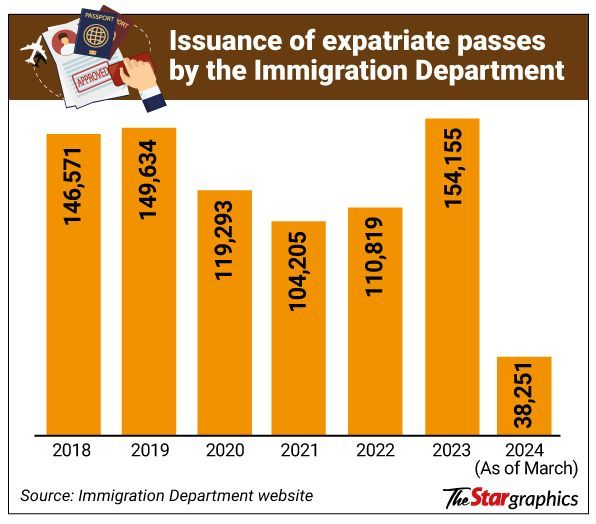
Malaysia has become a magnet for skilled foreign professionals, with the number of expatriates entering the country surpassing pre-pandemic levels.

According to the Immigration Department’s data, a total of 154,155 expatriate passes were issued last year – the highest since 2018.

As of March, the department has issued a total of 38,197 passes – compared with the 32,947 passes given out during the same period last year.

Malaysian Employers Federation president Datuk Dr Syed Hussain Syed Husman said employers are often forced to hire foreign professionals due to the mismatch in locals’ skills and competencies with the requirements of certain jobs.

There is a need for specific expertise in sectors such as aerospace, manufacturing (food processing) and construction. These sectors require expertise in emerging technologies such as machine learning, automation and data analytics.

“The aerospace industry, for instance, demands highly specialised skills, expertise and experience in aerospace engineering, aircraft maintenance and related fields.

“However, Malaysia faces stiff competition for skilled and experienced workers from neighbouring countries.

“Employers in Malaysia struggle to recruit and retain talent in the aerospace industry, leading to gaps in the workforce and challenges in meeting industry demands,” he said when contacted.

An expatriate is a skilled professional, who is a non-citizen or a permanent resident who is allowed to work in Malaysia on a contract or temporary basis.

Due to skill gaps among the local workforce, Syed Hussain said employers are favouring expatriates over local talents.

“The upward trend in expatriate hires over the years can be attributed to various factors.

“One reason is the real lack of locals especially for new and emerging technologies.

“Higher learning institutes need to ensure that the programmes they offer are meeting the latest and emerging skills required by the labour market,” he said.

Malaysian Trades Union Congress president Mohd Effendy Abdul Ghani said companies will only employ overseas workers if they fail to find suitable candidates for highly skilled positions.

“In fact, companies often prioritise hiring locally to avoid issues related to work permits, cultural integration and potential language barriers,” he said.

The Statistics Department’s 2023 fourth quarter report revealed that Malaysian labour share in the skilled category only amounted to 25% of the total filled jobs.

The report showed that the majority of local talents were in the semi-skilled category with over 62.7% cumulatively.

Sunway University economics professor Dr Yeah Kim Leng said it is encouraging that the number of expatriates in the country is on the uptick after experiencing a decline over the last few decades.

“The decline has been reflective of falling foreign investment in the country as well as increased use of Malaysians in running the foreign-owned operations due to lower cost,” he said.

“The rise in the number of expatriates is a good indicator that affirms the surge in foreign investment over the past two years.”

It is also positive to the economy in terms of business confidence, domestic spending and investment, especially in the high-end property, automotive and durable goods markets in addition to domestic tourism, education and other household services.

He said expatriates are typically brought in to manage critical operations, train local employees and transfer their knowledge.

“With more high-value foreign investments, the expatriates play an important role in stemming the brain drain problem by training Malaysians and providing career enhancement opportunities,” he said.

He said they may also contribute to the economy by renting high-end properties.

“The weak ringgit enhances the purchasing power of expatriates who are paid in the currencies of their home countries,” he said.

Besides contributing in direct and indirect taxes, their daily consumption and spending power will boost local products.

Economist Dr Geoffrey William said there is no dearth of local talent in the high-skilled workforce.

“There is no lack of local talent in the local professional and high-skilled workforce; the problem is lack of jobs,” he said.

“Malaysia has an underemployment of around two million people with qualifications higher than the jobs they are doing.”

Source: The Star

Malaysia a magnet for expats


Content Type:

Duration:

ALTHOUGH the 17 Sustainable Development Goals were adopted by the United Nations (UN) in 2015 companies were largely under the impression that such pursuits were mostly the responsibility of governments.

Ideas that the private sector are just as obligated to create a world with no poverty, has zero hunger, with access to health and education for everyone, were only subscribed to by a few corporations.

In fact, as the Ministry of Investment, Trade and Industry (Miti) senior director for Industry Development Division, Dr Meenachi Muniandy pointed out: “If you ask companies if they would say those are their priorities, definitely they will say ‘no’.”

Meenachi was presenting the ministry’s i-ESG Framework during Star Media Group’s ESG PIA Winners Showcase Agenda networking event, which was held on May 3.

Importance of ESG

However, she pointed out that today’s catch-all phrase for sustainability—ESG (environmental, social and governance)—has been in existence way longer.

The ideas were already present on Feb 1, 1999 when former UN secretary-general Kofi Annan called upon firms and their business associations to “embrace, support and enact a set of core values in the areas of human rights, labour standards, and environmental practices.”

She explained that the term “ESG” was then coined in a 2004 UN report called Who Cares Wins.

The report provided examples or components for “E”, “S” and “G” as well as on how companies can respond to climate change, treat their employees, build trust and innovation, and manage the supply chain.

She then addressed the reason why ESG is so important to the nation’s economy by saying that Malaysia is a small and highly open economy.

“Trade accounts make up more than 100% of the gross domestic profit, which means we are dependent on trade, with the European Union, for example, is a major trading partners.”

With more first-world countries pushing ESG and their sustainability agendas via regulations, exporting countries, such as Malaysia, have to meet these requirements.

In fact, Malaysia has pledged to observe the Paris Agreement 2015 and fulfil the objectives of the UN’s SDGs.

“We are committed to reducing our emission level intensity to 45% of GDP by 2030 as compared to the 2005 levels.

“We also aspire to become a net zero country as early as 2050,” she shared.

To align with these commitments, she explained that Bank Negara introduced the Climate Change and Principle-based Taxonomy, which mandates financial institutions on sustainability reporting.

“Financial institutions would have to disclose their Scope 3, which means they would eventually need to get disclosures from their clients,” she said.

She also indicated that companies that want to be listed will also have to meet Bursa Malaysia’s ESG requirements as well as the Securities Commission’s (SC) own requirements.

Approaching MSMEs“When we started our journey in 2022, our division was established on Nov 1, i-ESG division, with the ‘i’ standing for ‘industry’”, she mentioned.

“We were tasked to come up with the framework for the manufacturing sector in ESG.”

During the survey, she said Miti realised that ESG awareness was low among the micro, small and medium sized entrepreneurs (MSMEs).

These companies were also under the impression that ESG is difficult to implement and will incur more costs to them, for they lack the capacity, financial resources or technology.

“They think of it as a programme and not a journey, and that was actually the issue we identified in 2022,” she said.

Furthermore, the plethora of available standards in sustainability reporting and speed in which they evolve make it difficult for them to follow.

In September 2023, when Miti launched a new industrial master plan that included a mission to push for net zero within its four missions, the ministry recognised the need for a framework.

“In the subsequent month, we launched the i-ESG framework. This framework is guided by the 17 SDG goals, the 12th Malaysia Plan and two documents produced by Miti, which are the New Investment Policy and New Industrial Master Plan.”

Miti’s i-ESG Framework aims to foster economically beneficial environmentally sustainable and socially equitable manufacturing sectors.

Its main objective is to build and strengthen a system that encourages and enhances ESG practices among the manufacturers.

The framework will be in line with other plans and roadmaps that are supposed to come by the end of this year, such as the Nationally Determined Contribution Roadmap, the National Energy Transition Roadmap and the 13th Malaysia Plan.

The i-ESG Framework

The framework has four components; standards, capacity building, financing and market mechanism.

It also lists 70 strategies, 50 deliverables and is supported by six enablers.

Miti’s portal that hosts the framework has detailed information on ESG as well as the reasons to push for the standards.

It holds a readiness assessment tool called i-ESGReady that companies can use to gauge themselves with.

They need to answer about 40 questions in terms of their ESG practices and at the end of the form, they will be shown either if they are at the basic, limited, evolving or advanced level.

“If you’re at the evolving or advanced levels that means you are actually on the right track.

“You may not need much help from Miti, but if you’re at the basic or limited levels, then you may look at Miti’s starter kit,” said Meenachi.

The starter kit is available at the conclusion of the readiness assessment, after pressing the “done” button.

As it is just a starter kit, Meenachi cautioned that it is not a guideline or a standard and it is not a framework.

It however helps companies understand how to do their ESG reporting, as it will link them to the frameworks or standards that they will need to use.

“So if you want to disclose total energy consumption, the starter will show the link to the Global Reporting Initiative, to the European Sustainability Reporting Standards, the SDGs, to Bursa and more—but those documents will not show you how to disclose.

“That is in your own capacity, either you want to engage a consultant to gather the information, or you do it internally,” she added. In order to assist MSMEs in navigating the starter kit, which has 200-over pages and can be overwhelming, Miti has “ESG Clinics” to guide them in the process.

“Companies can join in a group of about 50 for us to conduct hand-holding sessions to teach them how to use the starter kit.”

She also said that Miti does awareness programmes nationwide, such as “Kenal ESG”, where it meets industries and participates in various webinars, seminars and forums organised by third parties.

It also runs “ESG Mentor”, where multinationals and large companies can team up with Miti to brief their vendors on adopting ESU practices and reporting on their sustainability.

The i-ESG Framework on Miti’s official portal at https://www.miti.gov.my/index.php under the “Transformation Industry” tab and is freely available to all companies.

Source: The Star

Making ESG accessible to all companies


Content Type:

Duration:

Smart Asia Chemical Bhd (Smart Asia) has inaugurated its new manufacturing facility in Batu Gajah, Perak to enhance the company’s growth strategy and commitment to innovation and customer service.

The new facility, spanning 95,170 square feet, has been meticulously designed to optimise production processes and enhance operational efficiencies.

With the expanded manufacturing space, Smart Asia anticipates a 27.00 million-litre increase in annual manufacturing capacity for decorative paints and protective coatings.

This represents a growth of 309.99% from the company’s current annual manufacturing capacity of 8.71 million litres as of the end of fiscal year 2023. Additionally, the Perak facility’s strategic location will facilitate expansion of the company’s customer-base within the Central and Northern regions of Malaysia due to its proximity to customers.

Menteri Besar Perak Dato’ Seri Saarani Mohamad at the opening ceremony, said: “The inauguration of Smart Asia’s new plant, which represents a significant investment in our local economy; where we believe this will generate promising job opportunities and bolster economic vitality of the state as a whole. Moreover, by leveraging the abundant calcium carbonate available in Perak, and in alignment with the State’s Roadmap, Perak Sejahtera 2030, and the Pelan Perindustrian Perak (P3) spearheaded by InvestPerak, we are confident that this project will contribute significantly to adding value to the minerals mined within Perak state, rather than exporting scarce primary resources out of the country.”

Chief Executive Officer (CEO) of the Malaysian Investment Development Authority (MIDA) Sikh Shamsul Ibrahim Sikh Abdul Majid, at the event said: “Smart Asia’s new facility in Batu Gajah not only showcases the dynamic potential of Perak but also marks a pivotal moment in the evolution of Malaysia’s paint industry. Local manufacturers must ascend the value chain, adopting what is now the defining technology—automation and IoT—to significantly enhance production efficiency.

“The company’s strategic implementation of Industry 4.0, beginning in Johor and now expanded to Perak, serves as a commendable example of this advancement. MIDA is fully committed to supporting our manufacturers’ transition from traditional practices to technology-driven production, which will boost productivity, elevate product quality, and integrate Malaysia more deeply into the global production network.”

Lim Kok Beng, Non-Independent Executive Director, and Chief Operating Officer of Smart Asia Chemical Bhd added, “Our goal is to solidify our position as a reputable national paint brand in Malaysia. With this aim in mind, our Group has decided to set up our Perak facility. This move will not only streamline our manufacturing operations but also increase our manufacturing capacity, ensuring we meet the growing demand for our products.”

The new Perak facility introduces two innovative systems, the Industrial Tinting System and the Automated Paint Production System, revolutionising the manufacturing process for enhanced efficiency and quality. The Automated Paint Production System facilitates precise transfer of raw materials from storage to dispersion tanks, movement of semi-finished products between stations, automated loading and unloading, and rigorous quality checks throughout.

The Industrial Tinting System, which is also integrated with the Automated Paint Production System, will enable the continuous flow of the manufacturing processes. This integration of software and systems enables the company to reduce their dependency on human operators during manufacturing activities.

“These advancements incorporated in Perak plant further demonstrate Smart Asia’s commitment to enhancing our operational and automation capabilities across our products and services, as we strive to transition towards an ‘Industry 4.0’ manufacturing plant, optimising operations while upholding high standards of product quality,” Lim said.

Source: Business Today

Smart Asia Chemical opens new manufacturing plant in Perak


Content Type:

Duration:

The Malaysian Investment Development Authority (Mida) and Shanghai-based integrated solar technology company LONGi have organised the Solar Synergistics Conference 2024 to serve as a dynamic platform uniting major solar enterprises and critical stakeholders across the solar industry supply chain.

In a joint statement yesterday, Mida and LONGi said the conference will coincide with the 50th anniversary of bilateral relations between Malaysia and China.

“With a turnout of over 200 participants comprising mostly engineering, procurement, construction, and
commissioning firms, also known as system integrator firms, the conference facilitated insightful discussions to drive Malaysia’s solar ecosystem forward.

“The event is timely with the recent announcement of the renewable energy programs launched on April 1, and the enhanced green tax incentives,” it said.

Mida CEO Sikh Shamsul Ibrahim Sikh Abdul Majid said Malaysia is dedicated to assuming a significant
role in the global effort to combat climate change.

“Solar energy stands out as a beacon of hope in our quest for sustainability. Its abundance, accessibility and renewability make it a key component for a transition towards a low-carbon economy.”

Shamsul said that by harnessing the power of the sun, Malaysia will not only reduce its dependence on
fossil fuels but also create opportunities for economic growth and job creation.

LONGi Asia Pacific president Frank Zhao echoed the company’s resolute commitment to Malaysia’s energy transition during the Solar Synergistics Conference 2024.

“We are dedicated to propelling Malaysia’s energy transition and fostering the development of a
comprehensive solar ecosystem,” he said.

Source: Bernama

MIDA, LONGi organise conference to advance solar power ecosystem


Content Type:

Duration:

Penang has established Penang Chip Design Academy, an initiative to bolster its Integrated Circuit (IC) design and digital sectors to support the state’s plan to develop an IC Design and Digital Park.

The academy is a key component of the Penang Science, Technology, Engineering, and Mathematics Talent Blueprint to be launched next month, Penang state investment agency InvestPenang said in a statement today.

It will “cement the state’s ambition to become a preferred investment destination for design and digital businesses and entrepreneurs,” InvestPenang said.

Headed by Penang Skills Development Centre, in collaboration with key industry players, electronic design automation tool providers, academia and investPenang, the academy focuses on end-to-end design development. It aims to develop talent for the IC design ecosystem via upskilling and reskilling with academic training and hands-on experience.

“Plans are being finalised for opportunities for private-public funding mechanism,“ InvestPenang said in the statement.

According to Verified Market Report, the global IC design service market was valued at US$48.97 billion (RM230.6 million) in 2023 and is expected to reach US$84.16 billion by 2030, with a compound annual growth rate of 3.92%.

Penang secured nearly RM20 billion of approved services investments between 2019 and 2023, representing 9% of the state’s total approved investments during this period, InvestPenang said.

The state currently houses 18 of 20 semiconductor IC design companies in the country, including the three local IC design champions SkyeChip, Oppstar Technology and Infinecs Systems.

“With the substantial influx of investments into Penang, coupled with the growing demand in IC design and digital sectors, talent is increasingly recognised as one of the key differentiators in attracting investments, as businesses prioritise regions with highly skilled and adaptable workforce.

“Hence, the ultimate objective for the academy is to prepare individuals to become industry-ready IC design engineers, underscoring the state’s dedication to move up the value chain and unlock opportunities for growth and prosperity in this digital era,“ InvestPenang added.

Source: Bernama

Penang sets up academy to support chip design, digital sector


Content Type:

Duration:

Sarawak’s strategic alliances with United Kingdom’s (UK) leading industry partners in the development of compound semiconductors would drive innovations to increase the capability of microchips to power new technologies and applications, said Sarawak Premier Tan Sri Abang Johari Tun Openg.

He said that in recent years, the semiconductor landscape has witnessed a paradigm shift with compound semiconductors emerging as the cornerstone of next-generation technologies.

“Unlike traditional silicon-based semiconductors, compound semiconductors offer unparalleled performance capabilities across numerous applications, ranging from telecommunications and energy systems to advanced electronics and beyond,” Abang Johari said.

He said this in a posting on the Sarawak Premier’s official Facebook page, “Sarawakku”, to mark the signing of a memorandum of understanding (MoU) between Sarawak’s SMD Semiconductor Sdn Bhd and UK’s Compound Semiconductor Catapult in a ceremony held at the London parliament building today.

Abang Johari is visiting the UK with Sarawak Deputy Premier Datuk Amar Awang Tengah Ali Hassan and State Secretary Datuk Amar Mohamad Abu Bakar Marzuki as part of his entourage.

At the MoU signing ceremony, Sarawak SMD Semiconductor was represented by its chief executive officer (CEO) Shariman Jamil while CSA Catapult was represented by its CEO Martin McHugh.

Abang Johari said SMD Semiconductor operates as a wholly owned entity of the Sarawak government, established in 2022 to drive technological self-reliance and innovation to realise the state’s vision for the semiconductor sector.

He said Sarawak aspires to transcend into a leading hub and pivotal solutions provider, fostering an environment conducive to research and development and the commercialisation of cutting-edge semiconductor technology.

“At its core, SMD Semiconductor is on a mission to cultivate an optimal ecosystem, strategically positioning Sarawak as a premier investment destination for the semiconductor industry and a forefront solutions provider,” Abang Johari said.

He expressed confidence that the MoU would yield tremendous benefits for both parties, propelling both toward a future of innovation and shared success.

“I firmly believe that as SMD Semiconductor forges strategic alliances and collaborations with leading UK industry partners, it will be instrumental in driving innovations that reshape the capabilities and applications of compound semiconductors,” Abang Johari noted. 

Source: Bernama

S’wak on mission to develop compound semiconductors with UK companies


Content Type:

Duration:

Malaysia and Saudi Arabia are in the midst of discussions about new investments into the country, said Prime Minister Datuk Seri Anwar Ibrahim.

Anwar said he and his delegation are expected to finalise the details of investments from Saudi Arabia into Malaysia on Monday evening. 

“We will be announcing some new investments with the Kingdom of Saudi Arabia,” said Anwar, who is also finance minister, here on Monday. 

He said this after witnessing the memorandum of understanding (MOU) signing ceremony between the Securities Commission Malaysia and the Islamic Development Bank (IsDB) Group.

Anwar, who has been in Saudi Arabia for a three-day working visit since Saturday (April 27), has had a series of bilateral meetings with his counterparts from Pakistan, Iraq and Bangladesh, among others, amid the World Economic Forum’s Special Meeting and the IsDB annual meeting.

“I am having a private meeting with Saudi Crown Prince Mohammed bin Salman today. They have been to Pengerang in a big way and through IsDB.

“There are also some new ventures with the Kingdom in terms of digital technology and also energy transition, which gel with Malaysia’s priorities,” said the prime minister. 

To recap, in March this year, the board of IsDB approved the US$100 million (RM477 million) Pengerang Energy Complex project for Malaysia under the bank’s public-private partnership programme.

The project aims to develop a sustainable, energy-efficient, state-of-the-art aromatics complex in Pengerang, thereby adding value to Malaysia’s downstream oil and gas chain and economic growth. 

“The Kingdom takes a more progressive and open position in terms of looking at globalisation, inclusivity, issues of equity and inequality, and our capacity to involve or venture into new aspects or instruments (like digital technology and artificial intelligence) would help immensely.

“At the same time, this is how countries can propel the economy through these sorts of networking between countries, and some fiscal and institutional reforms,” he added.

Malaysia joined the IsDB on Aug 12, 1974. It has a capital subscription of 1.55%, worth 868.18 million Islamic dinars, which is equivalent to one special drawing right of the International Monetary Fund.

The IsDB has funded 166 projects in Malaysia, worth US$963.2 million.

Of these, 160 projects (worth US$945.8 million) have been completed and the other six projects (worth US$17.4 million) are ongoing.

Source: Bernama

Anwar: Malaysia in talks for new investments into country by Saudi Arabia


Content Type:

Duration:

IBM Malaysia has played a significant role to position Malaysia as a hub for aerospace innovation, citing the transformation of Turkish Aerospace Malaysia (TUSAS Malaysia) in Cyberjaya as a recent “success story”.

“From a modest beginning, TUSAS Malaysia has expanded into a major engineering hub specialising in various aerospace projects,” new managing director and technology leader Dickson Woo said in a statement today.

“A prime reason for its rapid growth was the adoption of IBM’s Engineering Lifecycle Management (ELM) technologies, which significantly enhanced productivity and compliance with stringent international standards,” he said.

Woo, who assumed his new position earlier this month, said IBM Malaysia plays a pivotal role in accelerating development and ensuring end-to-end traceability in TUSAS Malaysia’s projects, which in turn reinforces Malaysia’s reputation as an aerospace innovation hub.

“This technological advancement, particularly in sectors such as aerospace, dovetails with the broader goals of the government under the MADANI Economy framework, and aims to create a more resilient and diverse economy,” he added.

Woo said he will align the company’s operations with the government’s vision for technological and economic resilience.

“Working with both government agencies and the local business community, IBM Malaysia is geared towards supporting this framework by enhancing productivity and fostering economic resilience across all sectors,” said Woo.

He said IBM Malaysia intends to harness its advanced AI and hybrid cloud technologies to propel digital transformation across various sectors, enhancing business efficiency and national competitiveness.

On the 2024 national budget’s focus on sustainability, Woo said he will steer IBM Malaysia towards major sustainability initiatives to align with national goals.

The company intends to leverage its technology platforms, including AI and hybrid cloud solutions, to transform sustainability ambitions into practical and actionable strategies for businesses in Malaysia.

“This strategic alignment enhances business efficiency while contributing to a healthier environment and sustainable development in Malaysia,” said Woo.

IBM Malaysia also aims to mitigate the challenges that organisations face when adopting sustainable practices by offering robust technological solutions to enable the integration of sustainability into core business processes.

This includes overcoming technological barriers and enhancing data insights, which are significant hurdles for many companies.

“As we focus on AI and hybrid cloud technologies, we are setting industry trends, ensuring that IBM remains at the forefront of technological innovation,” said Woo.

Source: Bernama

IBM Malaysia plays major role in country’s aerospace hub aspirations


Content Type:

Duration:

Sarawak’s biomass industry has attracted the interest of foreign investors including from Singapore, China, and Japan, said Datuk Malcolm Mussen Lamoh.

He said these potential investors have proposed to develop biomass plants from waste to energy through the conversion of agricultural wastes, such as oil palm empty fruit bunches (EFB) and kernels, wood and municipal wastes as feedstock.

“Biomass is one of the promoted industries that can be developed for green energy.

“Sarawak is well positioned with huge potential to further develop the biomass industries with our feedstock from planted forest, agriculture and municipal wastes,” he said.

Mussen said this in response to a question from Tamin assemblyman Christopher Gira Sambang who had asked whether there were any interests from abroad to set up biomass plants as another source of clean energy during the Sarawak Legislative Assembly sitting here today.

Currently, he said the Sarawak Timber Industry Development Corporation (STIDC) and the private sector have initiated biomass projects in Sarawak to produce wood pellets by utilising material from planted forests.

“These wood pellets are exported to Japan, South Korea and Europe/ STIDC will continue to carry out research on other raw materials as feedstock such as bamboo, sago trunk, oil palm trunk, Napier grass (Hybrid Tropical Grass) and algae.”

On the efforts that have been taken to promote the biomass industry in Sarawak, Mussen said the Sarawak government has conducted a benchmarking visit to Drax Power Station in North Yorkshire, United Kingdom in April this year to gain insight into biomass energy production technologies and infrastructure.

“Sarawak Government is also exploring the technical feasibility and commercial viability to develop power generation using biomass sourced locally, converting existing coal-fired power plants with biomass and producing wood pellets,” said Malcom in response.

On the incentives offered to attract investments in biomass, Mussen said among the incentives offered by the federal government through the Malaysian Investment Development Authority (Mida) are Pioneer Status or Investment Tax Allowance to promote biomass industry for the Utilisation of Biomass to Produce Value-Added Products, Waste Recycling Activities and Green Technology Project.

Source: Borneo Post

Sarawak’s biomass industry attracts interest of Singapore, China, Japan investors, says deputy minister


Content Type:

Duration:

wpChatIcon