


MIDA Positions Talent at the Centre of Malaysia’s Semiconductor Growth
As SEMICON SEA 2026 closes, industry-led platforms and a new generation of engineers anchor Malaysia’s push for a future-ready semiconductor workforce
KUALA LUMPUR, Malaysia, 7 May 2026 – The Malaysian Investment Development Authority (MIDA) is strengthening Malaysia’s semiconductor ecosystem through a strategic focus on talent development, smart manufacturing and supply chain integration, in conjunction with SEMICON Southeast Asia 2026 at MITEC, Kuala Lumpur.
As the global semiconductor industry accelerates towards an estimated USD1 trillion market by 2030, the sector is undergoing a structural transformation driven by artificial intelligence, electrification and advanced computing. This transformation is reshaping not only technology demand, but also workforce requirements and the structure of global supply chains.
Malaysia continues to evolve beyond its traditional strengths in assembly, testing and packaging towards higher-value activities such as IC design, advanced packaging, and digitally enabled manufacturing systems, supported by the gradual adoption of technologies such as digital twin systems and AI-enabled production environments.
Commenting on Malaysia’s direction, MIDA Chief Executive Officer Datuk Sikh Shamsul Ibrahim Sikh Abdul Majid, said “Malaysia’s competitiveness will increasingly depend on the integration of talent development with technology adoption. Our semiconductor future will be shaped by how effectively we align talent development with smart manufacturing and digital technologies. Our focus is to ensure that skilled talent, advanced manufacturing systems and industry needs evolve together to deliver long-term value to global investors.”
A workforce in transition
Malaysia’s electrical and electronics (E&E) ecosystem secured RM28.5 billion in approved investments in 2025, with the country continuing to evolve beyond its traditional strengths in assembly, testing, and packaging towards higher-value activities such as IC design, advanced packaging, and digitally enabled
manufacturing systems.
This shift is changing what employers look for. Smart manufacturing technologies, particularly digital twin systems and AI-enabled production environments, are reshaping job requirements across the value chain. Engineers and technicians are now expected to work with real-time data, predictive analytics, and integrated production systems to improve yield, efficiency, and operational resilience.
Bridging academia and industry
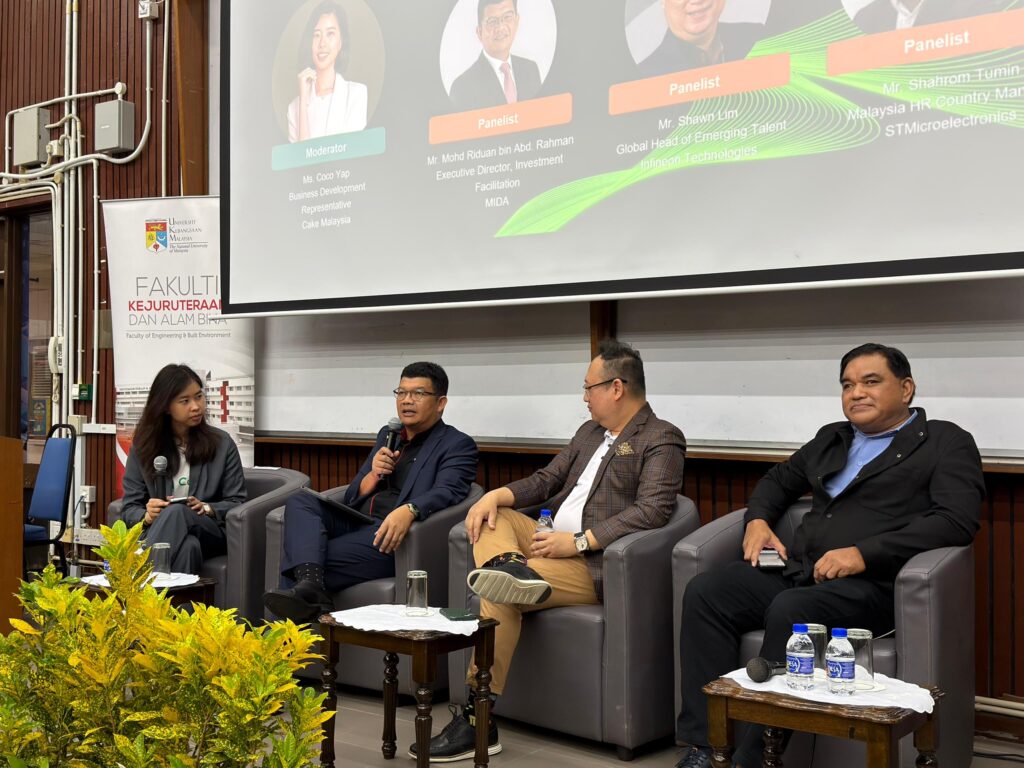
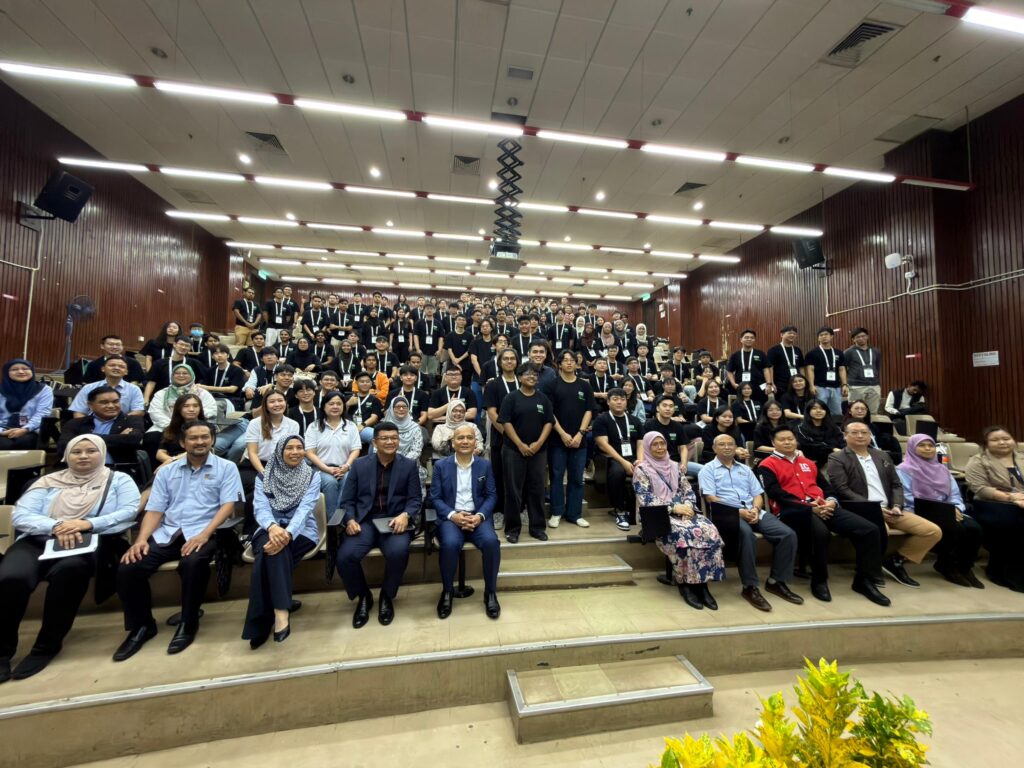
Mr. Mohd Riduan bin Abd. Rahman, Executive Director, Investment Facilitation, MIDA, joined senior industry leaders from Infineon Technologies Singapore and STMicroelectronics Malaysia on a panel discussion at the TECH Zoomers Bootcamp at Universiti Kebangsaan Malaysia (UKM), Bangi, themed
Workforce Development Trends and Job Outlook for the Semiconductor Industry.
The session brought Malaysian university students into direct conversation with global semiconductor employers – an exchange that mirrored, in microcosm, the broader bridge MIDA is working to build at the national level. Discussions identified practical exposure to cleanroom environments, industrial automation, and live problem-solving as the most critical gap to close in moving graduates from
classroom to fab floor.
A coordinated national push
MIDA’s talent agenda spans a coordinated set of initiatives now reaching scale. Through the Special Taskforce-Talent Facilitation (STF-TF) launched in March 2023, MIDA convenes 17 stakeholders – including the Ministry of Higher Education, the Department of Polytechnic and Community College Education, the Malaysia Productivity Corporation, and several technical universities – to align workforce development with industry needs.
Under the ARM–Malaysia Strategic Cooperation Initiative, up to 10,000 Malaysian engineers will be trained in integrated circuit design over four years, with the first batch of CSS IP token approvals already announced. The K-Youth Development Programme with Khazanah Nasional has trained more than 8,000
young Malaysians since 2021, with over 83 per cent securing employment within three months of completion. The MRI3 programme led by Universiti Sains Malaysia, in partnership with 27 industry players, places final-year students directly with sponsoring companies, with successful graduates entering full-time roles at starting salaries above RM4,000.
Together, these initiatives form the operational backbone of Malaysia’s talent strategy under the New Industrial Master Plan 2030 (NIMP 2030) and the National Semiconductor Strategy (NSS).
Talent within an integrated ecosystem
Talent development at SEMICON SEA 2026 was reinforced by parallel engagements across the broader semiconductor ecosystem. MIDA’s Handshake@SEMICON networking platform connected Malaysian suppliers with multinational buyers, with sharing sessions from DHL and Micron. Strategic engagements also took place through one-on-one meetings with a few global investors, aimed at accelerating
new investment decisions in Malaysia.
The MIDA Seminar, themed around strategic supply chain integration and capability enhancement, featured a panel of leading industry players including Micron, Inari, Besi APAC, Betamek, and the Malaysia Advanced Packaging Consortium (MAPC), with UOB Malaysia as the financing partner. A separate MIDA Seminar on Digital Twin and Smart Manufacturing, in partnership with the Malaysia Automotive, Robotics and IoT Institute (MARii) and the Selangor Human Resource Development Centre (SHRDC), focused on equipping Malaysian SMEs with the smart manufacturing capabilities needed to remain relevant in global supply chains.
Datuk Sikh Shamsul Ibrahim said these engagements reflect a deliberate integration of priorities.
“We have built our reputation on assembly, testing, and packaging. The next chapter is design, advanced packaging, and innovation. None of that is possible without the right people, in the right roles, learning at the right pace. That is why every engagement at SEMICON SEA 2026 has been shaped around the same
question: how do we move faster, together, on talent.”
Through SEMICON SEA 2026, MIDA reinforces Malaysia’s position as an integrated semiconductor ecosystem where talent, technology, and supply chain capabilities evolve in tandem to support long-term industry competitiveness.

***End***
About MIDA
MIDA is the government’s principal investment promotion and development agency under the Ministry of Investment, Trade and Industry (MITI) to oversee and drive investments into the manufacturing and services sectors in Malaysia. Headquartered in Kuala Lumpur Sentral, MIDA has 12 regional and 20 overseas offices. MIDA partners with investors at every stage of their journey, supporting sustainable growth and long-term value creation for Malaysia. For more information, please visit www.mida.gov.my and follow MIDA on X, Instagram, Facebook, LinkedIn, TikTok and YouTube.
For media enquiries, please contact:
MIDA
Ms. Azrina Hashim
Director
Industry Talent Management And Expatriate Division
Email: [email protected]
Tel: +603 2267 3454
UOB Malaysia (Strategic Financial Partner)
“As Malaysia’s semiconductor sector advances into higher‑value activities, we are seeing a corresponding shift in how companies approach financing, from capital expenditure for equipment and facilities to longer‑term investment in technology adoption, workforce capability, and supply chain integration. Banks like UOB Malaysia have a role to play in enabling this transition, whether through structured financing for SME upgrading, trade solutions that support cross‑border supply chains, or advisory support to help companies navigate growth at scale. Malaysia’s policy clarity under the NIMP 2030 and the National Semiconductor Strategy gives us confidence to support industry players with the financial solutions they need to grow sustainably.”
— Mr Andy Cheah, Country Head of Wholesale Banking, UOB Malaysia
Infineon Technologies
“The availability of future-ready talent who can operate in highly digital and data-driven environments is a key success factor for us. Smart manufacturing and advanced technologies are integral to global operations. Malaysia’s continued focus on developing skilled workforce and emerging talents is essential to sustaining its relevance in the global (semiconductor) value chain and supporting the Malaysia’s
National Semiconductor Strategy (NSS).”
Mr. Shawn Lim, Global Head of Emerging Talent, Infineon Technologies
STMicroelectronics Malaysia
“Manufacturing today is fundamentally changing, driven by the rise of smart factories, real-time data systems and AI-enabled production environments. This evolution requires engineers and technicians who are not only technically strong, but also adaptable, digitally fluent, and capable of working within increasingly integrated and intelligent manufacturing ecosystems. Talent readiness will therefore
remain a key enabler of competitiveness for the semiconductor industry moving forward.”
— Mr. Shahrom Tumin, Head of Human Resources, STMicroelectronics Malaysia
Bosch and Bosch Rexroth Malaysia
“As Malaysia advances its semiconductor ambitions, talent development is critical. With a national target of 60,000 highly skilled engineers by 2030 for the semiconductor industry, strong collaboration between industry, government and academia will be key. At Bosch, we are actively contributing to this agenda, from our role in the National TVET Council to being a founding member of the German Dual Vocational Training programme. With about 4,000 associates in Malaysia and continued support for initiatives such as the Penang Science Fair, we are focused on building future-ready talent to strengthen Malaysia’s position in the global semiconductor value chain,”
— Mr. Darren Chan, Managing Director of Bosch Malaysia and Bosch Rexroth
Malaysia


