


|


|

This site
is mobile
responsive

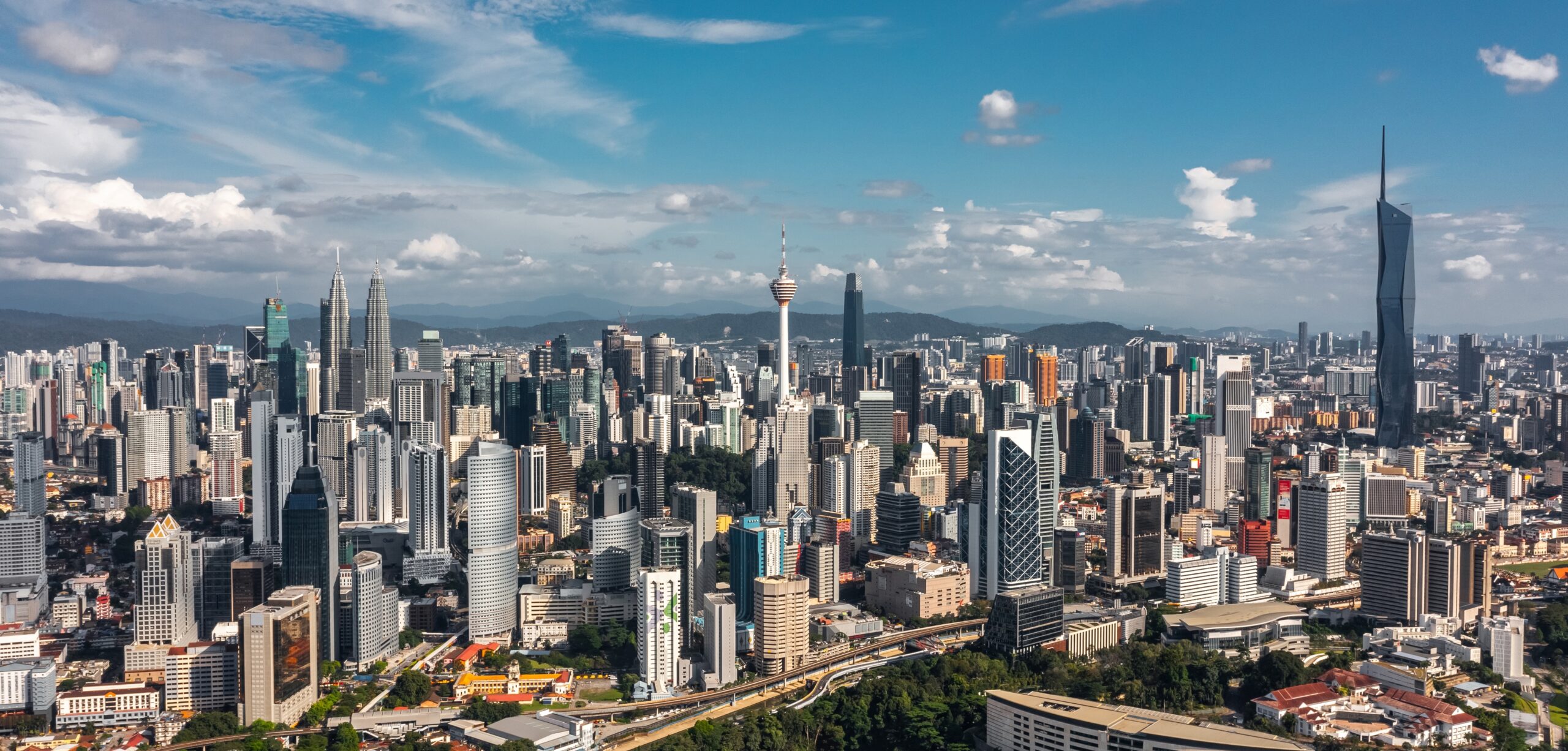
Malaysia is the land of strategic geography and sustainable growth – of connectivity corridors and cross-border dynamism, of natural resilience and technological ambition. This emerging identity extends to its digital infrastructure. Where once the country was known for palm oil and semiconductors, it is becoming ASEAN’s essential digital backbone not merely through scale, but through an intelligent blend of location, sustainability and purpose-built ecosystems that global technology players increasingly recognise and value.
The evidence is clear. In recent years, data-centre projects worth more than USD16 billion have been announced by global tech giants such as Amazon, Google, Microsoft, NVIDIA, Oracle and ByteDance. Much of this capital is flowing into Johor, the state adjoining Singapore. While some of this reflects the city-state’s constraints in space and power, the broader picture is of Malaysia’s strategic shift into what policymakers call “Data Centre 2.0”: facilities conceived for resilience, efficiency and the intense demands of artificial intelligence (AI).
“We are not merely offering land for machines,” says Datuk Sikh Shamsul Ibrahim Sikh Abdul Majid, Chief Executive Officer of MIDA. “Our mission is to propel the nation forward by creating a high-value, future-ready digital ecosystem.
“We are shifting from hosting data to mastering sophisticated computing – embracing AI, cloud architecture and edge technologies to catalyse deep innovation,” he said. “Our ambition is to build a future where advanced digital transformation and sustainable energy are intrinsically linked. Data centre projects are now the accelerant, fundamentally transforming our manufacturing sector and boosting our global competitiveness through pervasive digital economy adoption.
“If data is the new global currency, then Malaysia is positioning itself as both the digital powerhouse that mints it and the innovation engine that transforms it into the prosperity of a high-income nation.”
The timing is propitious. Southeast Asia’s digital economy is expanding at breakneck speed, with data consumption growing 30% annually. In this landscape, Malaysia is engineering the region’s new digital spine for the AI era, where the difference between success and obsolescence will be measured in milliseconds of latency and megawatts of renewable power.
Investment flows show the strategy gaining traction. In the first nine months of 2025, Malaysia attracted RM285.2 billion of approved investments, with RM99.8 billion going to information and communications, of which 85.6% (RM85.4 billion) was related to data centre projects. Since 2021, the Digital Investment Office under MIDA and the Malaysia Digital Economy Corporation (MDEC) has facilitated RM373.8 billion in digital investments, creating well over 110,000 new jobs in high-demand fields such as AI, cloud and cybersecurity – clear proof that global players believe in Malaysia’s next chapter.
Beyond the headline investment figures, the depth of commitment from these tech giants reveals Malaysia’s strategic importance.
Microsoft announced a USD2.2 billion cloud and AI investment in Malaysia in 2024, and launched its first Malaysian cloud region in 2025.
“Malaysia offers the right balance of scale, policy support and talent,” said Dr. Jasmine Begum, regional director, legal and government affairs, Microsoft ASEAN. “The government’s efforts in developing Malaysia as the region’s premier hub for digital assets gives us the confidence to make long-term commitments here — not only to accelerate the country’s AI-driven transformation but to also support regional digital and AI economic growth.
“We also see strong potential for Malaysia to serve as a trusted digital embassy and a secure hub for regional data and digital collaboration,” she added.
Meanwhile, AirTrunk has opened Malaysia’s first AI-ready hyperscale data centre, JHB1, in Johor, setting a new benchmark for sustainable digital infrastructure in the region. The company also announced a second data centre, JHB2, confirming its confidence in the market and taking its Malaysia platform to over 420 megawatts of capacity for leading global technology companies.
“Malaysia has all the components needed to scale AI-ready digital infrastructure: market proximity, skilled talent and a growing digital ecosystem advancing sustainable data centre innovation,” said Pei Jet Lim, head of AirTrunk’s operations in Malaysia. “Johor’s rise as a digital precinct – supported by forward-looking policies and investment – is powering next-generation digital infrastructure.
“The environment enables continuous innovation, including the advanced liquid cooling deployment and rooftop solar at our Johor data centres plus water and energy solutions, including Malaysia’s largest recycled water supply scheme for data centres and the first renewable virtual PPA for a data centre,” Lim added.
Malaysia’s “Made by Malaysian” ethos, a core pillar in the Thirteenth Malaysia Plan’s vision to accelerate economic complexity through high-value products and services, extends naturally into the data centre industry. The vision is clear: to build an ecosystem where dynamic Malaysian firms and world-class talent partner with global players, enabling Malaysia to compete both regionally and globally.
In this role, Malaysia will act as a bridge, connecting today’s digital infrastructure with tomorrow’s technologies, while ensuring supply chain security and resilience.
The country already provides solid foundations in precision engineering, electrical and electronics (E&E) manufacturing and renewable energy integration. Local firms are advancing their capabilities in modular construction and advanced electrical systems, ensuring the delivery of infrastructure at speed and scale. To propel the ecosystem further, Malaysia seeks global partners in advanced cooling, smart grid solutions, and high-end equipment manufacturing, the very frontiers that will define the next generation of data centres.

The Data Centre Nexus 2025 initiative put this into action, connecting eight global operators with 16 Malaysian vendors. For investors, this translates into faster project execution, dependable local partners and smoother operations, all backed by a government committed to building ecosystems where global and local players thrive together.
The payoff is clear: shorter timelines, lower costs and reduced risk. This ecosystem is supported by competitive incentives and long-term policies, such as the Digital Ecosystem Acceleration Scheme, Malaysia Digital (MD) status and the New Incentive Framework (NIF), which combine to deliver predictability for the next generation of digital infrastructure investment.
“Malaysia’s strength lies not only in attracting world-class investors, but in building ecosystems that help them thrive,” added Datuk Sikh Shamsul Ibrahim Sikh Abdul Majid. “By linking global operators with capable local partners, we are ensuring every investment here has the scale, resilience and support to succeed for the long term.”
Infrastructure is only half the story; talent completes it. Malaysia is cultivating a digitally fluent workforce through initiatives like the Microsoft National AI Innovation Hub, the Bina AI Malaysia program and Universiti Teknologi Malaysia’s new AI faculty under the AI Talent Roadmap 2024–2033. These efforts equip local talent with the necessary skills in AI, cloud and cybersecurity, while helping small and medium-sized enterprises (SMEs) integrate into global value chains.
Johor, meanwhile, is emerging as a cross-border catalyst. The Johor–Singapore Special Economic Zone (JS-SEZ), launched in January 2025, is expected to attract 100 projects within a decade and create 20,000 skilled jobs. Together with the Johor Bahru-Singapore Rapid Transit System, scheduled to begin operations in January 2027, it promises to accelerate the movement of talent, goods and services, creating a powerful dual-hub dynamic with Singapore.
Malaysia’s data centre story has reached a turning point. By leveraging its strategic geography, global validation, a robust local ecosystem and a forward-looking workforce, the country is no longer just a contender but a leader. Data Centre 2.0 is Malaysia’s blueprint for smarter, greener and more inclusive growth. The message to global investors is clear: ASEAN’s digital backbone is taking shape here, and the time to connect is now.

Published on Reuters on 21 November 2026:
https://www.reuters.com/plus/from-scale-to-purpose-malaysia-redefines-aseans-digital-backbone
For more information, connect with our Business Services and Regional Operations Division at
https://www.mida.gov.my/staffdirectory/business-services-and-regional-operations-division/
Explore other related content to further
explore MIDA’s insights.