


|


|

This site
is mobile
responsive

Healthcare is emerging as one of the fastest-growing segments of the global services economy with medical tourism becoming an increasingly important driver of cross-border healthcare demand. The global medical tourism market is projected to exceed USD107 billion by 2030, driven by rising healthcare costs in developed economies, ageing populations, and increasing demand for specialised treatments across borders
Malaysia is strategically positioned within this expanding landscape. With internationally accredited hospitals, a highly skilled medical workforce, competitive treatment costs, and strong regulatory governance, the country has further strengthened its standing as a preferred destination for quality healthcare services in the region.
At the centre of this progress is the development of Centres of Excellence (CoEs) — specialised hubs designed to deliver advanced, multidisciplinary, and outcomes-driven care. Beyond clinical capability, CoEs function as strategic healthcare infrastructure that anchors Malaysia’s ambitions in high-value services and medical tourism.
Studies indicate that hospitals performing high procedural volumes — a hallmark of CoEs — have demonstrated significantly improved clinical outcomes, with studies indicating complication reductions of up to 30 percent. Concentrated expertise, structured clinical pathways, and coordinated care models collectively contribute to these improvements.
In Malaysia, CoEs integrate specialists across disciplines — including surgery, oncology, radiology, rehabilitation, and supportive care — to ensure comprehensive and patient-centric treatment. This multidisciplinary model enhances clinical decision-making while improving operational efficiency and patient experience.
Importantly, CoEs justify sustained capital investment in advanced medical technologies and digital health systems. By consolidating complex care within specialised facilities, they optimise resource utilisation, attract high-skilled professionals, and strengthen Malaysia’s value proposition in specialised healthcare delivery.
International accreditation remains a cornerstone of Malaysia’s healthcare credibility. Many Malaysian hospitals achieve CoE status for specific services including Oncology, Cardiology and Gastroenterology, by meeting the demanding standards of international accreditation bodies such as as Joint Commission International (JCI) and Australian Council on Healthcare Standards International (ACHSI).
These certifications require rigorous performance measurement, benchmarking against global standards, and continuous improvement mechanisms. Achieving and maintaining such accreditation enhances institutional reputation, strengthens patient confidence, and supports Malaysia’s competitiveness in international healthcare tourism. This emphasis on measurable outcomes and global alignment reinforces Malaysia’s positioning as a trusted provider of safe, high-quality specialised care.
For the healthcare system, CoEs efficiency of consolidating complex care in one location, allows for strategic use of specialised equipment and personnel. Offering not only the significant advantages to patients, healthcare providers, and the healthcare ecosystem, COEs also serve as essential training and research hubs, generating new knowledge and helping to diffuse best practices throughout the region.
This commitment continues to demonstrate Malaysia as a competitive destination for specialised healthcare services. According to the Malaysia Healthcare Travel Council (MHTC), the country recorded over 1.5 million healthcare traveller arrivals in 2024, generating approximately RM2.7 billion in healthcare travel revenue. Demand is particularly strong in oncology, cardiology, fertility treatment, and orthopaedics — areas commonly structured under Centres of Excellence.
The rising global incidence of non-communicable diseases further reinforces this demand. Data from the International Agency for Research on Cancer (IARC) projects that global cancer cases will increase by nearly 60 percent over the next two decades, underscoring the growing need for specialised, technology-enabled treatment centres.
For Malaysia, this represents both a healthcare imperative and a strategic economic opportunity as the country strengthened its position in high-value healthcare services.
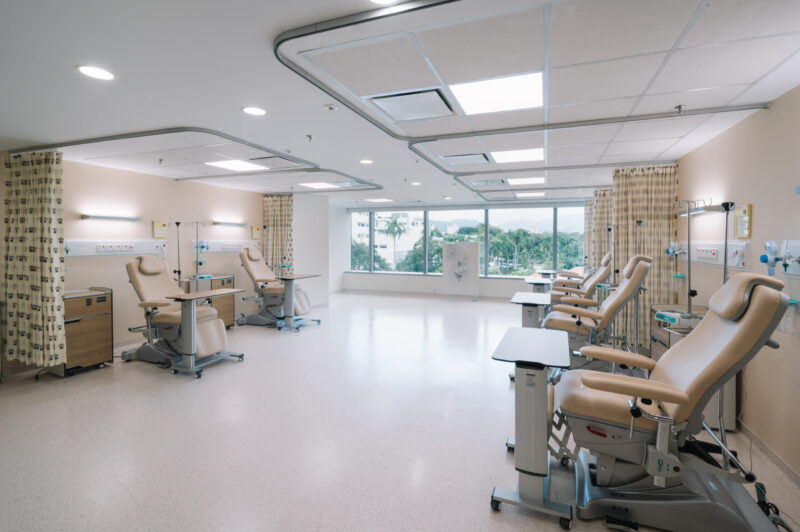
Island Hospital in Penang provides a strong example of Malaysia’s CoE model in practice. As one of the largest private hospitals in northern Malaysia, it has established specialised centres supported by international accreditation and a structured multidisciplinary care framework.
Operating under continuous performance measurement aligned with global standards, its Cancer Centre of Excellence integrates surgical, medical, and radiation oncology alongside pathology, radiology, nursing, rehabilitation, and supportive services to ensure coordinated and evidence-based treatment planning.
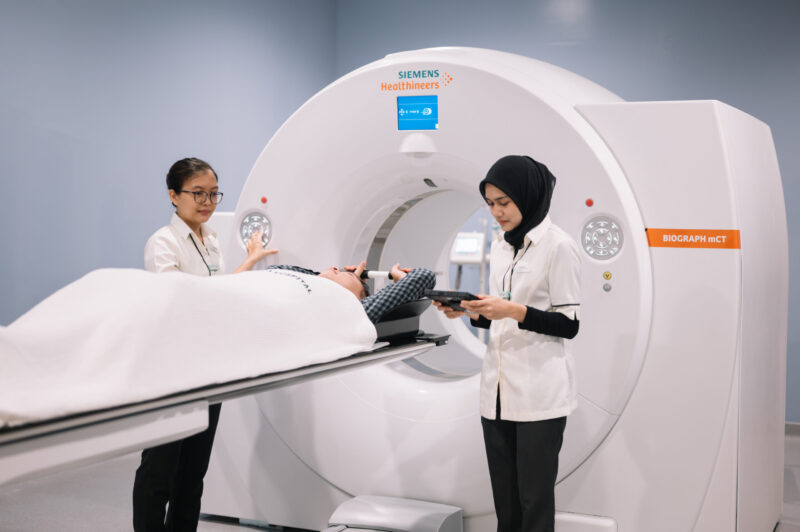
The centre is supported by substantial capital investment in high-end diagnostic imaging systems, precision radiotherapy platforms, advanced nuclear medicine capabilities, and robotic-assisted minimally invasive surgical technologies. These technology-intensive assets enhance clinical accuracy, reduce recovery time, and enable complex oncological procedures to be performed with greater precision.
The scale of these investments highlights the capital-intensive nature of specialised healthcare development. Beyond improving patient outcomes, they strengthen Malaysia’s ecosystem for high-skilled employment, clinical research collaboration, and medical technology adoption — reinforcing the country’s position in high-value healthcare services.
The continued growth of Centres of Excellence in Malaysia is supported by proactive government facilitation and policy alignment.
As the Government’s principal investment promotion agency, Malaysian Investment Development Authority (MIDA) actively facilitates investments in the services sector, including private healthcare and medical tourism infrastructure.
In collaboration with the Malaysia Healthcare Travel Council, MIDA supports hospitals undertaking strategic expansion and technology upgrading initiatives. Incentives such as the Automation Capital Allowance (ACA) encourage the adoption of advanced medical technologies and digital healthcare systems, enhancing productivity and service quality.
Programmes such as the Flagship Medical Tourism Hospital initiative further strengthen Malaysia’s international branding and ecosystem coordination, reinforcing investor confidence in the sector.
Through facilitation, fiscal incentives, and policy alignment, Malaysia offers a conducive environment for the development of specialised healthcare facilities that meet global standards.
Centres of Excellence represent strategic infrastructure within modern healthcare systems. Integration of specialised expertise, advanced technologies, and globally aligned standards improves clinical outcomes while reinforcing Malaysia’s competitiveness in medical tourism.
Growing demand for complex treatments will continue to reshape healthcare delivery. Malaysia’s focus on high-value, technology-intensive services positions the country as a regional hub for specialised, innovation-driven care. Sustained government support and strong private sector participation will continue to strengthen the ecosystem, delivering world-class services while generating long-term economic and social value for Malaysia and the wider region.
Explore other related content to further
explore MIDA’s insights.